| What’s cleaned | Supply, return, and exhaust ductwork, AHUs, coils, diffusers, grilles |
| Standard | NADCA ACR (assessment, cleaning, restoration) |
| BC requirement | WorkSafeBC Section 4.78: preventive maintenance on ventilation systems |
| Project length | A few hours to months, depending on building size |
| Price | Get a custom quote |
Key takeaways
- NADCA data shows a 10 to 46% improvement in supply airflow once HVAC systems are properly cleaned. In a commercial building, that shows up as better tenant comfort and lower energy costs.
- WorkSafeBC Section 4.78 requires preventive maintenance on all ventilation system components. Duct cleaning is part of that obligation.
- The right schedule depends on your building’s use, occupancy, and environment. A qualified contractor can assess the system and recommend a cleaning interval based on what they find.
Commercial duct cleaning is the process of removing dust, debris, and biological contaminants from the HVAC system in an office, strata building, school, healthcare facility, or retail space. On BC’s damp coast, moisture encourages mould growth inside ductwork, and summer wildfire smoke adds fine particulate that settles in supply and return runs. A building that recirculates air 5 to 7 times per day through a contaminated system is pushing those contaminants to every floor and suite.
Signs your building needs HVAC cleaning
Visible dust or debris at diffusers and grilles
If you can see dust buildup on supply diffusers, return grilles, or around VAV boxes, the ductwork behind them is carrying more. This is the simplest check and the one NADCA points to first: if your ducts look dirty, they probably are.
Tenant complaints about stuffiness or odours
People spend roughly 90% of their time indoors, where air pollutants can be 2 to 5 times higher than outdoor levels. When tenants report headaches, stuffiness, or stale odours that ventilation adjustments do not fix, the ductwork and air handling units are worth inspecting.

Uneven airflow or rising energy costs
Contamination inside coils, ductwork, and air handling units restricts airflow. The HVAC system works harder to move the same volume of air, which drives up energy costs and creates hot or cold spots across zones.
Pro tip: Before committing to a building-wide project, ask your contractor to walk the system during the quoting visit. A visual check of the ductwork and AHU internals tells you the scope and urgency before you spend anything.
What a commercial cleaning project covers
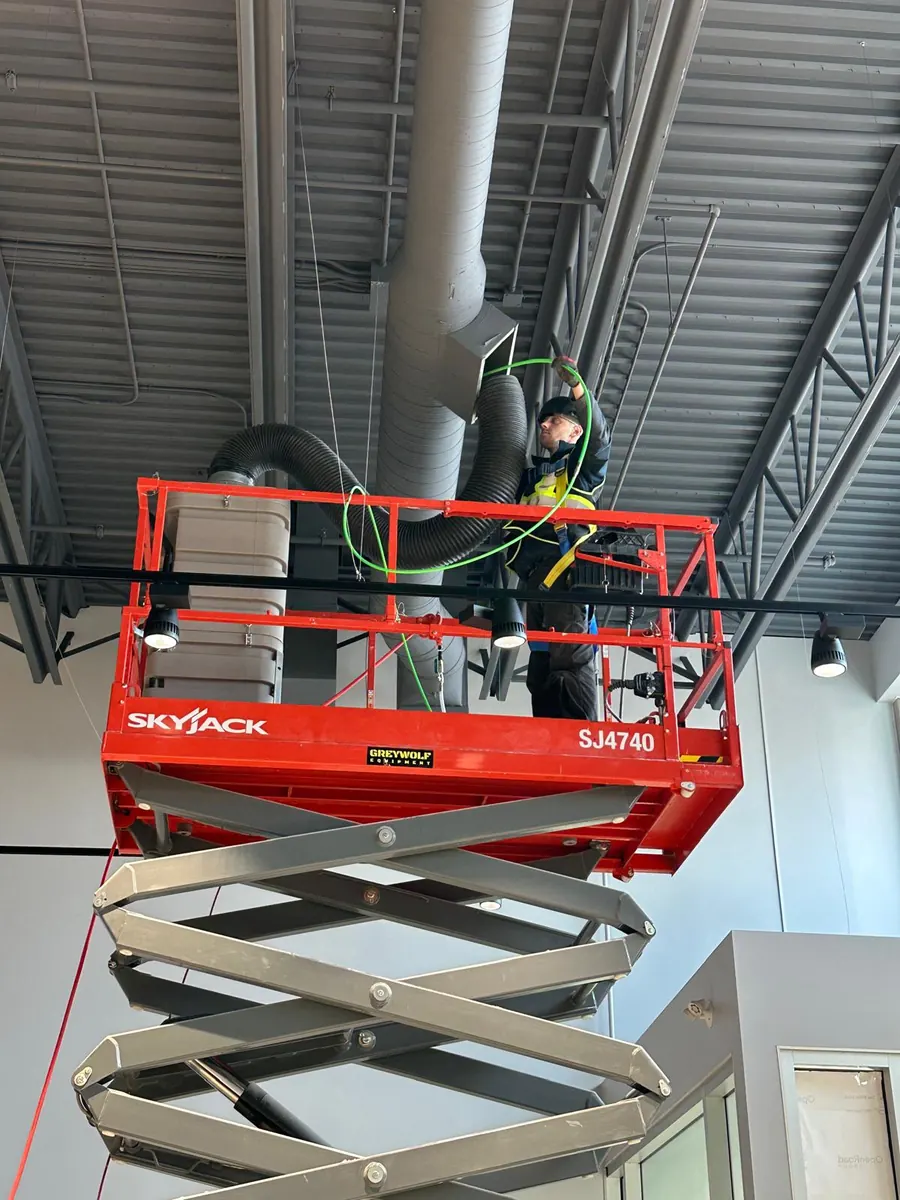
During cleaning, the entire HVAC system is placed under continuous negative pressure to prevent contaminants from spreading into occupied areas. The scope depends on your system, but a thorough job typically includes:
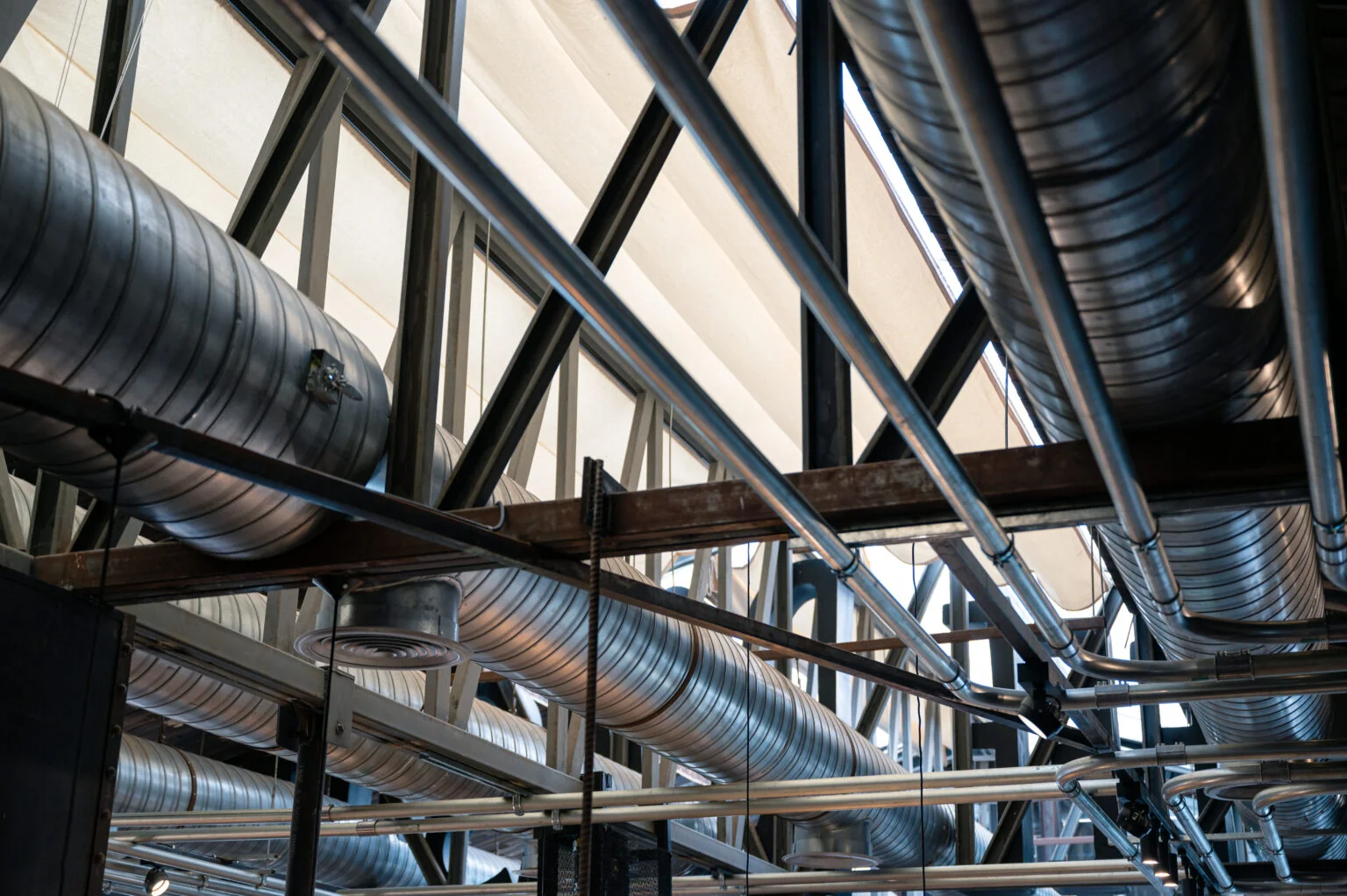
- Ductwork (supply, return, exhaust): HEPA-filtered negative-air vacuuming and compressed-air agitation to remove dust and debris. Mechanical brushes used where required.
- Air handling units (AHU, MAU, RTU): Internal surfaces and coils cleaned with HEPA vacuuming, compressed air, and coil cleaner. Accessible surfaces hand-wiped, coil fins combed where needed.
- Diffusers, grilles, and VAV boxes: Power-wiped and air-washed. Removable components taken outside for cleaning before reinstallation.
- Coils (heating, cooling, evaporator): Compressed air, HEPA vacuum, and no-rinse evaporator foam to restore heat transfer and airflow.
- Access panels: Existing openings used wherever possible. New openings made and closed to SMACNA and UL 181 requirements: mechanically fastened, sealed, re-openable, and marked.
- Sanitizing (optional): After source-removal cleaning, a Health Canada registered disinfectant applied through the system to reduce bacteria, mould spores, and odours.
Every commercial job ends with a written report documenting what was cleaned, what was found, and the condition of the system.
When to schedule cleaning
There is no universal interval for commercial HVAC cleaning. The right timing depends on a few things.
Building type and occupancy. A busy medical clinic with immunocompromised patients has different indoor air quality needs than a warehouse. Schools and healthcare facilities typically need cleaning more often than low-occupancy office suites.
Environment. BC’s coast means damp air and mould pressure year-round. Buildings near active construction sites pick up concrete dust and drywall particulate. Wildfire seasons add fine smoke particles that settle inside ductwork.
Post-construction or renovation. NADCA recommends that newly installed or renovated HVAC systems be verified clean before the system is permitted to operate. If your building recently went through a refit, schedule cleaning before the new tenants move in.
After water damage. Any moisture intrusion into the HVAC system creates conditions for mould growth. Clean and dry the system before running it again.
Assessment-driven scheduling. The NADCA ACR standard includes assessment procedures that evaluate system cleanliness and guide the cleaning decision. A contractor certified to this standard can inspect your system and recommend a schedule based on actual conditions rather than a calendar guess. ASHRAE Standard 62.1 sets the industry baseline for commercial building ventilation, and keeping ductwork and air handling equipment clean is part of meeting that standard.
Heads-up: Postponing cleaning after visible contamination or water damage risks spreading mould and particulate to every occupied space in the building. WorkSafeBC requires preventive maintenance on ventilation systems, and a dirty system that triggers tenant complaints can become a regulatory problem.
Choosing a qualified contractor
For commercial HVAC cleaning, look for:
- NADCA membership and ASCS certification. Every NADCA member company must have at least one certified Air Systems Cleaning Specialist on staff. This is the baseline for commercial work. Read more about what NADCA certification means.
- Compliance with ACR, the NADCA Standard. This is the industry benchmark for assessment, cleaning, and restoration of HVAC systems. Ask whether the contractor follows it.
- Insurance and WorkSafeBC compliance. Commercial jobs involve confined spaces, rooftop access, and scissor lifts. Make sure the contractor carries adequate liability coverage and meets WorkSafeBC requirements.
- A written scope and report. The contractor should walk the building, assess the system, and provide a written scope of work before starting. After the job, you should receive a report documenting what was cleaned and the condition of the system.
We are NADCA certified, WorkSafeBC compliant, and carry $5M liability insurance. We have completed commercial HVAC cleaning at hospitals, schools, office towers, and retail spaces across BC, including work at Surrey Memorial Hospital, Richmond Hospital, and Kelowna General Hospital.
Get a free quote for your building.
Where we do this work
We clean commercial HVAC systems across BC: Vancouver, Burnaby, Surrey, Richmond, Coquitlam, Port Coquitlam, Port Moody, New Westminster, North Vancouver, West Vancouver, Delta, Langley, White Rock, Maple Ridge, Pitt Meadows, Mission, Abbotsford, Chilliwack, Squamish, Whistler, Kamloops, Kelowna, Nanaimo, and Victoria. We also serve commercial buildings in Alberta.