| Certification body | NADCA (formed in 1989) |
| Required credential | ASCS (Air Systems Cleaning Specialist) |
| Cleaning standard | ACR (Assessment, Cleaning and Restoration) |
| Ongoing training | 6 continuing education credits per year |
| Price | Free quote |
Key takeaways
- NADCA members must keep at least one certified Air Systems Cleaning Specialist (ASCS) on staff, carry general liability insurance and clean according to ACR, the NADCA Standard.
- The ASCS exam covers indoor air quality, safety, mechanical systems and field experience. NADCA recommends 2 to 4 years of hands-on work before sitting it.
- Certification is renewable each year. Technicians earn 6 continuing education credits annually, or they retake the ASCS certification exam from scratch.
- Source-removal cleaning, the method the ACR standard requires, pulls debris out of your ducts with HEPA-filtered negative-air vacuuming rather than just pushing it around.
NADCA stands for the National Air Duct Cleaners Association. Formed in 1989, it is the trade body that sets training, insurance and cleaning standards for the duct cleaning industry. When a company says it is “NADCA certified,” it means the company holds active membership and meets a specific set of requirements that NADCA enforces every year. In Metro Vancouver, where the damp coast and seasonal wildfire smoke push more moisture and particulate into duct systems than most Canadian cities, knowing what that certification actually includes helps you tell a qualified crew from one that just owns a vacuum.
What NADCA requires of its members
To hold active membership, a duct cleaning company must do three things, according to NADCA’s homeowner resources:
1. Keep at least one ASCS on staff
Every member company must have at least one NADCA certified Air Systems Cleaning Specialist (ASCS) on staff. This is the person responsible for managing cleaning projects and making sure the work follows the standard. More on what the ASCS credential involves below.
2. Carry general liability insurance
Members must maintain general liability insurance. This protects you if something goes wrong on the job. AirCare carries $5M liability insurance, which is well above the minimum.
3. Follow the ACR standard and Code of Ethics
Members agree to clean according to ACR, the NADCA Standard and comply with NADCA’s Code of Ethics. ACR is a worldwide benchmark for best practices in HVAC cleaning. It is not optional for members: it defines how the inspection, cleaning and restoration of your duct system should be done.
What the ASCS credential covers
The ASCS (Air Systems Cleaning Specialist) is a worldwide credential recognizing a technician’s knowledge and skills in HVAC system hygiene. The exam tests indoor air quality, safety, mechanical systems, field experience and the ability to apply that knowledge on real jobs.
NADCA recommends 2 to 4 years of field experience before attempting the exam. There are no formal prerequisites, so technically anyone can sit it. But the pass requirement means the person holding the credential has demonstrated competence across the full scope of residential and commercial duct cleaning.
The credential matters because duct cleaning in BC has no licensing requirement. Anyone can buy a truck-mounted vacuum and start taking jobs. The ASCS is one of the few ways a homeowner can verify that the person showing up at the door has been tested on the work they are about to do.
How certification stays current
Passing the exam once is not enough. ASCS certification is renewable each year, and technicians must earn 6 continuing education credits (CECs) annually to stay certified. CECs come from NADCA seminars, conventions, online quizzes and industry training programs.
If a technician does not earn the required credits by the renewal deadline, they lose the credential and must retake the ASCS certification exam to get it back. This keeps certified technicians current on changes to standards, equipment and best practices.
Pro tip: When you call for a quote, ask for the company’s NADCA member number. Look it up in NADCA’s directory at breathingclean.com. A company that holds the credential will give you the number without hesitating. If they sidestep the question, that tells you something.
What source removal means for your ducts
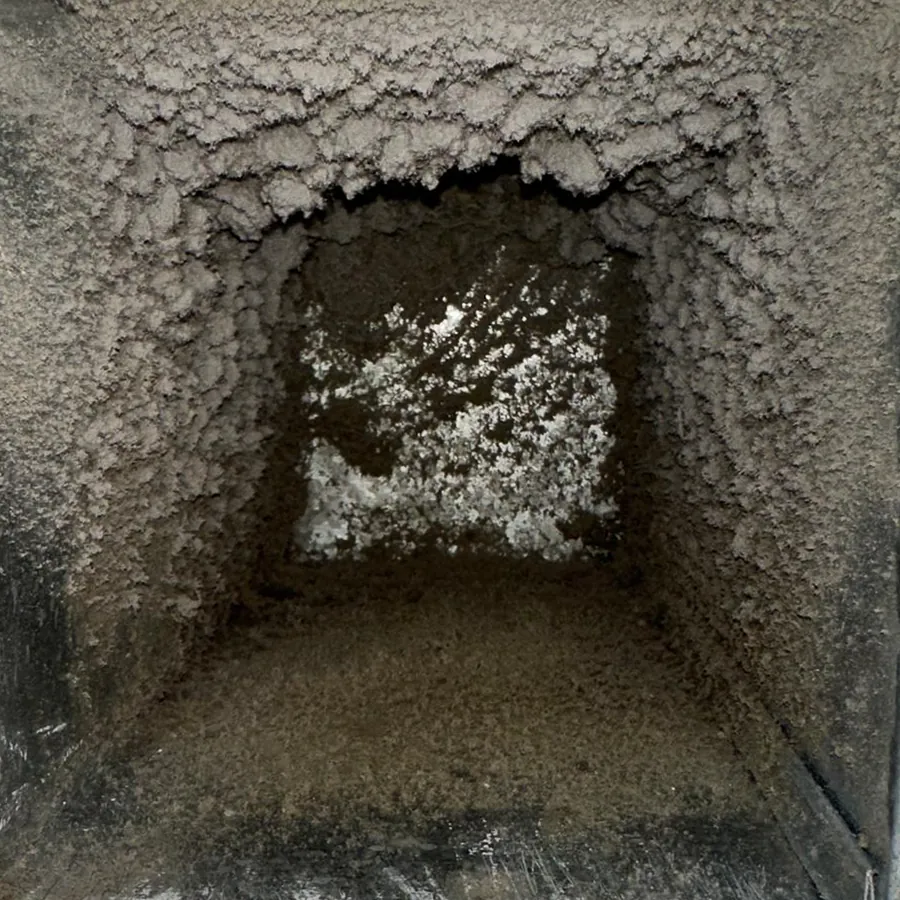
NADCA was formed specifically to promote source removal as the only acceptable method of cleaning. That position has not changed. Source-removal cleaning means physically removing contaminants from your ductwork, not just loosening them and hoping the filter catches the rest.
Your HVAC system recirculates indoor air 5 to 7 times per day. Every pass moves whatever is in the ducts through your living space: dust, pet dander, mould spores, construction residue. Source-removal cleaning uses HEPA-filtered negative-air vacuuming and compressed-air agitation to take that material out of the system entirely.
A residential cleaning removes an average of 47 lbs of mold, dust, and debris per home. After cleaning, homeowners see a 26% drop in energy use because the system moves air more freely once the buildup is gone.
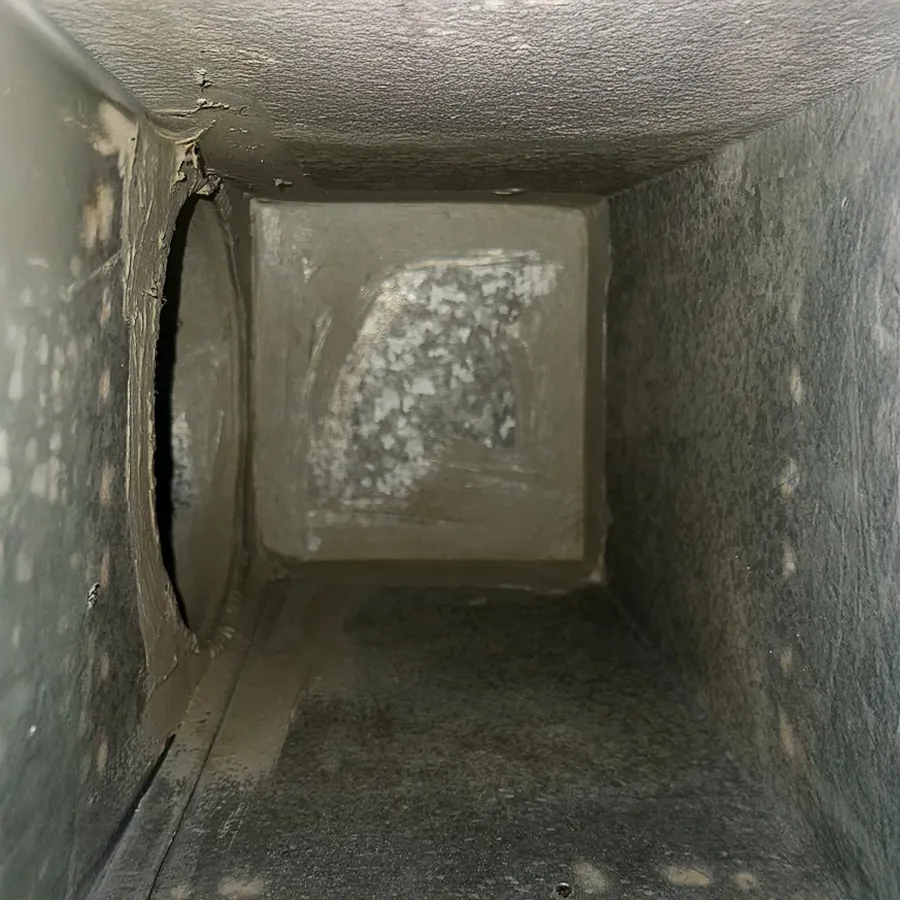
If mould is present, we follow the cleaning with Benefect Decon 30, a Health Canada approved, plant-based disinfectant used in hospital and clinic work. It treats the surfaces the mould was growing on. Before closing the system, the technician invites you to see the final cleaning of the main trunk so you can judge the result yourself.
Red flags when comparing quotes
Not every company that advertises duct cleaning follows the same process. Here is what to watch for:
The company has no ASCS on staff
If no one at the company holds the ASCS credential, there is no third party verifying their training. Ask who manages the cleaning projects and what credential they hold.
They cannot explain their process
A NADCA member will describe source-removal cleaning: negative-air vacuuming, compressed-air agitation, cleaning every register, the blower compartment and the area around the heat exchanger. If the answer is vague or focuses only on price, the cleaning is likely to be vague too.
They clean “the whole house” in an hour
A proper source-removal cleaning of a full residential system takes real time. Rushing through it means corners are cut, and the ducts that are hardest to reach are the ones most likely to be skipped.
Heads-up: A company with no NADCA membership, no verifiable insurance and a price that undercuts everyone else is the combination that leads to a truck showing up, a shop vac at the furnace and an invoice for work that was never done properly.
Book a NADCA-certified cleaning
AirCare Systems BC is NADCA certified, with 10+ years of experience, $5M liability insurance, WorkSafeBC compliance and 100+ Google reviews at a 5.0 rating. We clean according to the ACR standard on every job.
Get a free quote: tell us about your home and we will send your quote by text and email. If you want to learn more about how often to clean, we wrote a separate guide on that.
Where we do this work
AirCare Systems BC cleans residential ductwork across Metro Vancouver and the Fraser Valley: Vancouver, North Vancouver, West Vancouver, Burnaby, Richmond, Surrey, Coquitlam, Port Coquitlam, Port Moody, New Westminster, Delta, Langley, White Rock, Maple Ridge, Pitt Meadows and Abbotsford.