
| Furnace service | at least every 2 years for gas (NRCan) |
| What comes out | 47 lbs of mold, dust, and debris per home |
| Energy impact | 26% drop in energy use after cleaning |
| Filter changes | every 3 months |
| Price | Free quote |
Key takeaways
- Furnace cleaning covers the heating unit (blower, heat exchanger, burners). Duct cleaning covers the pipes that carry air through the house. A proper job does both.
- NADCA says the entire HVAC system should be cleaned: air ducts, coils, registers, blower motor and assembly, heat exchanger, and more.
- A low-cost “duct cleaning” that skips the furnace leaves the biggest collector of debris sitting where all your air passes through.
Your forced-air system has two halves. The furnace heats the air. The ducts carry it to every room and bring it back. When one half gets cleaned and the other does not, the dirty side keeps feeding debris into the clean side. In Metro Vancouver, where damp winters run long, pets shed year-round and summer wildfire smoke settles into homes, both halves collect real buildup that affects your indoor air quality.
What furnace cleaning covers
The furnace is where air gets heated before it enters the duct system. Cleaning it focuses on the unit itself.
1. Blower motor and assembly
The blower pulls return air through the filter and pushes heated air into the supply ducts. Dust coats the fan blades over time, which reduces airflow and makes the motor work harder. This is the single component that collects the most debris in the system because all air passes through it.
2. Heat exchanger
The metal chamber where combustion heat transfers to your air. Dust buildup on the exchanger reduces heat transfer, so the furnace runs longer to reach the set temperature.
3. Burners and flame sensor
On a gas furnace, dust on the burners or flame sensor can cause ignition delays or short cycling. NRCan recommends servicing natural gas furnaces at least every 2 years, and a technician checks these components during that service.
4. Filter area
Your furnace filter catches particles before they reach the blower. NRCan recommends changing or cleaning it every 3 months. The filter is the one part of the system most homeowners can handle on their own.
What duct cleaning covers
The ductwork is everything between the furnace and the registers in your rooms. It is the distribution half of your system.
1. Supply ducts
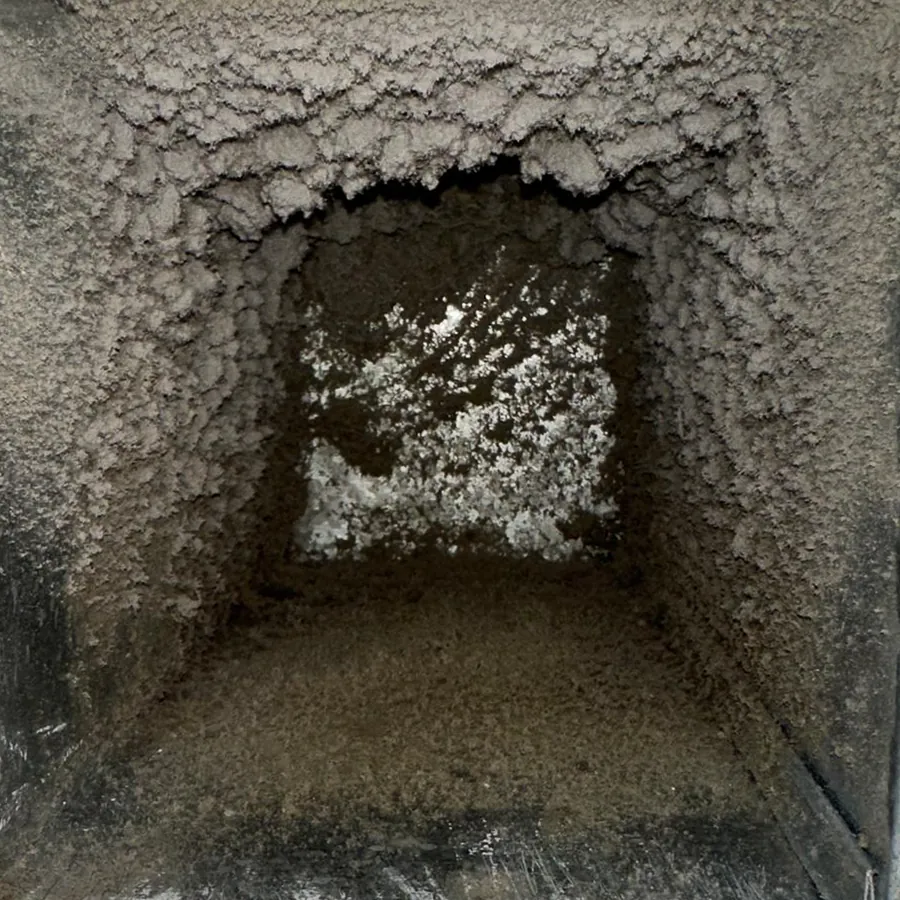
These carry heated (or cooled) air from the furnace to each room. Dust, pet hair and other debris settle along the walls of these runs over the years.
2. Return ducts
Return ducts pull air from your rooms back to the furnace. They tend to collect more debris than supply runs because the air entering them is unfiltered at the register end.
3. Registers and grilles
The covers on your walls, floors and ceilings. Pulling one off often reveals the first visible sign that the system needs attention.
4. Main trunk line and plenum
The large central duct that connects directly to the furnace. Everything passes through this section. It is also the section we invite you to look at before we close the system, so you can see the condition of the ductwork yourself.
Why a proper job covers both
NADCA recommends cleaning the entire HVAC system. Their component list includes air ducts, coils, drain pan, registers, grilles, air plenum, blower motor and assembly, heat exchanger, air filter and air cleaner. That list spans both what people call “the furnace” and “the ducts.”
The practical reason: your system recirculates indoor air 5 to 7 times per day on average. Air passes through the furnace, picks up whatever is loose in the blower compartment, and carries it into the ducts. Cleaning one side and skipping the other means the dirty side pushes debris right back into the freshly cleaned half.
| Furnace cleaning | Duct cleaning | Full HVAC cleaning | |
|---|---|---|---|
| Blower and motor | Yes | Sometimes skipped | Yes |
| Heat exchanger | Yes | No | Yes |
| Supply ducts | No | Yes | Yes |
| Return ducts | No | Yes | Yes |
| Registers | No | Yes | Yes |
| Main trunk | No | Yes | Yes |
| Coils | Sometimes | Sometimes | Yes |
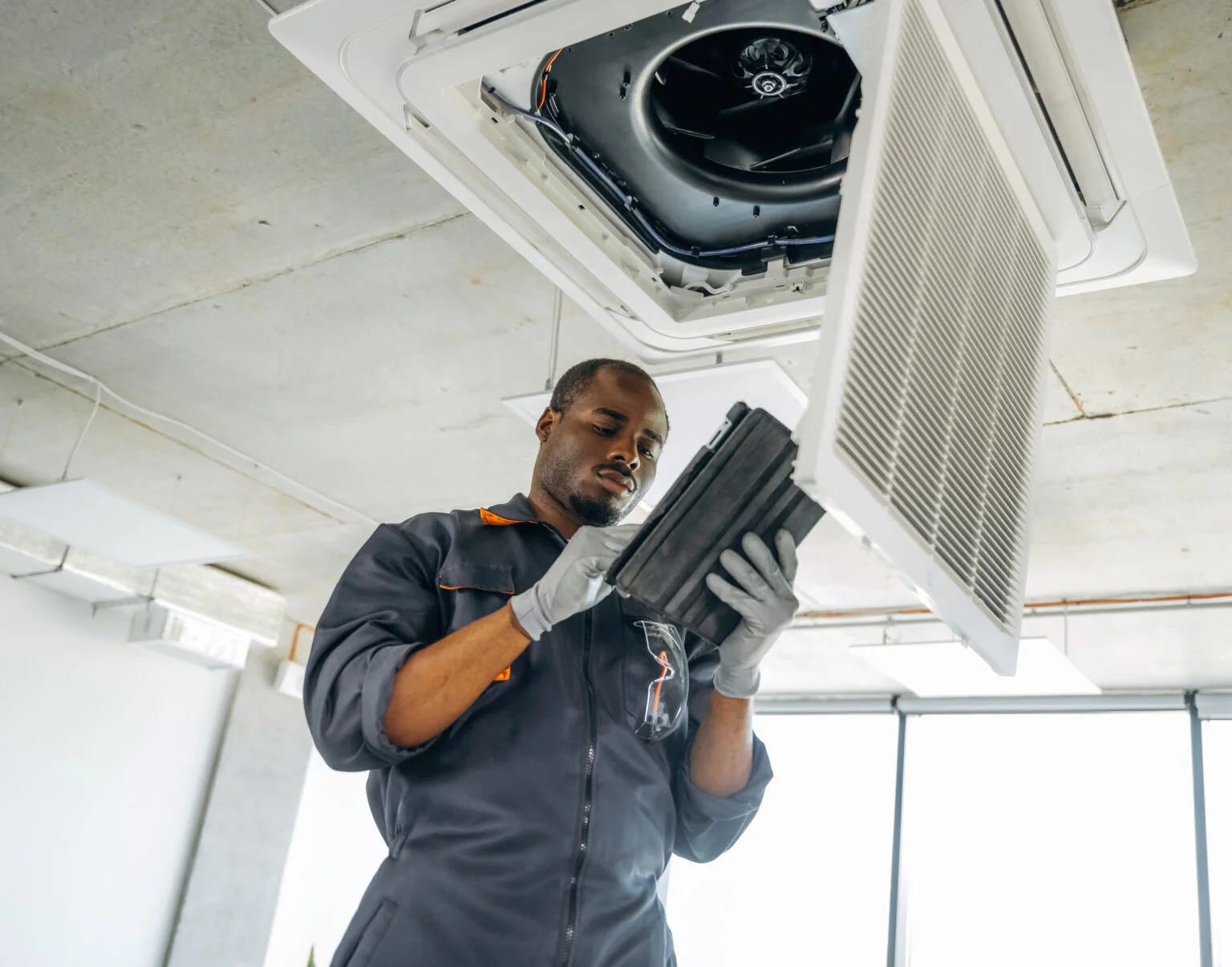
The cleaning method that gets the best results is source removal. The system goes under continuous negative pressure with a HEPA-filtered vacuum while brushes, air whips and compressed air dislodge buildup from the duct walls. Nothing gets released into your living space during the process.
Pro tip: Pull up a floor register and look past the first few inches with a flashlight. If you see matted dust or debris lining the duct, the rest of the system likely looks the same. That quick check costs nothing and tells you whether it is time to call for a quote.
What to watch for in a quote
NADCA notes that low-cost specials often exclude critical components such as the air handler, blower fans, coils and registers. If a quote mentions ducts but says nothing about the furnace or its components, ask what is included before you book.
When we clean a home, the scope covers the furnace (blower, heat exchanger, area around the burners) and the full duct system (every supply and return run, the main trunk, all registers). We use HEPA-filtered negative-air vacuuming and compressed-air agitation. Before we close the system, we invite you to see the final cleaning of the main trunk.
Heads-up: A quote that seems surprisingly low may mean the furnace components are left out. The blower compartment is often where the heaviest buildup sits in a system that has gone years without service.
Get a free quote
If your system has not been cleaned in a while, or you have noticed dust around your registers, get a free quote and we will walk you through what the job covers for your home. We are NADCA certified with 10+ years of experience cleaning homes across Metro Vancouver.
For more on how often your ducts and furnace need attention, see our guide on how often to clean your air ducts in Metro Vancouver.
Where we do this work
Vancouver, North Vancouver, West Vancouver, Burnaby, Richmond, Surrey, Coquitlam, Port Coquitlam, Port Moody, New Westminster, Delta, Langley, White Rock, Maple Ridge, Pitt Meadows, Abbotsford.