| When to clean | after any renovation that generates dust |
| Time on site | 3 to 5 hours for most homes |
| What settles in ducts | drywall dust, sawdust, paint dust, insulation fibres |
| DIY-able? | Vents and grilles, yes. Trunk lines and furnace, no |
| Price | Free quote |
Key takeaways
- NADCA lists home renovations as a trigger for duct cleaning because construction dust settles deep inside ductwork where filters and household vacuums cannot reach it.
- Drywall dust is ultra-fine and passes right through standard furnace filters, coating your blower wheel, evaporator coil, and duct walls from the inside.
- Your HVAC system recirculates indoor air 5 to 7 times per day. After a renovation, every cycle pushes leftover construction dust through the house.
- A full source-removal cleaning after the work is done pulls out what settled during construction and gets your system back to normal.
Renovation dust is not the same as the household dust that builds up over years of living. It is heavier, finer in the case of drywall, and arrives all at once in a volume your HVAC system was never designed to handle. Under normal conditions, duct cleaning every 3 to 5 years keeps things manageable. A renovation dumps months of extra dust in a matter of weeks, which is why NADCA lists it as a reason to clean sooner.
In Metro Vancouver’s damp coastal climate, that dust picks up moisture quickly. Damp construction dust sitting in a dark, still duct run creates the kind of conditions where mould can take hold.
Where renovation dust ends up
During a renovation, your HVAC system either runs (pulling dust straight in) or sits idle with open returns and supply registers acting as funnels for airborne debris. Either way, dust migrates into the ductwork.
Supply and return registers. The most visible layer. You can see it on the grille edges and feel grit when you run a finger along the louvers.
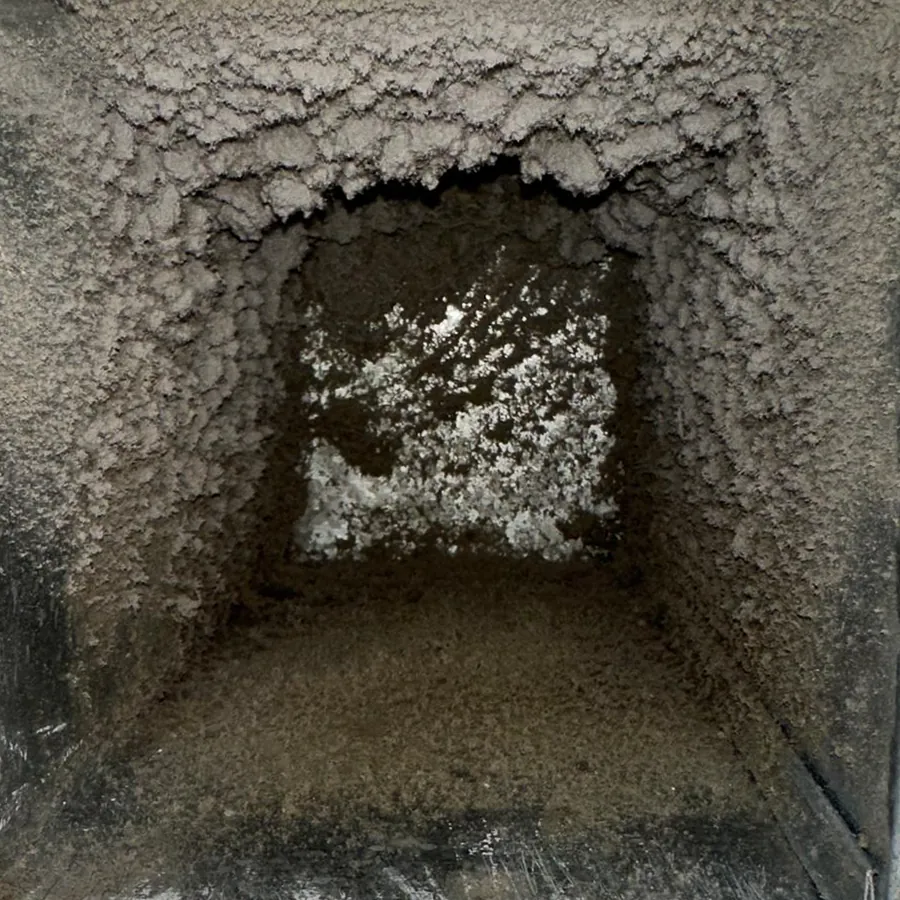
Trunk lines and branch runs. The main artery and the smaller ducts feeding each room. Drywall dust and sawdust settle along the bottom of horizontal runs and collect at bends and transitions. This material does not move once it settles unless the system blows it loose later.
Furnace cabinet, blower wheel, and evaporator coil. Fine dust coats the fan blades, the motor housing, and the coil fins. A dust-coated coil transfers heat less efficiently, and a loaded blower wheel moves less air per revolution.
Even if the renovation contractor covered registers with plastic or taped off vents, some dust always finds a way in. HVAC returns create negative pressure that draws air from anywhere with a gap.
Signs your ducts need cleaning after a reno
1. Visible dust on the registers
If the register faces are coated with fine grey or white powder, drywall dust has been through the system. Clean the registers and check again a day later. If the dust comes back, it is blowing out of the ducts.
2. Dust returns faster than usual
You wipe surfaces and they are dusty again within a day. That is your HVAC system redistributing settled construction dust every time the fan cycles. Indoor air moves through the duct system 5 to 7 times per day, so even a thin layer in the ducts becomes a constant source.
3. Reduced airflow from registers
Dust buildup on the blower wheel and coil restricts airflow. If some rooms feel weaker than before the renovation, the system is working against a layer of debris that was not there before.
4. New or unusual smells
Fresh paint, adhesive, and new flooring release volatile organic compounds (VOCs) that Health Canada links to building materials such as paint, glues and varnish. Those compounds can linger in duct lining and recirculate each time the fan runs. Cleaning the ducts removes the dust layer that holds onto those smells.
Why changing the filter is not enough
Your furnace filter sits between the return duct and the blower. It catches particles that pass through it while the system runs. After a renovation, the problem is not just what is floating in the air right now. The real issue is what has already settled.
Dust sitting on the bottom of a horizontal duct run, caked on a blower wheel, or wedged into coil fins will not lift off and float through the filter on its own. It stays put until somebody removes it with compressed-air agitation and HEPA-filtered negative-air vacuuming.
Drywall dust makes this worse. NADCA’s homeowner resource notes that drywall dust consists of ultra-fine particles made of gypsum and binders that pass right through standard air filters. Even the fraction that does get picked up by airflow sails through a regular filter and lands right back in the system.
Pro tip: Before a renovation starts, shut the HVAC system off and cover every register with plastic and painter’s tape. It will not stop all dust from entering the ducts, but it cuts down the volume significantly. Once the work is done, swap the filter and book a duct cleaning before running the system full-time again.
What a post-renovation cleaning covers
A proper post-renovation cleaning is the same source-removal process used for any residential duct cleaning, just with more material to remove.
- The entire system goes under continuous negative pressure using a HEPA-filtered vacuum connected to the main trunk.
- Each supply and return duct gets compressed-air agitation to break loose settled debris. The negative pressure pulls everything toward the vacuum.
- The furnace cabinet interior, blower wheel, and evaporator coil are cleaned separately.
- Every register and grille is removed, cleaned, and reinstalled.
- Before closing the system, we invite you to see the final cleaning of the main trunk so you can see the difference for yourself.
The typical visit takes 3 to 5 hours for a single-system home. Renovation dust tends to be denser than normal buildup, so it may run toward the longer end. An average cleaning pulls 47 lbs of mold, dust, and debris per home, and homeowners see a 26% drop in energy use afterward.
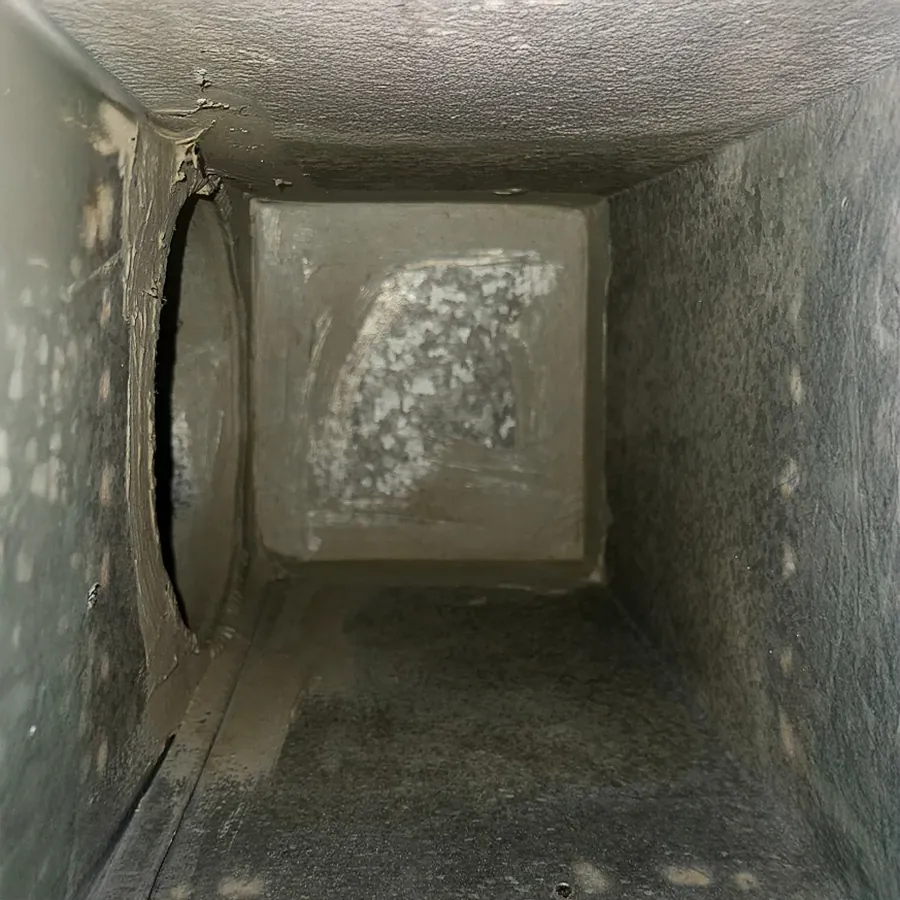
Heads-up: Waiting months after a renovation gives moisture time to mix with settled dust. In Metro Vancouver’s coastal humidity, that combination is how mould takes hold on dust-coated duct surfaces. Cleaning sooner means you are removing construction dust before it becomes a bigger problem.
If you have recently finished a renovation and your system has been running through the dust, a full source-removal cleaning is the right next step. It gets construction debris out of your ductwork and returns your indoor air quality and system efficiency to where they should be.
Get a free quote and we will set up a time that works for your schedule. We are NADCA certified, insured, and have been cleaning ducts across Metro Vancouver for 10+ years.
Where we do this work
We clean residential ducts in Vancouver, North Vancouver, West Vancouver, Burnaby, Richmond, Surrey, Coquitlam, Port Coquitlam, Port Moody, New Westminster, Delta, Langley, White Rock, Maple Ridge, Pitt Meadows, and Abbotsford. See all service areas.