
| How often | Every 3 to 5 years (NADCA); shorter with pets |
| Time on site | 3 to 5 hours for a typical home |
| What we remove | Pet hair, dander, dust, mould spores |
| DIY-able? | Vent covers yes; the ductwork itself needs professional equipment |
| Odour fix | Source-removal cleaning plus optional sanitizing |
| Price | Free quote |
Key takeaways
- Homes with pets that shed high amounts of hair and dander load up the duct system faster than homes without pets, so NADCA’s standard 3 to 5 year interval is the outside range, not the target.
- Your HVAC system recirculates indoor air 5 to 7 times per day. Every cycle pushes whatever is sitting in the ducts through your living space.
- Pet odours in the ductwork come from the dander and hair themselves; removing that material is the first step, and sanitizing handles what a vacuum cannot reach.
- Across our residential jobs, we remove an average of 47 lbs of mold, dust, and debris per home. In a pet household, a good share of that weight is hair and dander.
If you have a dog, a cat, or both, your duct system is collecting more than dust. Pet hair works its way into the return vents, wraps around the blower wheel, and lines the inside of the ductwork. Dander, the tiny flakes of skin that animals shed constantly, is light enough to stay airborne and small enough to pass through most standard filters. In Metro Vancouver’s damp climate, that trapped organic material holds moisture and can develop a musty, animal smell that gets stronger every time the furnace runs.
How pet hair and dander get into your ducts
Your HVAC system pulls air through the return vents, passes it over the furnace or heat pump, and pushes it back out the supply registers. That cycle happens 5 to 7 times per day in a typical home. Every cycle picks up whatever is floating in the air or sitting near the return grilles: dander, dust, and chemicals from cleaning products, cooking, and off-gassing.
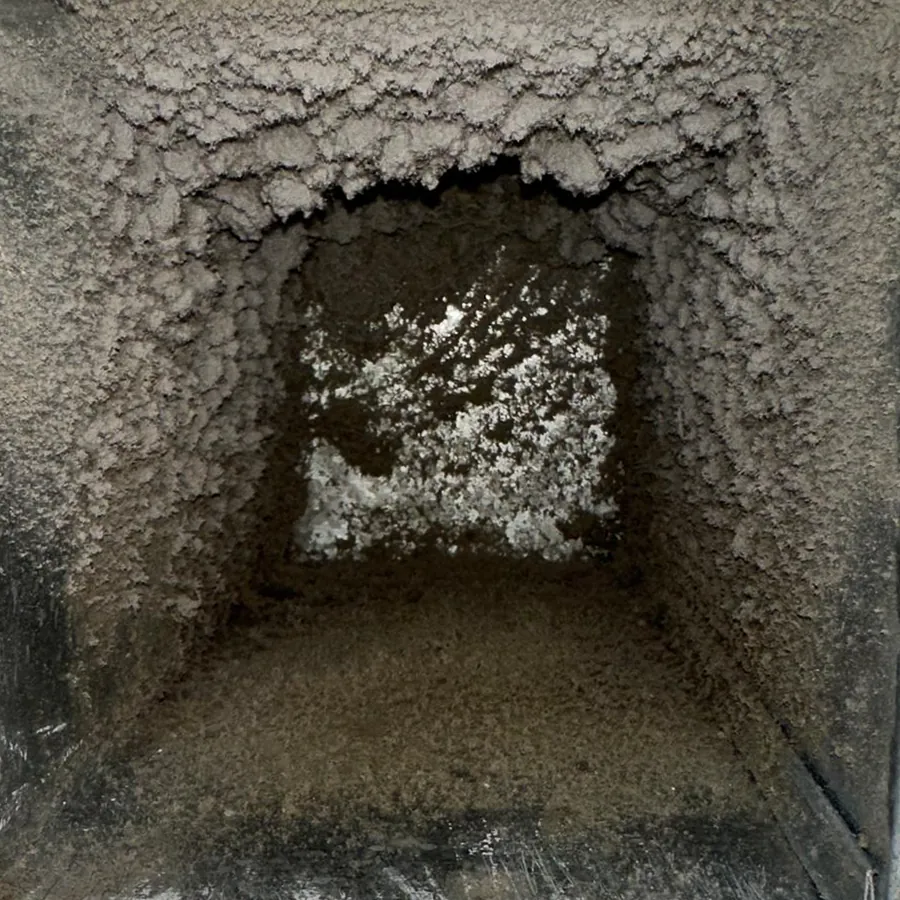
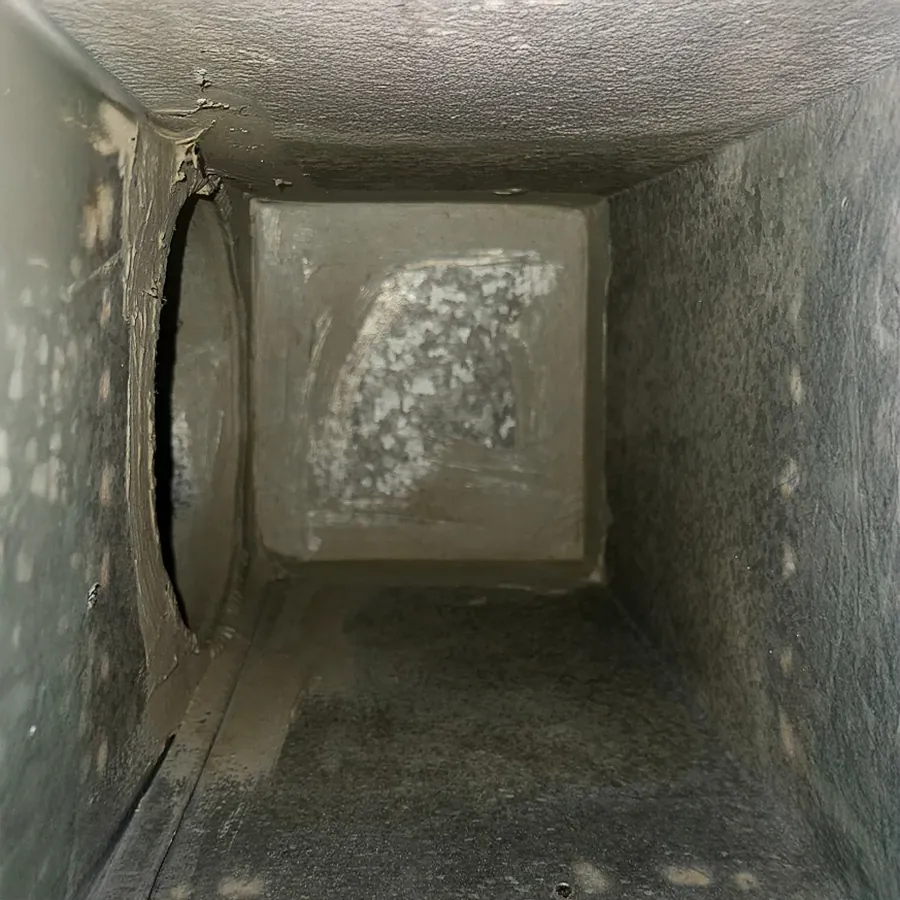
Pet hair is heavier than dander, so it tends to settle along the bottom of horizontal duct runs and pile up at bends. Dander, being finer, coats the duct walls more evenly and mixes in with the dust layer. Over a few years, even in a well-maintained home, the buildup becomes significant.
The return side of the system takes the worst of it. Pets tend to rest near floor-level return grilles (the warm air feels good), and loose hair gets pulled straight in. If your return vents are in hallways or near where the dog sleeps, that is the intake point for most of the hair entering the system.
Signs your pet-household ducts need cleaning
1. A stale or animal smell when the system kicks on
You have cleaned the floors, washed the pet bed, groomed the dog, and the house still smells like animal when the heat comes on. That smell is coming from inside the ductwork, where dander and hair have been accumulating and trapping odour.
2. Dust or hair visible around supply vents
Dark smudges or tufts of fur at the edges of your registers mean particles are blowing out into the room. That is what the system is pushing through your living space.
3. Filters clog faster than expected
NRCan recommends changing or cleaning your furnace filter every 3 months. If yours is visibly loaded well before that mark, pet hair is likely the reason. A clogged filter also means the blower is working harder, which can raise your energy costs.
4. Allergy symptoms that improve when you leave the house
Dander is one of the most common indoor allergens. If sneezing or congestion eases up when you spend a few hours away from home, the indoor air quality is worth looking at. The Canadian Lung Association recommends grooming your pet frequently to limit pet dander and other allergens, but grooming alone does not remove what is already in the ducts.
How we clean a pet-heavy system
A NADCA-certified contractor uses source-removal methods, which means physically pulling contaminants out of the ductwork rather than just loosening them. Here is what that looks like.
1. Assess the system
The technician checks the furnace, ductwork and registers. In pet households we pay particular attention to the return side and the blower compartment, where hair accumulates most.
2. Connect the vacuum and create negative pressure
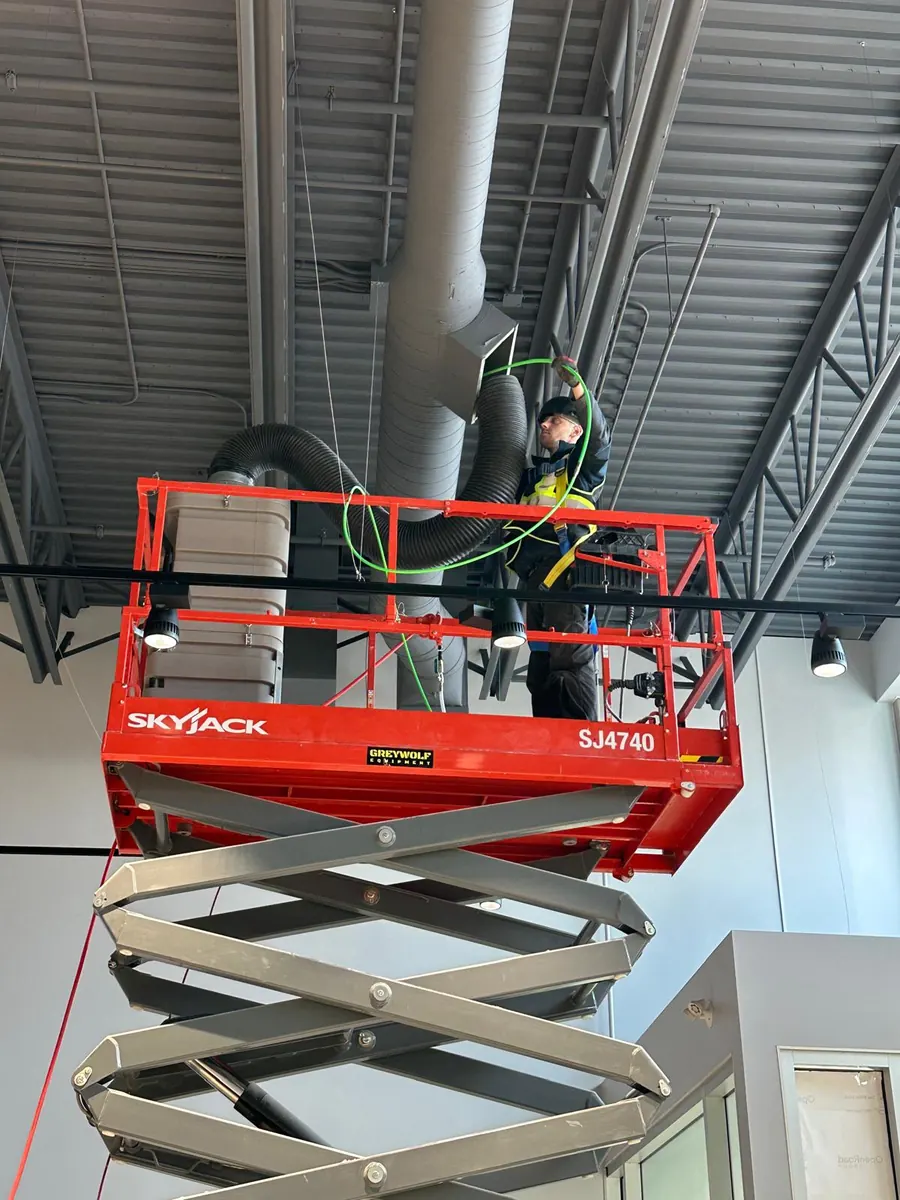
A large vacuum attaches to the main trunk line and puts the entire duct system under negative pressure. Everything moves toward the vacuum, not into your rooms.
3. Agitate each run
While the vacuum draws air through the system, compressed-air tools and brushes work through every supply and return line. Hair wrapped around duct walls, dander coatings, dust and debris all get dislodged and pulled toward the vacuum.
4. Clean the furnace
The blower wheel, heat exchanger area and furnace cabinet get cleaned. Pet hair loves to wrap around the blower blades, which reduces airflow and makes the motor work harder.
5. Visual check
NADCA’s standard is clear: if any dust or debris can be seen during the visual inspection, the system should not be considered cleaned. Before we close the system, we invite you to see the final cleaning of the main trunk.
Dealing with pet odours
The cleaning itself removes the physical material that holds the smell. For homes where the odour has been building for years, or where there is bacterial or mould growth on duct surfaces, we follow the cleaning with Benefect Decon 30. It is a plant-based sanitizer made from thyme oil, Health Canada approved, with a contact time of 30 seconds. It eliminates odours produced by odour-causing fungi and bacteria on porous and non-porous surfaces. No synthetic chemicals, no evacuation required.
Sanitizing only works after the ducts are physically clean. Spraying over a layer of hair and dust does nothing useful.
Pro tip: Pull a supply register off the wall and shine a flashlight inside. If you can see a layer of dust or fur on the duct walls, a cleaning is overdue. If you also notice a smell, mention it when you book so we can plan for the sanitizing step.
Keeping the system cleaner between services
Duct cleaning resets the system. These habits slow the buildup between cleanings:
- Change or clean your furnace filter every 3 months (NRCan recommendation), or sooner if you see it loading up with hair. A loaded filter lets more particles past and strains the blower.
- Groom your pet frequently. The Canadian Lung Association recommends regular grooming to limit pet dander and other allergens at the source.
- Vacuum carpets and soft furniture at least once a week to reduce pet allergens before they reach the return vents. A vacuum with a HEPA filter catches the fine dander that standard vacuums can blow back into the air.
- Keep humidity below 50%. Damp conditions help dust mites and mould thrive, and moisture makes dander stick to duct walls. A hygrometer from any hardware store tells you where you stand.
- Keep return grilles clear. Move pet beds and blankets away from floor-level return vents so the system is not pulling hair straight off the bedding.
Heads-up: If a company quotes you a price without asking about pets, the number of vents or the age of the system, they may not be planning to clean the whole system. A real quote starts with questions about your home.
Get a free quote
If your home has pets and the ducts have not been cleaned in a few years, the buildup is real. Get a free quote or call us at (604) 200-4767. We clean the full system: furnace, ductwork, and registers.
Where we do this work
We clean residential duct systems across Metro Vancouver and the Fraser Valley: Vancouver, North Vancouver, West Vancouver, Burnaby, Richmond, Surrey, Coquitlam, Port Coquitlam, Port Moody, New Westminster, Delta, Langley, White Rock, Maple Ridge, Pitt Meadows and Abbotsford. See all service areas.