| Common sources | Process fumes, organic dust, moisture, biological growth |
| First step | Source-removal cleaning (NADCA recommended) |
| Sanitizing after? | Yes, with a Health Canada registered product when warranted |
| BC regulation | WorkSafeBC Section 4.78: ventilation maintenance required |
| Scope | Custom for each building and system |
| Price | Custom quote |
Key takeaways
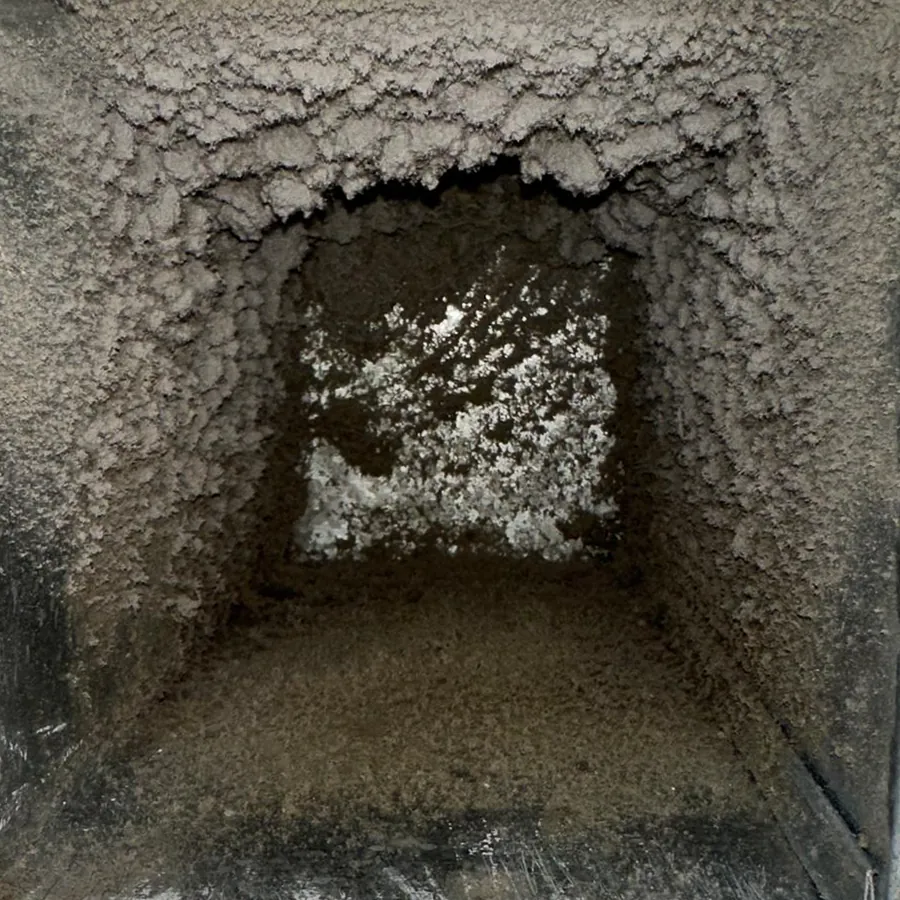
- Odour in industrial ventilation almost always traces back to contamination on duct surfaces, coils, or drain pans rather than the air itself
- Source-removal cleaning physically strips that material out of the system; chemical treatments alone mask the problem temporarily
- WorkSafeBC requires preventive maintenance of ventilation systems and investigation of indoor air quality complaints
- After source removal, a Health Canada registered disinfectant-deodorizer can neutralize residual odour-causing organisms
Industrial ventilation odour is any persistent unwanted smell travelling through a building’s HVAC ductwork. Warehouses, manufacturing plants, food-processing facilities, and mixed-use industrial buildings across BC run into it. The coast’s damp climate adds a layer: moisture inside ductwork feeds mould and bacteria that produce their own smells on top of whatever process fumes the system has already absorbed.
Where the smell comes from
1. Organic buildup in ductwork
Dust, fibres, skin cells, pollen, and other airborne particles settle inside supply and return ducts over months and years. In an industrial setting, those particles mix with oil mist, chemical residue, or food-processing byproducts. Air contaminants recirculate through an HVAC system 5 to 7 times per day on average. In a commercial or industrial system running extended hours with heavier particle loads, that recirculation compounds the buildup faster than it would in a typical office.
2. Coils, drain pans, and air handlers
Cooling coils and drain pans collect condensate. Standing moisture grows bacteria and mould colonies that produce musty or sour odours. The air handler pushes those smells through every supply duct in the building. Cleaning coils and drain pans is part of any thorough commercial HVAC cleaning scope.
3. Process fumes in duct linings
Manufacturing processes, solvents, adhesives, and cleaning chemicals release volatile organic compounds (VOCs). Health Canada lists VOCs among the most common indoor air contaminants. When VOC-laden air passes through ductwork, residue settles on interior surfaces and re-releases over time, long after the original process has stopped.
4. Dead zones and poor exhaust
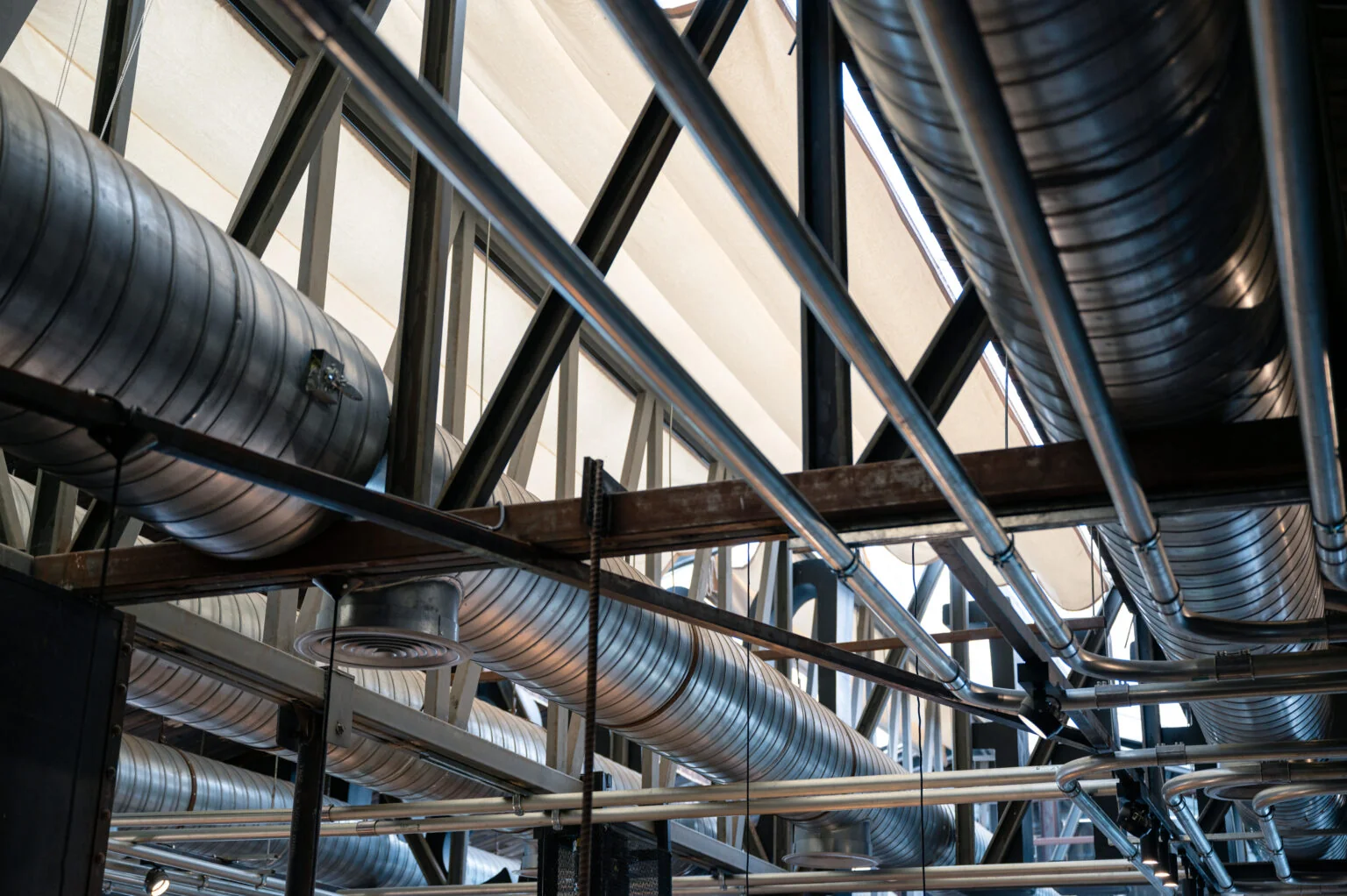
Sections of ductwork with low airflow become dead zones where contaminants settle without being flushed. Blocked dampers or undersized exhaust design can trap odour inside the system instead of venting it outdoors. These pockets are easy to miss during a visual walkthrough because they sit behind walls, above ceilings, or inside vertical risers.
How source-removal cleaning works
Source removal is the approach NADCA recommends for decontaminating HVAC systems. It starts with an assessment of the ductwork, air handling units, coils, and other components to map what has built up and where.
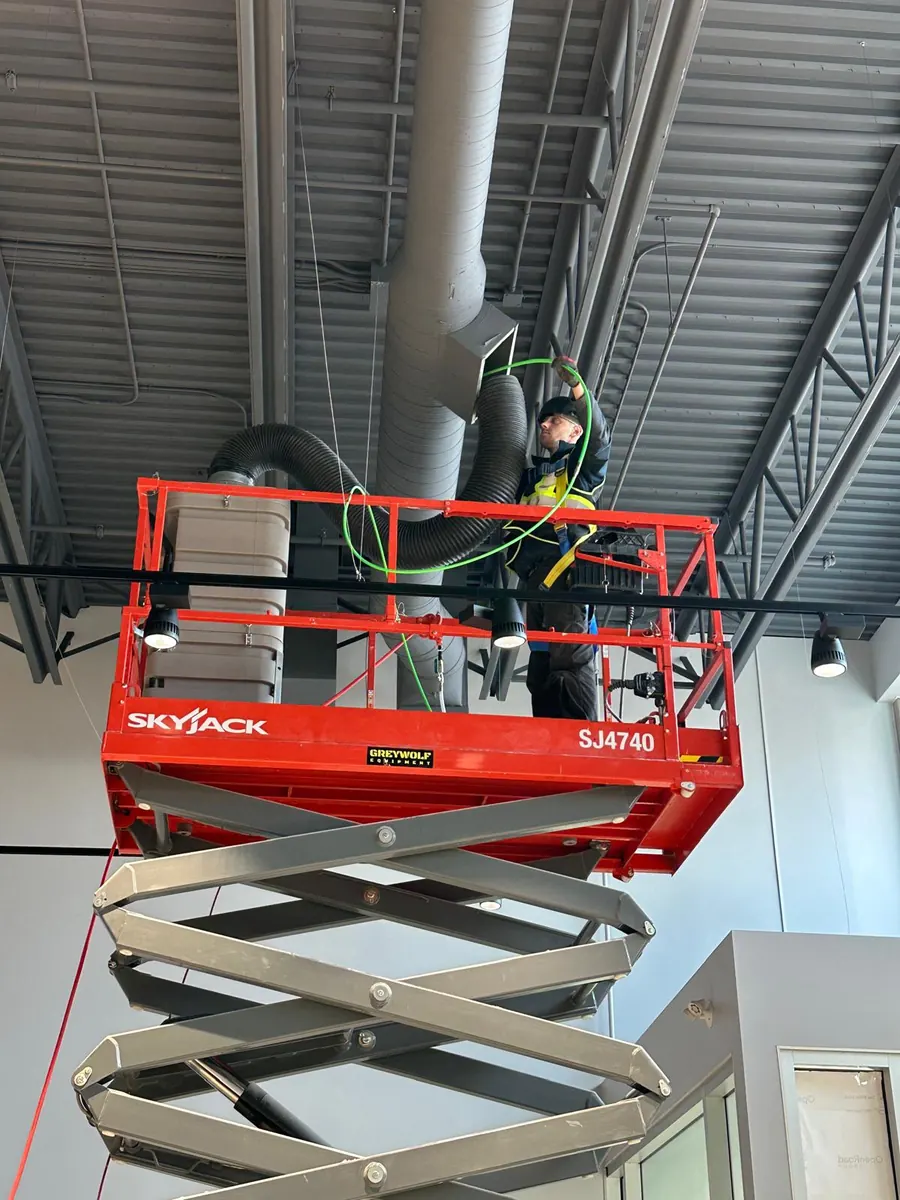
Technicians use agitation tools such as brushes, compressed-air whips, and contact vacuuming to dislodge contaminants from interior duct surfaces. The section under work is held at negative air pressure with a HEPA-filtered vacuum, which captures loosened material and prevents it from spreading into occupied areas.
We clean all accessible supply, return, and exhaust ductwork; air handling units and their internal surfaces; coils, drain pans, and condensate collectors; and diffusers, grilles, and VAV boxes. New access panels are sealed to SMACNA and UL 181 standards. Every commercial job ends with a Certificate of Completion and a before-and-after photo report documenting the work.
Pro tip: Before booking a full cleaning for odour, check your air filters and condensate drain lines. A clogged drain pan or a saturated filter can produce strong smells on its own, and swapping either one takes minutes.
When sanitizing makes sense
Source removal handles the bulk of odour because it strips out the material producing the smell. But in some industrial environments, biological contamination persists on surfaces even after thorough mechanical cleaning. That is where a disinfectant-deodorizer steps in.
We fog systems with Benefect Decon 30, a Health Canada registered, plant-based disinfectant with thymol (from thyme oil) as its active ingredient. It eliminates odours produced by odour-causing fungi, bacteria, and other organisms on both porous and non-porous surfaces. NADCA’s position paper on chemical products in HVAC systems calls source removal of contaminants the single best method for decontaminating HVAC systems. Chemicals supplement the cleaning; they never replace it.
Heads-up: Masking deodorizers like air fresheners or scented sprays only cover the smell while contamination stays inside the system. The odour returns as soon as the fragrance fades. Source removal is the step that actually fixes the problem.
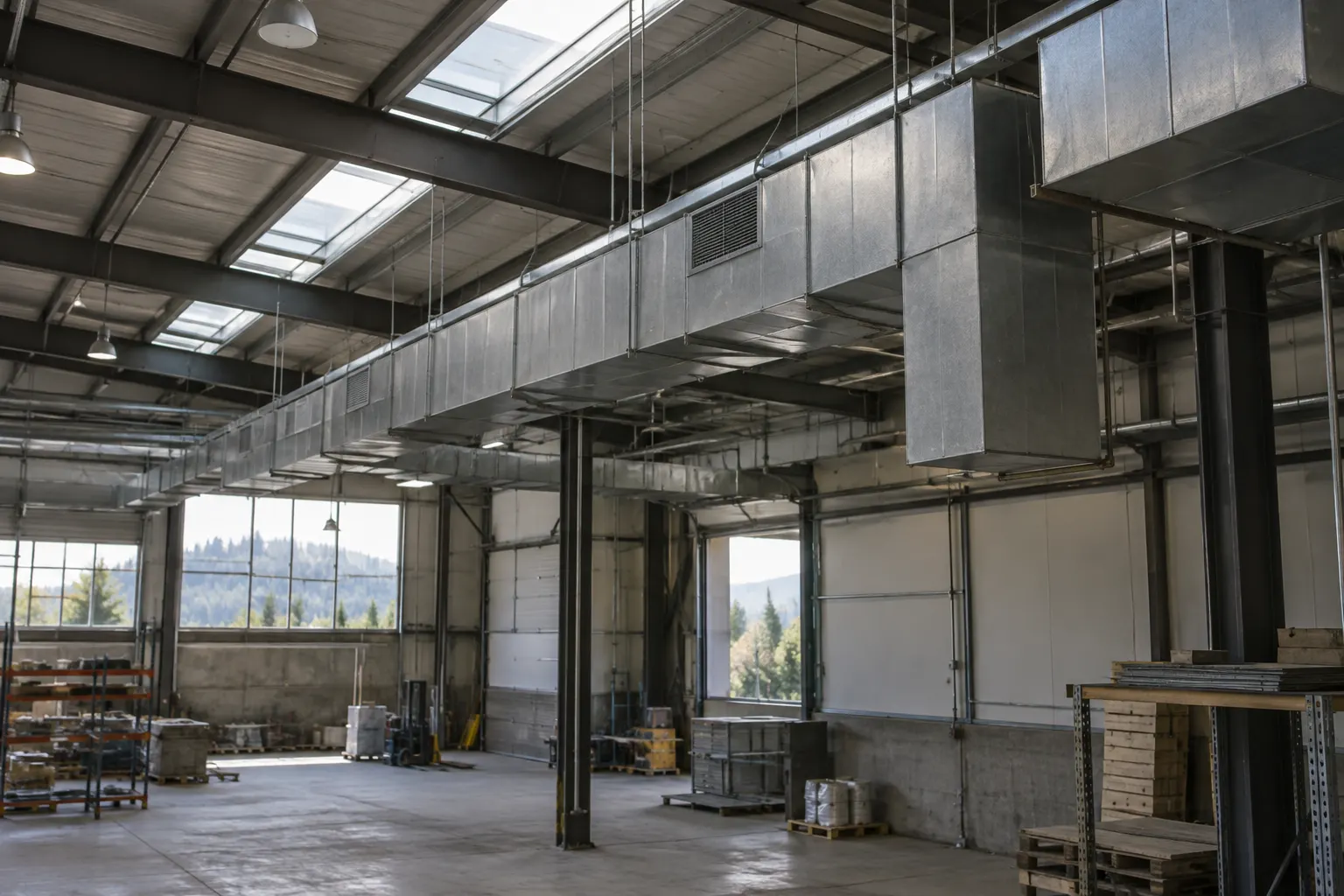
BC regulations and indoor air quality
WorkSafeBC OHS Regulation Section 4.78 requires employers to carry out preventive maintenance of ventilation equipment at regular intervals. That includes inspection of ductwork, dampers, fans, diffusers, and control systems. Section 4.79 requires investigation when workers report indoor air quality problems.
ASHRAE Standard 62.1 sets minimum ventilation rates for commercial buildings and specifically addresses odour as a component of acceptable indoor air quality. Keeping your ductwork clean is a practical part of meeting both the provincial regulation and the industry ventilation standard.
If your building has had persistent odour complaints, a ventilation assessment and cleaning gives you documented maintenance records for WorkSafeBC compliance and for your building’s indoor air quality file. For more on what a commercial cleaning report includes, see our guide to commercial duct cleaning reports.
Get it cleaned
Get a custom quote for your building’s ventilation system. We scope every job individually based on system size, contamination type, and access requirements. Our team is NADCA certified, follows the ACR standard for assessment, cleaning, and restoration, and carries $5M liability insurance.
Where we do this work
We clean industrial and commercial ventilation systems across BC, including Vancouver, Burnaby, Surrey, Richmond, Coquitlam, Port Coquitlam, Port Moody, New Westminster, North Vancouver, West Vancouver, Delta, Langley, White Rock, Maple Ridge, Pitt Meadows, Mission, Abbotsford, Chilliwack, Squamish, Whistler, Kamloops, Kelowna, Nanaimo, and Victoria, plus Alberta.