| What’s cleaned beyond ducts | AHUs, coils, diffusers, grilles, VAV boxes, drain pans |
| Standard | NADCA ACR (assessment, cleaning, restoration) |
| BC requirement | WorkSafeBC Section 4.78: preventive maintenance on ventilation |
| Project length | A few hours to months, depending on building size |
| Report included | Certificate of Completion with before-and-after photos |
| Price | Get a custom quote |
Key takeaways
- NADCA’s commercial cleaning checklist names air handling units, coils, condensate drains, diffusers, grilles, and VAV boxes alongside the ductwork.
- Cleaning only the ducts and skipping the air handling unit sends contaminants right back into the system within days.
- WorkSafeBC Section 4.78 requires a preventive maintenance program that includes cleaning air distribution systems when needed.
- A site walkthrough sets the full scope before work starts, and project length can vary from a few hours to six months or more.
Building managers hear “duct cleaning” and picture a crew vacuuming out the rectangular metal channels in the ceiling. That is part of it. A commercial HVAC system also has coils, air handling units, condensate drain pans, diffusers, grilles, VAV boxes, exhaust fans, and dampers that all collect contamination. Skip any of them and you are pushing dirty air through clean ducts.
This article walks through what a full-scope commercial HVAC cleaning covers, how often the different components need attention, and how to plan the work around your building’s operations.
What gets cleaned beyond the ducts
NADCA’s commercial cleaning checklist groups the work into several categories. Here are the main ones.
Air handling units
The air handling unit is where conditioned air enters the ductwork. It houses a blower, heating and cooling coils, filters, a condensate drain pan, and mixing chambers. All of those surfaces collect dust, biological growth, and debris that get pushed into the ductwork every time the fan runs.
NADCA requires that the contractor “clean all air handling units (AHU) internal surfaces, components and condensate collectors and drains.” That includes makeup air units (MAUs) and rooftop units (RTUs). We cover what NADCA ACR requires for each of these in a separate article.
Coils
Heating and cooling coils are where the most concentrated buildup happens. Dust bonds to the damp surface and hardens over time, restricting airflow and reducing heat transfer. According to the U.S. Department of Energy (as cited by NADCA), 25 to 40 percent of the energy used for heating or cooling is wasted. Dirty coils are a big part of that number in commercial buildings.
NADCA’s checklist requires the contractor to “clean all coils and related components, including evaporator fins.” The crew uses compressed air, HEPA vacuuming, and no-rinse evaporator foam to restore the coil surface without damaging the fins.
Diffusers, grilles, and VAV boxes
Air distribution devices are what your tenants actually see and feel. Dirty diffusers drop dust particles directly into occupied spaces. NADCA’s checklist includes “air distribution devices (registers, grilles & diffusers)” and “VAV, Dual duct boxes, blowers and exhaust fans” as separate line items. These get power wiped, air washed, and reinstalled. Removable components are taken outside for air washing before they go back in.
Condensate drain pans and drains
The drain pan sits under the cooling coil and collects moisture. If it clogs or grows biological material, that moisture backs up and either overflows into the mechanical room or recirculates as mould spores and odour through the ductwork. The checklist bundles drain pans with the AHU scope: condensate collectors and drains are cleaned as part of the air handling unit work.
How often each component needs attention
There is no single number that works for every building. NADCA does not publish a fixed interval for commercial systems. The approach starts with a visual assessment: open the system, look at the ductwork and components, and determine whether contamination has reached a level that calls for cleaning.
Some components tend to need attention sooner than others. Condensate drain pans in coastal BC pick up biological growth faster because of the damp climate. Coils in buildings near construction sites load up with fine particulate within months. Exhaust fans in multi-unit buildings with shared laundry or parking collect lint and vehicle exhaust residue year-round.
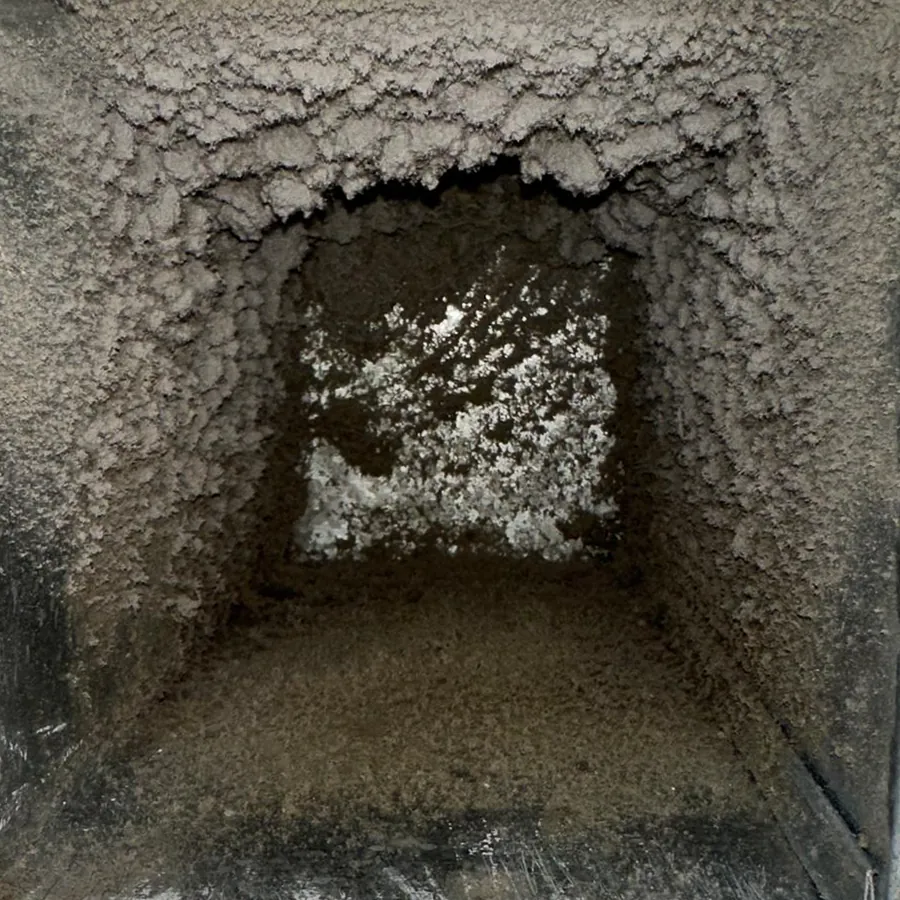
Air inside a commercial building is re-circulated 5 to 7 times per day, on average. Every pass through the system deposits a fraction of what it carries onto the coils, drain pan, and duct walls. The contamination is cumulative, and by the time you see dust at the diffusers, the system behind them has been building up for a while.

Pro tip: Ask your HVAC maintenance contractor to photograph the inside of one AHU and one duct section at the next filter change. That photo tells you more about timing than any rule of thumb.
WorkSafeBC backs this up. Section 4.78 of the OHS Regulation requires the owner of the ventilation system to maintain an effective preventive maintenance program that includes “the cleaning of air distribution systems, ducts and dampers when necessary to correct an indoor air quality deficiency.” The trigger is the condition of the system, not the calendar.
Planning the work
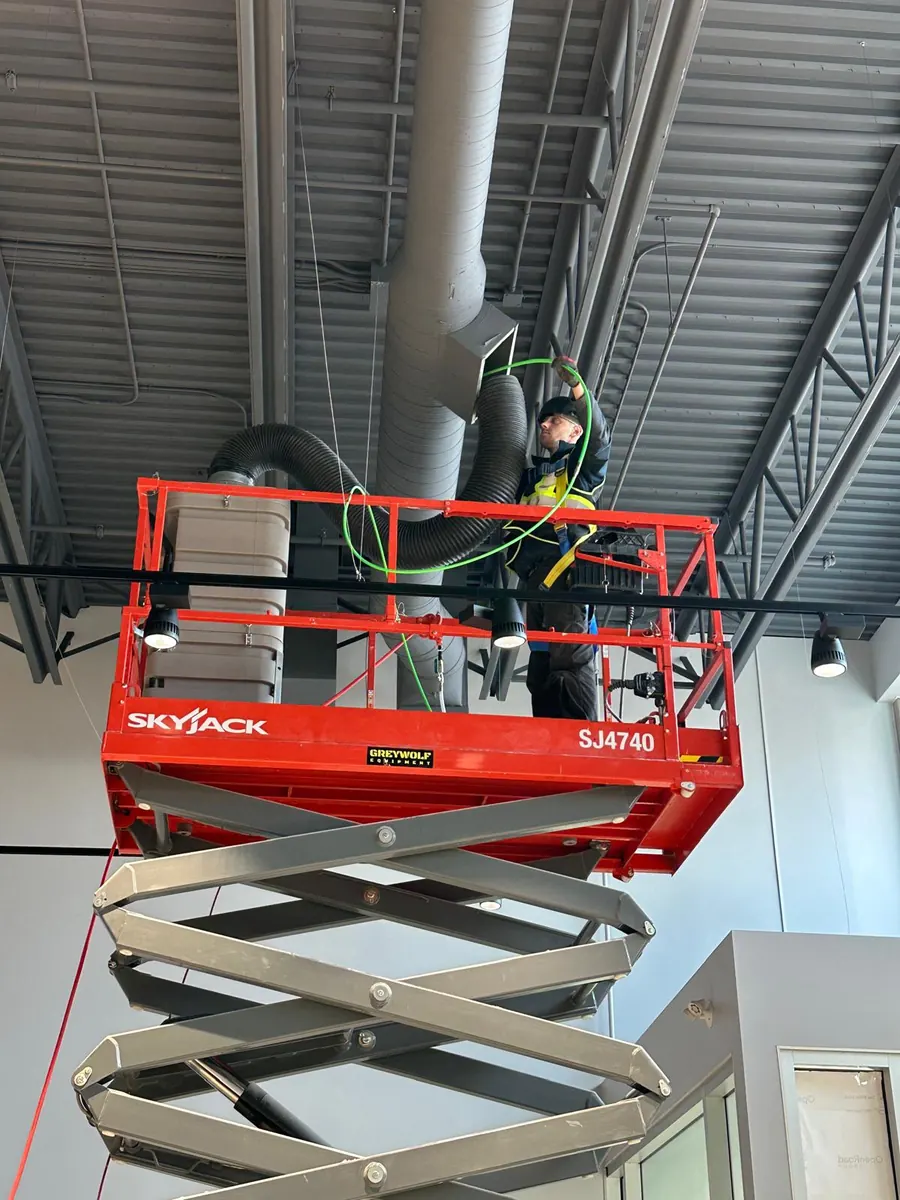
A full-scope commercial HVAC cleaning is a project, not a one-afternoon task. NADCA notes that project length can vary from a few hours to six months or more, depending on the size and complexity of the system. Getting the scope right up front saves time and avoids surprises mid-project.
Start with a site walkthrough
Before any quote, the contractor needs to see the mechanical rooms, the ductwork layout, the number and type of AHUs, and the building’s operating schedule. This walkthrough sets the scope: which systems need cleaning, which access points already exist, and where new service openings will be made and sealed to SMACNA and UL 181 standards.
Phase the work around building operations
The building does not need to close. The crew works during off-hours or sections off one zone at a time. The system stays under continuous negative pressure during cleaning, so dust does not migrate into occupied spaces. Schools and healthcare facilities time the work around holidays or low-occupancy windows. Office buildings often schedule after business hours or on weekends.
Heads-up: If a contractor quotes the job without walking the site, they are guessing at the scope. That usually means change orders later or components left out of the cleaning.
Know what documentation you will get
Every commercial job we do ends with a Certificate of Completion and a before-and-after photo report. These documents confirm which systems and areas were cleaned, the condition before the work started, and the state of the system after. Property managers use them for maintenance records, tenant communication, and regulatory files.
Get a free quote
If your building has not had a full HVAC cleaning, or if the last one covered only the ductwork, get a custom quote. We will walk the site, review the mechanical drawings, and scope the full system so you know exactly what is included before the work starts. We are NADCA certified with $5M liability insurance and 10+ years of commercial experience across BC.
Where we do this work
We clean commercial HVAC systems across BC, including Vancouver, Burnaby, Surrey, Richmond, Coquitlam, Port Coquitlam, Port Moody, New Westminster, North Vancouver, West Vancouver, Delta, Langley, White Rock, Maple Ridge, Pitt Meadows, Mission, Abbotsford, Chilliwack, Squamish, Whistler, Kamloops, Kelowna, Nanaimo, and Victoria, and in Alberta.