
| Main cause | Moisture in ductwork feeding mould growth |
| First check | Pull a supply register and look inside with a flashlight |
| Humidity target | Below 60 percent, ideally 30 to 50 percent (EPA) |
| Fix sequence | Source-removal cleaning first, then sanitize if odour remains |
| Price | Free quote |
Key takeaways
- That musty smell when your furnace or AC kicks on usually points to mould or bacteria growing on damp surfaces inside the ductwork.
- Mould needs moisture. In Metro Vancouver’s damp coastal climate, condensation inside ducts is common enough that growth builds up without any obvious leak or flood.
- Spraying a disinfectant over dirty ducts coats the problem. A proper source-removal cleaning comes first; sanitizing treats what remains.
- The EPA recommends keeping indoor relative humidity below 60 percent, ideally between 30 and 50 percent, to prevent mould growth.
If your supply vents give off a damp, earthy smell every time the furnace or air conditioner runs, something is growing inside the ductwork. The smell is usually mould, sometimes bacteria, feeding on moisture and the fine layer of dust that builds up in every duct system over time. BC’s wet coastal climate makes this more common here than in drier parts of the country. Condensation forms on cold duct surfaces, and if it sits long enough, mould follows.
What causes a mould smell from your vents
Mold can grow on virtually any organic material as long as moisture and oxygen are present (EPA). Inside your ductwork, dust, skin cells, and pet dander coat the interior surfaces and provide the organic material mould feeds on. The temperature stays comfortable year-round. The only variable is moisture, and in Metro Vancouver there is plenty of it.
In the Lower Mainland, moisture shows up in a few ways:
- Condensation on cold duct surfaces. When humid air passes through ducts that run through unconditioned spaces like crawl spaces or attics, the temperature difference causes water to form on the metal.
- AC coil drainage problems. If the condensate drain line on your air conditioner backs up or drips inside the duct system, that standing water feeds mould within days.
- Bathroom and kitchen moisture. Hot showers and cooking push water vapour into the return air. If humidity stays high long enough, moisture settles inside the ducts.
- Leaks or flooding. A roof leak, pipe burst, or basement flooding that reaches the ductwork introduces enough water to start growth quickly. Wet materials not dried within 24 to 48 hours can develop mould (EPA).
Your HVAC system recirculates indoor air 5 to 7 times per day on average (NADCA). Once mould takes hold in the ductwork, every cycle pushes spores and that musty smell into every room the system reaches.
Signs of mould in your ductwork
1. A musty or earthy smell when the system runs
The most telling sign. The EPA notes that you may suspect mould even if you cannot see it if the air smells musty. If the odour appears when the furnace or AC kicks on and fades when it shuts off, the source is somewhere in the duct run.
2. Dark patches inside ducts or around registers
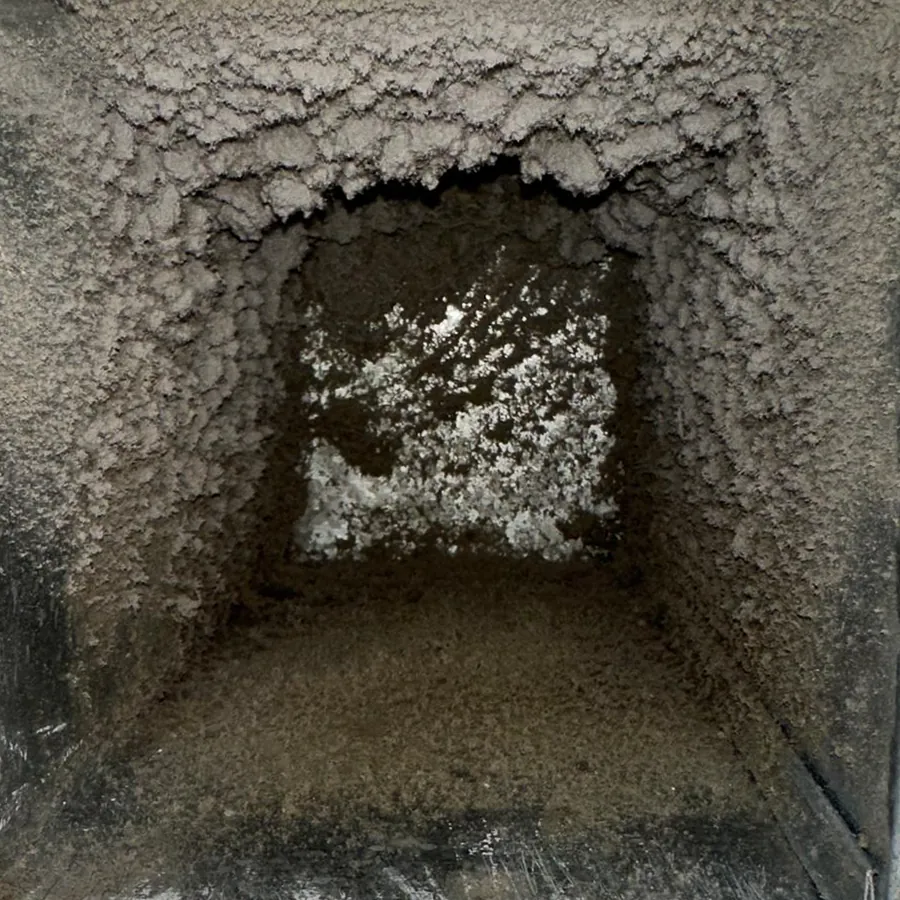
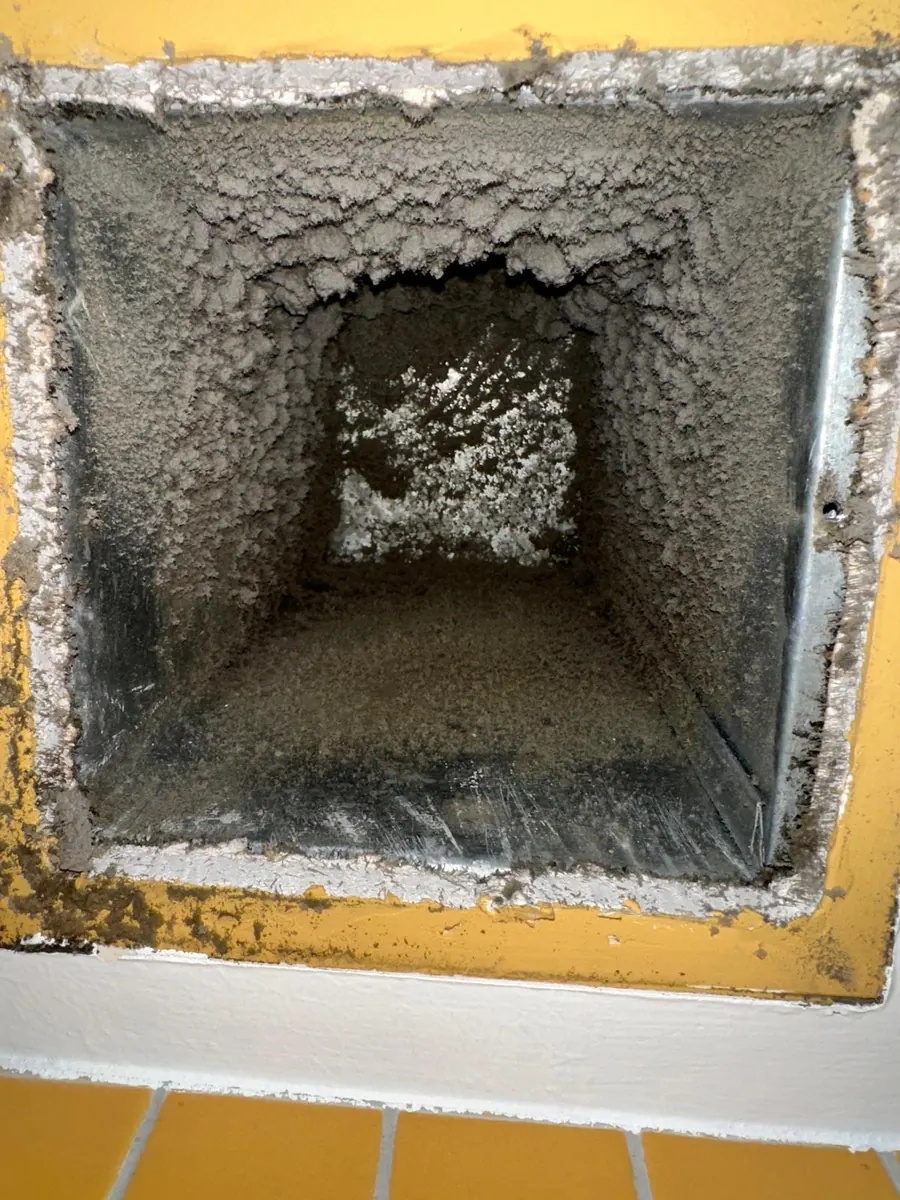
Pull a supply register off the wall and shine a flashlight into the duct opening. Dark discolouration on the metal, fuzzy patches, or a damp film all point to microbial growth.
3. Respiratory symptoms that worsen indoors
Molds can cause asthma attacks in people with asthma who are allergic to mold (EPA). Allergy and asthma sufferers, as well as young children and the elderly, tend to be more susceptible to contaminants circulating through the HVAC system (NADCA). If symptoms improve when you leave and return when the system runs, the ductwork is worth checking.
4. Visible condensation around vents
Water droplets on or around your supply registers mean humid air is condensing near the duct opening. Where there is persistent condensation, mould growth tends to follow.
Pro tip: Before calling anyone, unscrew a supply register and look inside with your phone flashlight. If you see dark streaks, fuzzy growth, or the musty smell gets stronger from inside the duct, you have a clear reason to book a cleaning.
Why the smell keeps coming back
Air fresheners, vent clips, and scented filters mask the odour without touching the growth. The EPA is direct on this point: if the conditions causing the mold growth in the first place are not corrected, mold growth will recur.
A service that skips source removal has the same problem. Some companies spray a fog into the ductwork without first cleaning out the contamination. The product lands on a layer of dust, debris, and mould, wets the surface, and dries. The growth continues underneath.
How we clean mould out of ductwork

We start with source-removal cleaning, the method NADCA sets as the standard. A HEPA-filtered negative-air vacuum connects to the main trunk while compressed-air tools agitate and dislodge contamination from every supply and return line, the furnace cabinet, the blower, and the evaporator coil. On a typical residential job, that process removes an average of 47 lbs of mold, dust, and debris.
Before we close the system, we invite you to see the final cleaning of the main trunk.
When sanitizing helps
Sanitizing is the second step, after the physical cleaning. If a musty odour remains once the contamination has been removed, we apply Benefect Decon 30 through the duct system as a fog. Benefect is Health Canada approved, plant-based, and used by mould remediation and restoration companies. It reduces bacteria, mould spores, and odours at the source.
The key word is “after.” A sanitizer applied to clean duct surfaces can reach and treat residual microbial contamination. A sanitizer applied over a layer of debris cannot. Customers in Vancouver with asthma or mould problems have found it really helps.
Heads-up: If a company offers to spray something into your ducts without doing a full source-removal cleaning first, the mould is likely still there under the coating. A proper cleaning is worth the reset.
Keeping moisture out of your ducts
Once the ductwork is clean and treated, the goal is to stop moisture from returning. The EPA recommends keeping indoor relative humidity below 60 percent, ideally between 30 and 50 percent. In a Vancouver-area home, that takes some attention during the wet months.
- Run bathroom exhaust fans during and after showers.
- Make sure your AC condensate drain line is clear and draining properly.
- If your home has an HRV, keep it maintained so it exchanges moisture effectively.
- Fix plumbing leaks promptly. Any wet surface should dry within 24 to 48 hours to prevent mould growth (EPA).
- Consider a dehumidifier in damp areas like basements or crawl spaces where ductwork runs.
Moisture should not be present in ducts (EPA). If you can control the humidity, you can keep the mould from coming back.
Book a cleaning
If your vents smell musty, the ductwork is holding onto something. A duct cleaning removes the contamination, and a Benefect treatment addresses whatever lingers. Get a free quote and we will walk you through what your system needs.
Where we do this work
Vancouver, North Vancouver, West Vancouver, Burnaby, Richmond, Surrey, Coquitlam, Port Coquitlam, Port Moody, New Westminster, Delta, Langley, White Rock, Maple Ridge, Pitt Meadows, Abbotsford.