
| Biggest concern | Fine particles (PM2.5) settle inside ductwork during smoke events |
| How smoke gets in | HVAC intake, open windows, gaps around doors and window frames |
| Filter during smoke | MERV 13 or higher (EPA, ASHRAE) |
| When to book | After smoke season, before you start the furnace for fall |
| Price | Free quote |
Key takeaways
- Wildfire smoke particles pass through a standard furnace filter, settle inside your ductwork, and recirculate every time the system runs.
- BC averaged 1,531 wildfires a year over the past decade. In 2023, fires burned through 2,840,104 hectares and smoke hung over Metro Vancouver for weeks.
- A MERV 13 filter catches most smoke particulate while the air is bad, but it does not clean what already settled on duct walls, the blower, and the coil.
- The best window for a post-smoke air duct cleaning is early fall, before you run the furnace full-time.
BC’s wildfire seasons have been getting worse. In 2023 alone, the province recorded 2,293 fires and burned through 2,840,104 hectares. Even when the nearest fire is hundreds of kilometres away, smoke drifts into Metro Vancouver and lingers. Wildfire season typically runs from early April to October, and during the worst stretches, that smoke finds its way into your home and your HVAC system.
How wildfire smoke gets into your ductwork
Smoke enters your home three ways (EPA):
- Through your HVAC system. If your furnace has an outdoor fresh air intake, it pulls in whatever the outside air carries. If your home has a heat recovery ventilator (HRV), its dedicated outdoor intake draws in smoke directly. See our guide to HRV cleaning for what to check on that unit.
- Through open windows and doors. Even briefly opening a door during a smoke event lets particulate inside.
- Through infiltration. Smoke seeps through gaps around closed windows, door frames, and any unsealed penetration in the building envelope.
Your furnace fan recirculates indoor air 5 to 7 times a day on average (NADCA). Every cycle moves smoke particles through the return, past the filter, through the furnace cabinet, and out every supply register. A standard furnace filter (MERV 8 or lower) catches larger dust but lets most fine smoke particulate through. A MERV 13 filter captures a much higher share of those particles, which is why the EPA recommends it as a starting point for wildfire smoke protection.
What smoke leaves behind in your ducts
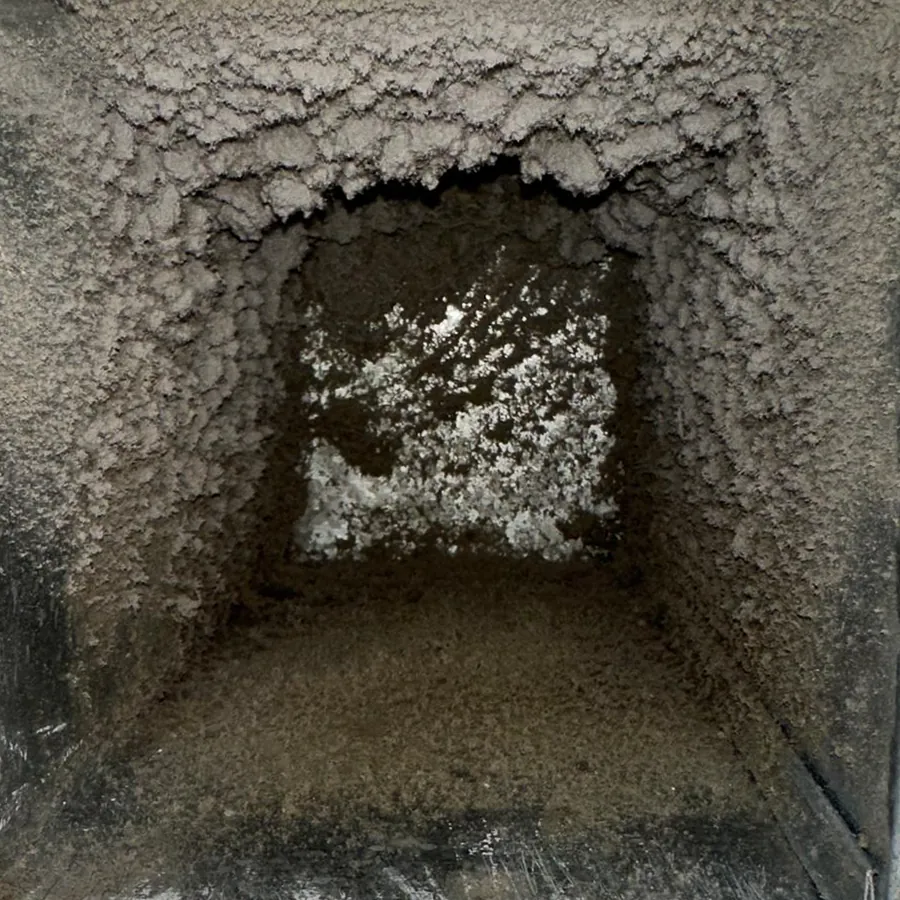
The main indoor air quality concern with wildfire smoke is PM2.5: fine particulate matter 2.5 micrometers or smaller (Health Canada). These particles are small enough to reach deep into your lungs and, in some cases, enter your bloodstream (EPA).
Inside your ductwork, PM2.5 and the larger soot particles that come with wildfire smoke settle on every surface the air touches. The interior walls of supply and return ducts, the blower fan blades, the evaporator coil fins, and the furnace heat exchanger all collect residue. When the heating season starts, the blower pushes air across those surfaces and carries the settled particulate back into your living space.
Pro tip: Pull a supply register off the wall and shine a flashlight into the duct. If the metal is coated in dark, fine residue, that gives you a good idea of what the rest of the system holds.
Signs your ducts need attention after a smoky summer
1. A stale or smoky smell when the furnace kicks on
If the first time you turn on the heat you notice a burnt or musty odour that was not there last spring, smoke residue in the ducts is a likely cause.
2. Dark residue around supply registers
Soot and fine ash carried through the ductwork can leave visible marks on the grilles and the wall or ceiling around them.
3. More dust than usual on surfaces
If you are wiping down furniture and shelves more often than before the smoke, settled particulate in the ductwork may be releasing every time the fan cycles.
4. New or worse respiratory symptoms
Allergy and asthma sufferers are more susceptible to the contaminants that circulate through a dirty HVAC system (NADCA). If breathing trouble appeared or worsened during or after smoke season, the ductwork is worth checking.
What a post-smoke duct cleaning covers
We clean every supply and return duct, the main trunk lines, the furnace cabinet, the blower, and the evaporator coil using HEPA-filtered negative-air vacuuming and compressed-air agitation. This is source-removal cleaning, the method NADCA recommends. On a typical residential job, that process removes an average of 47 lbs of mold, dust, and debris.
If a faint smoke odour remains after the physical cleaning, we apply Benefect Decon 30 through the system. Benefect is Health Canada approved, plant-based, and used in mould remediation and restoration work. It addresses the odour at its source.
Before we close the system, we invite you to see the final cleaning of the main trunk.
Heads-up: Waiting until midwinter to address smoke residue means the furnace has been pushing that particulate back into your air for months. The sooner you clean after smoke season, the less time those particles spend in your living space.
Your furnace filter during and after smoke season
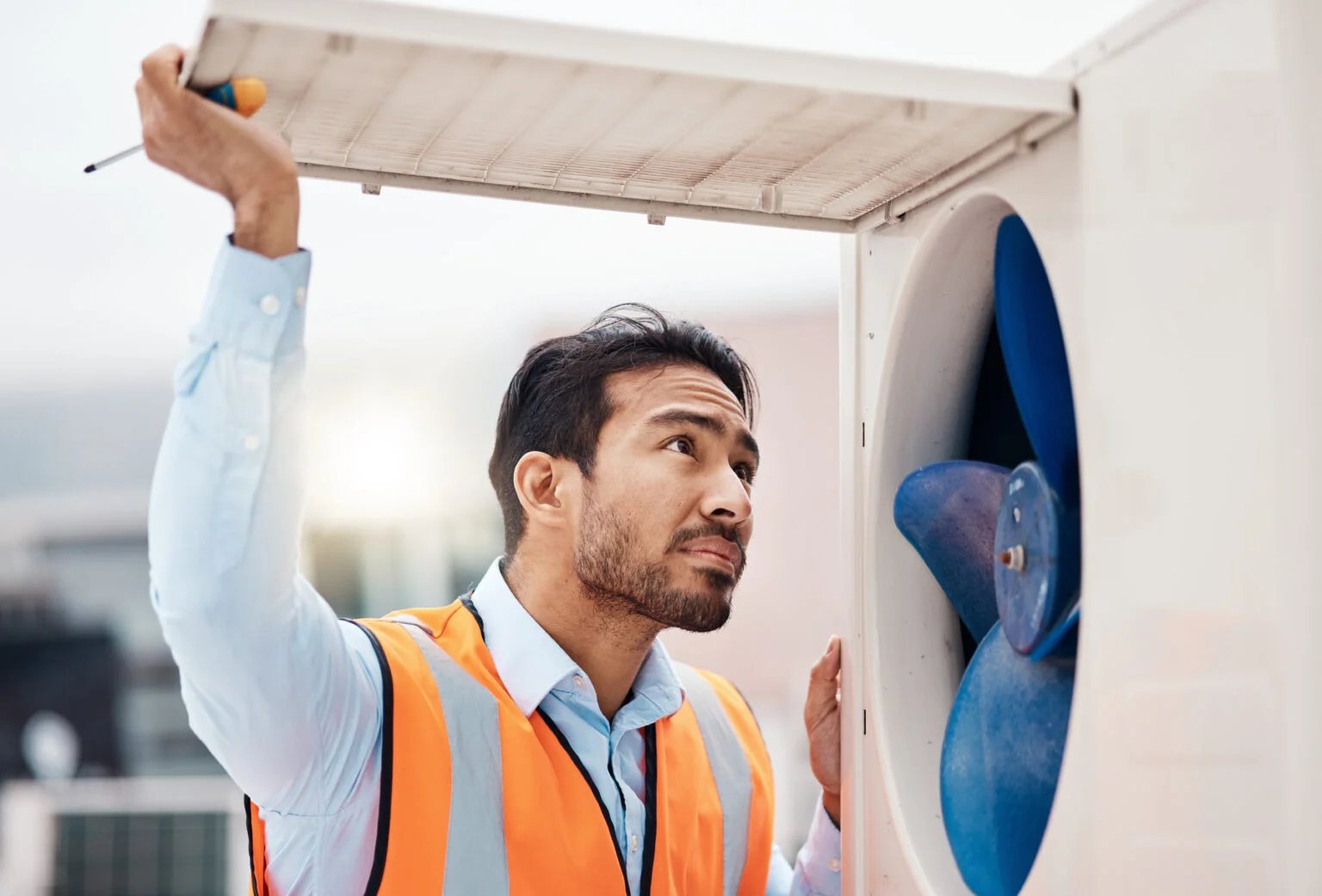
During active smoke events, switch your furnace fan from “auto” to “on” (continuous). This keeps air moving through the filter even when the system is not actively heating or cooling.
Upgrade to a MERV 13 filter if your system can handle one. The EPA recommends a MERV 13 “or as high a rating as your system fan and filter slot can accommodate.” Replace the filter more often during heavy smoke: a filter that normally lasts a few months may need swapping monthly during an extended smoke event.
A fresh filter helps going forward, but it cannot remove what already settled on duct walls, on the blower, and on the coil. A filter upgrade and a duct cleaning work together. The cleaning removes what has accumulated, and the better filter catches more of what comes in next.
Book a post-smoke cleaning
If your home sat through weeks of wildfire smoke, the ductwork is holding onto some of it. A post-smoke duct cleaning removes the particulate at its source, and a MERV 13 filter upgrade keeps the next round from settling the same way. Get a free quote and we will walk you through what your system needs.
Where we do this work
Vancouver, North Vancouver, West Vancouver, Burnaby, Richmond, Surrey, Coquitlam, Port Coquitlam, Port Moody, New Westminster, Delta, Langley, White Rock, Maple Ridge, Pitt Meadows, Abbotsford.