| What are they | Heating ducts cast into or below the concrete slab |
| Common in | Richmond-area ranchers and bungalows from the 1960s-70s |
| Key concern | Moisture from the high water table can enter the ducts |
| How often | Every 3 to 5 years (NADCA); sooner if you smell must |
| Time on site | 3 to 5 hours for most homes; under-slab jobs may run longer |
| Price | Free quote |
Key takeaways
- Under-slab ducts sit in or below the concrete floor, where Richmond’s high water table can introduce moisture and dust into your air supply. Your furnace recirculates that air 5 to 7 times per day.
- A musty smell when the furnace starts is the single most common sign these ducts need cleaning.
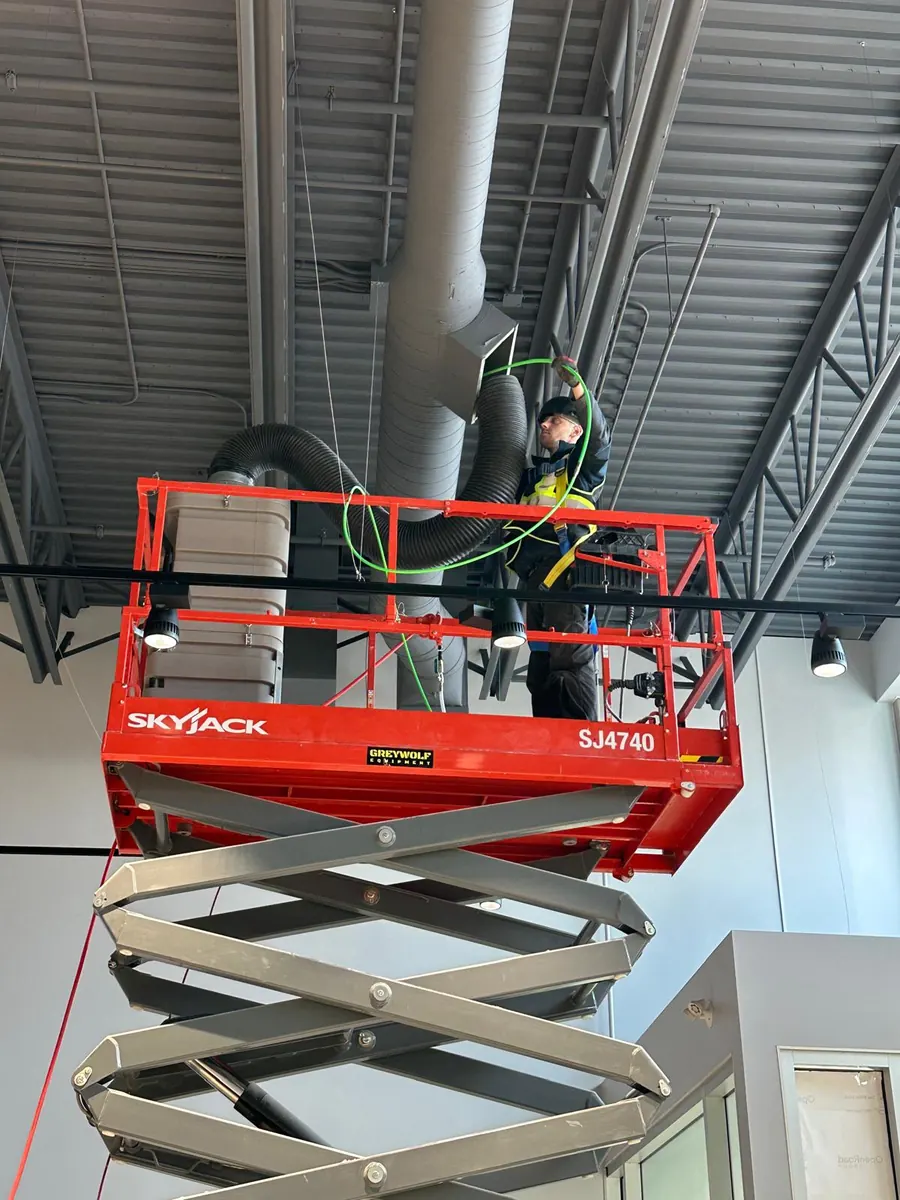
- NADCA-standard source removal cleaning works on under-slab ducts. A HEPA-filtered vacuum holds the system under negative pressure while debris is loosened and pulled out through the floor registers.
- You cannot easily replace under-slab ducts without breaking up the slab, so regular cleaning is the practical way to keep your indoor air quality healthy.
If you own a rancher or bungalow in Richmond, Steveston, Broadmoor, or Blundell, there is a good chance your home was built on a concrete slab with heating ducts running through or beneath it. These are called under-slab ducts (sometimes in-slab ducts), and they were a standard way to deliver perimeter heating in slab-on-grade homes built in the 1960s and 1970s across the Lower Mainland.
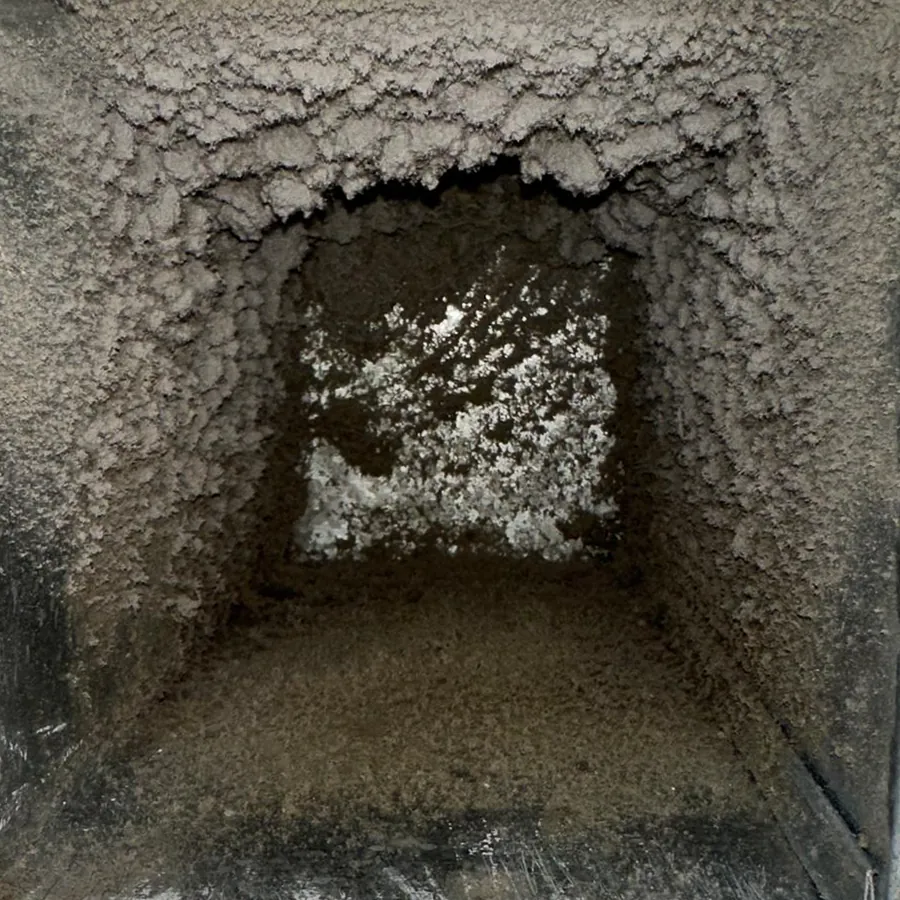
Richmond is built on islands within the floodplain of the Fraser River, at an average of just 1 metre above sea level. That geography means the water table sits close to the underside of every concrete slab in the area. For homes with ducts cast into that slab, moisture has had decades to work its way in. The result: sediment, dust, and sometimes mould spores in your heating supply, pushed through every room each time the furnace runs.

Signs your under-slab ducts need cleaning
1. Musty smell at startup
You turn the furnace on in October and the house smells damp or earthy for the first few minutes. That is moisture and organic material in the ducts heating up and releasing odour into the air stream.
2. Dust around the floor registers
If you keep finding fine dust or grit around your floor vents even after vacuuming, the ducts below the slab are likely holding sediment that gets stirred up when the blower runs.
3. Condensation or staining near the registers
Visible moisture, rust marks, or mineral staining on the register frames or the surrounding floor can mean water has been sitting in the duct system.
4. Allergy symptoms that ease away from home
Your furnace recirculates indoor air 5 to 7 times per day. If the ducts hold dust, mould spores, or fine sediment, those particles ride the air stream into every room. Symptoms that improve when you leave the house and return when you come home can point to the duct system.
Pro tip: Pull up a floor register and look into the duct with a flashlight. If you see standing water, damp sediment, or a visible dust line, the system needs professional attention. That check takes two minutes and costs nothing.
How we clean under-slab ducts
The approach is the same NADCA source removal method we use on any residential duct system, adapted for the access constraints of a slab-on-grade home.
Step 1: Access through floor registers
We remove every floor register to expose the duct openings. In a slab-on-grade home, these registers are the primary access points because the ducts themselves are encased in concrete.
Step 2: Negative pressure with HEPA filtration
A HEPA-filtered vacuum is connected to the main trunk line and holds the entire system under continuous negative pressure. That means any debris loosened during cleaning gets pulled toward the vacuum and trapped in the HEPA filter rather than blowing into your living space.
Step 3: Agitation and extraction
We work through each register opening, using compressed air and mechanical tools to dislodge dust, sediment, and debris from the duct walls. The negative pressure pulls everything toward the collection point.
Step 4: Furnace cleaning
The furnace itself is part of the system. We clean the blower assembly, heat exchanger surfaces, and the supply plenum. Skipping the furnace means dust left inside it gets blown right back into the freshly cleaned ducts, so we always include it.
Step 5: Reassembly and walkthrough
We reinstall the registers, run the system, and invite you to check the airflow at each vent. Before we close up, we walk through what we found and whether anything needs follow-up.
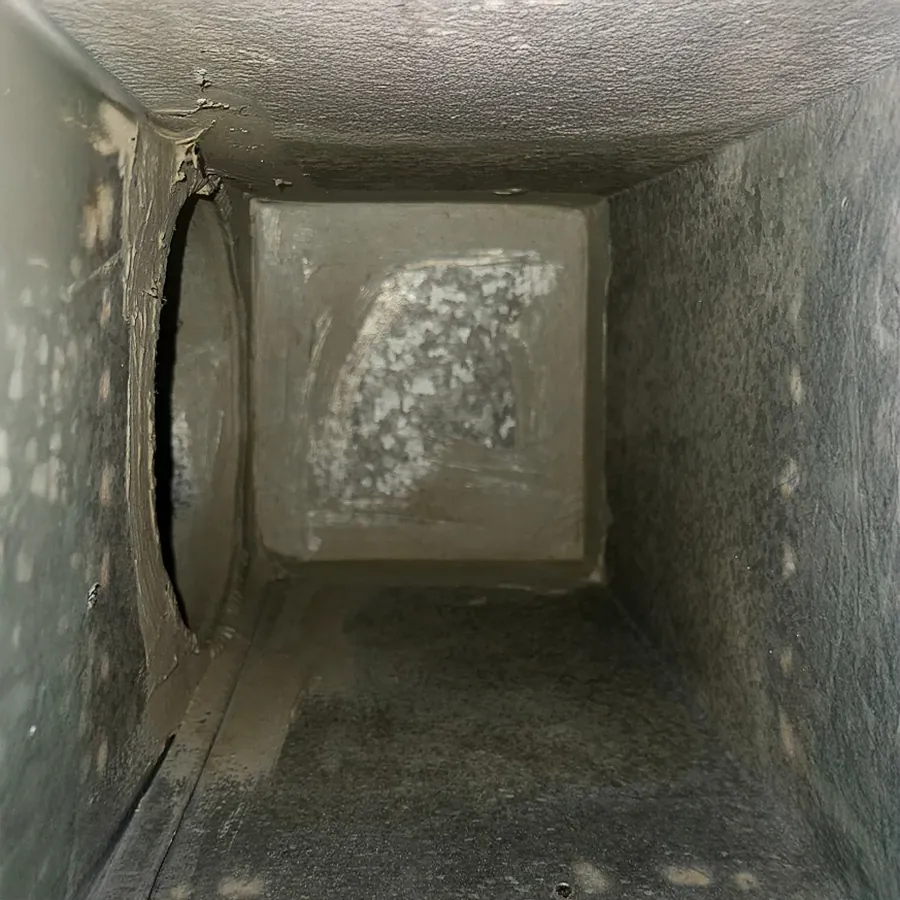
Heads-up: If your under-slab ducts have standing water that returns after cleaning, the issue is water intrusion, not just dirty ducts. We will flag that during the job. You may need a plumber or drainage specialist to address the water source before the next cleaning cycle.
When to clean and what to expect
NADCA recommends a duct cleaning every 3 to 5 years for a typical home. Under-slab systems in a high-water-table area like Richmond often land at the shorter end of that range, especially with pets, renovations, or a history of musty odours.
A standard residential duct cleaning takes 3 to 5 hours for most homes. Under-slab jobs can run a bit longer because the ducts are harder to reach and sediment buildup tends to be heavier than in exposed ductwork.
Across our residential work, we remove an average of 47 lbs of mold, dust, and debris per home. In under-slab systems that have gone a long time between cleanings, the total can be higher because sediment and moisture residue add weight.
Get a free quote
If you own a slab-on-grade home in Richmond or anywhere in Metro Vancouver and you have noticed musty air, dust around your floor registers, or you simply have not had the ducts cleaned in years, get a free quote. We will walk through the scope with you, explain what to expect, and schedule the work at a time that suits your household.
We are NADCA certified, and we have served 500+ Metro Vancouver homes.
Where we do this work
Vancouver, North Vancouver, West Vancouver, Burnaby, Richmond, Surrey, Coquitlam, Port Coquitlam, Port Moody, New Westminster, Delta, Langley, White Rock, Maple Ridge, Pitt Meadows, Abbotsford.