
| What the coil does | Absorbs heat and moisture from indoor air |
| What coats it | Dust, pollen, pet dander, organic matter |
| Airflow impact | Restricted; system takes longer to cool each room |
| Energy impact | Dirty coils use up to 30% more energy (NADCA) |
| DIY-able? | Filter swap yes, coil cleaning no |
| Price | Free quote |
Key takeaways
- NADCA says a dirty evaporator coil takes longer to cool a space, restricts airflow delivery and inhibits moisture removal from the air. That single component affects every room in the house.
- NRCan says air conditioners become inefficient when the inside coil is dirty. Cleaning the coil restores the efficiency.
- On BC’s damp coast, the coil collects moisture year-round. Organic matter sticks to that wet surface even when the AC is off.
- On average, a residential duct and coil cleaning removes 47 lbs of mold, dust, and debris per home.
Your furnace filter catches the big particles. The evaporator coil catches everything else. It sits inside the air handler or above the furnace, a dense grid of aluminium fins wrapped around copper refrigerant tubing. As your blower pushes warm indoor air across those fins, the refrigerant absorbs the heat and the cold surface pulls moisture out of the air. That is how your home cools and dehumidifies at the same time. In Metro Vancouver, where humidity stays high for most of the year, this coil works hard and it collects a lot.
How a dirty coil cuts your cooling
The coil’s job depends on air moving freely across every fin. When dust, pet dander, pollen and organic matter build up on those surfaces, two things happen.
First, airflow drops. NADCA says a dirty evaporator coil “takes longer to cool a space, restricts the amount of air flow delivered, and inhibits water removal from the air.” Less air across the coil means less heat absorbed per cycle, so the system runs longer to reach your thermostat setting.
Second, moisture problems get worse. The coil is supposed to condense humidity out of the air and send it down the condensate drain pan. A coated coil holds that moisture against the dust layer instead of draining it. NADCA notes that dirty evaporator coils create conditions that “can lead to strange smells, microbial growth, and even affected building materials.”
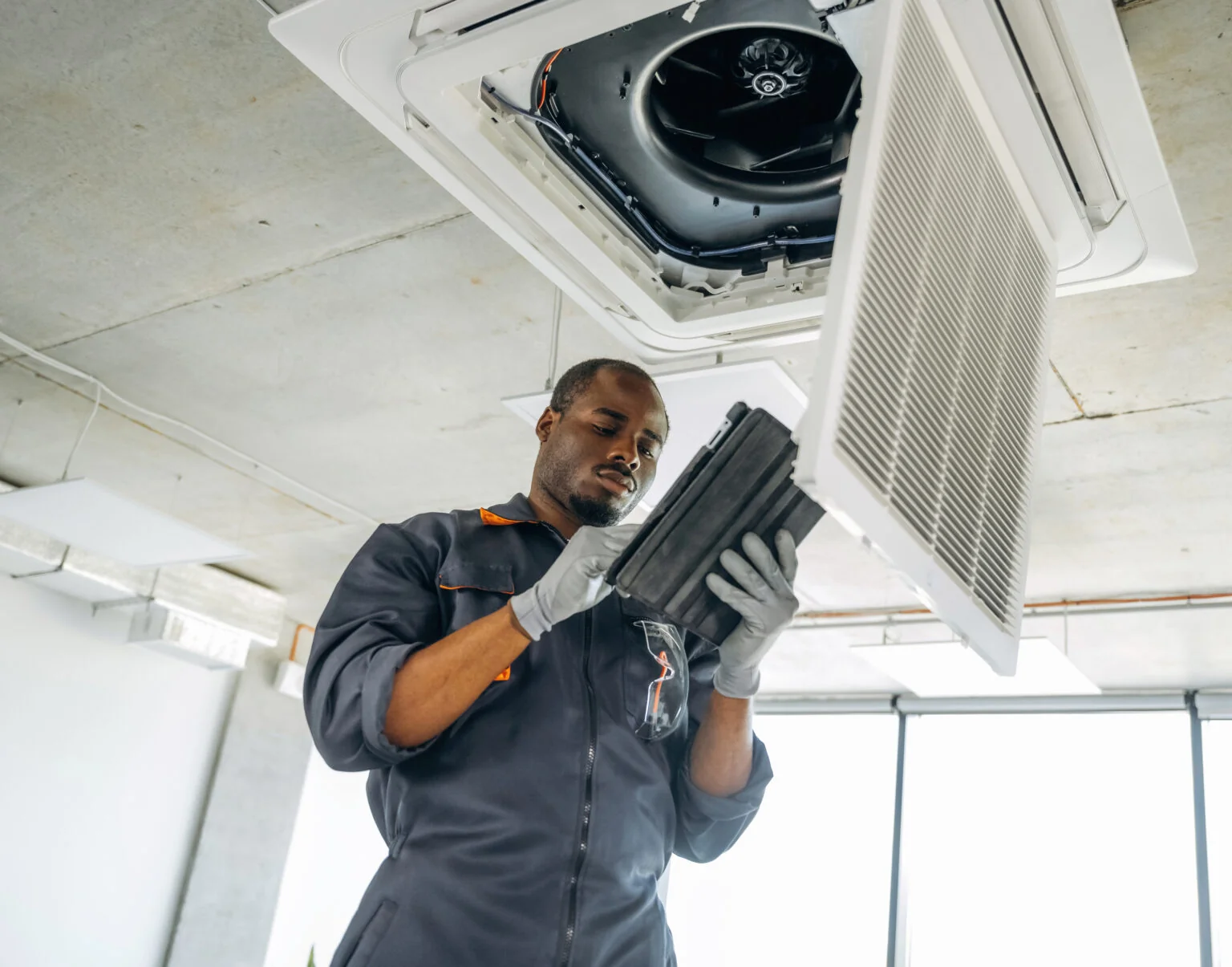
NRCan puts it plainly: air conditioners “become inefficient when the inside coil is dirty, when the airways on the outdoor condenser unit are blocked and when the refrigerant level runs low.” Two of those three are maintenance problems you can fix with a cleaning.
The energy cost adds up. NADCA’s homeowner site notes that dirty HVAC systems, especially dirty coils, use up to 30% more energy. After a full cleaning, the difference shows: a 26% drop in energy use after duct cleaning and $1,020 saved between services on heating and cooling.
Signs your coil needs cleaning
1. Weak airflow from the registers
The blower motor pushes the same volume of air whether the coil is clean or clogged. When the fins are coated, that air has nowhere to go. You feel less coming out of every vent, and the rooms farthest from the air handler cool last or not at all.
2. The house takes too long to reach the set temperature
If the AC used to bring the house down to your thermostat setting by mid-afternoon and now runs until evening, a dirty coil is a likely cause. The refrigerant is not absorbing enough heat per pass, so the compressor stays on longer.
3. Musty smell when the system runs
The evaporator coil is a cold, wet surface in a dark enclosure. Organic matter that lands on it does not dry out. In BC’s coastal humidity, mould can develop on a dirty coil within a season. When the blower kicks on, you smell it in every room. Indoor air quality suffers well before the smell gets obvious, because mould spores travel through the ductwork on every air cycle.
4. Dust returns to vent covers within days of wiping
Your HVAC system recirculates indoor air 5 to 7 times per day. Dust and spores loosened from a dirty coil get blown into every room with each cycle. Wiping the vent covers does not fix what is happening inside the system.
Pro tip: Pull a floor register and shine your phone flashlight into the duct opening. If you see matted grey dust past the first few inches, the buildup likely runs through the whole system, and the coil sitting upstream is collecting the same material plus moisture.
Why the BC coast makes coil fouling worse
Most guides about AC coil cleaning assume a dry summer climate where the system runs hard for a few months and sits idle the rest of the year. The Lower Mainland is different. Humidity stays high through fall, winter and spring, and the coil surface stays damp whenever the system moves air, even in heating mode. That year-round moisture means organic matter sticks to the fins and stays there.
Add wildfire smoke season, which deposits fine particulates into the ductwork, and the coil ends up with a layer of sticky, biologically active residue that a filter change alone cannot fix.
What professional coil cleaning includes
NADCA recommends cleaning all components of the HVAC system together. Failure to clean all components “can result in recontamination of the entire system.” That means the coil, condensate drain pan, blower motor, air ducts, registers and the air handler interior all get cleaned in one visit.
We clean using source removal: HEPA-filtered negative-air vacuuming with compressed-air agitation across every surface. The coil fins are cleaned with no-rinse evaporator foam where appropriate, and the drain pan is cleared so moisture drains properly again.
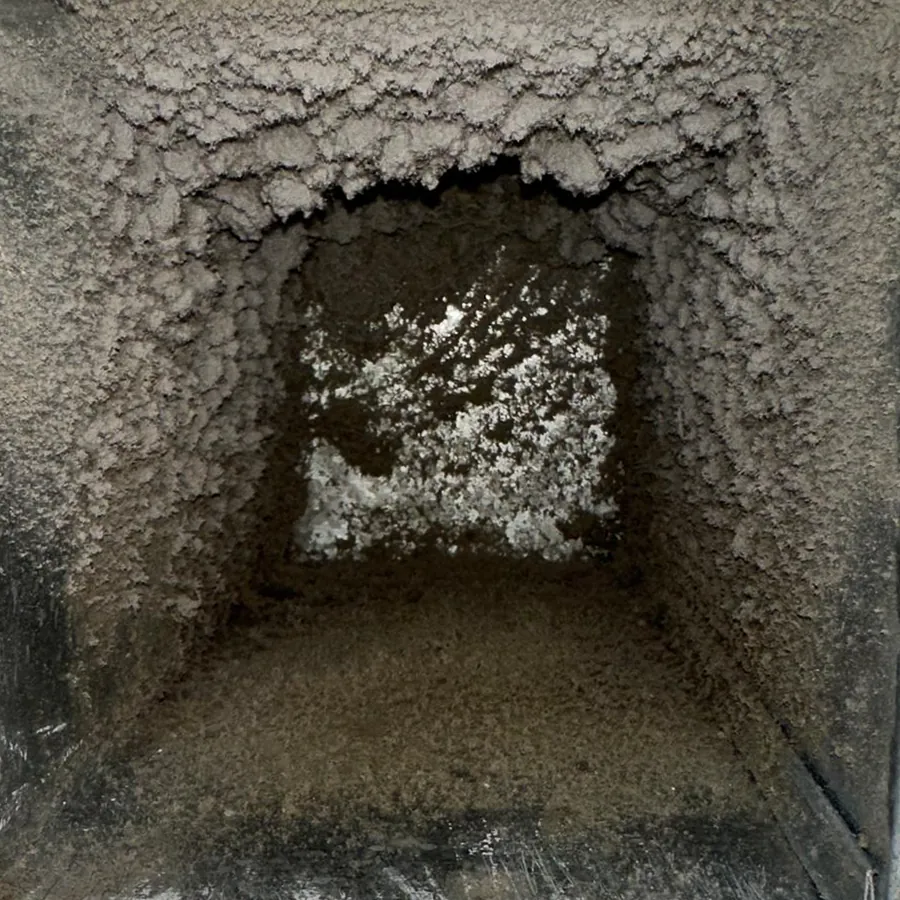
If mould is present on the coil or in the ductwork, we follow the cleaning with Benefect Decon 30, a Health Canada approved, plant-based disinfectant used in mould remediation and in our hospital and clinic work.
Before closing the system, we invite you to view the final cleaning of the main trunk. The technician does a final visual check, secures all access points and reviews the completed service with you.
Heads-up: Running AC through a coil that has visible buildup does not burn off the debris. The moisture on the coil surface keeps that material stuck. Each cooling season adds another layer, and the airflow and energy penalty compounds until the coil is professionally cleaned.
Get a quote
Get a free quote. We ask a few questions about your home, then send your quote by text and email. AirCare Systems BC is NADCA certified with $5M liability insurance and 100+ Google reviews at a 5.0 rating.
Where we do this work
AirCare Systems BC cleans residential ductwork and AC coils across Metro Vancouver and the Fraser Valley: Vancouver, North Vancouver, West Vancouver, Burnaby, Richmond, Surrey, Coquitlam, Port Coquitlam, Port Moody, New Westminster, Delta, Langley, White Rock, Maple Ridge, Pitt Meadows and Abbotsford.