
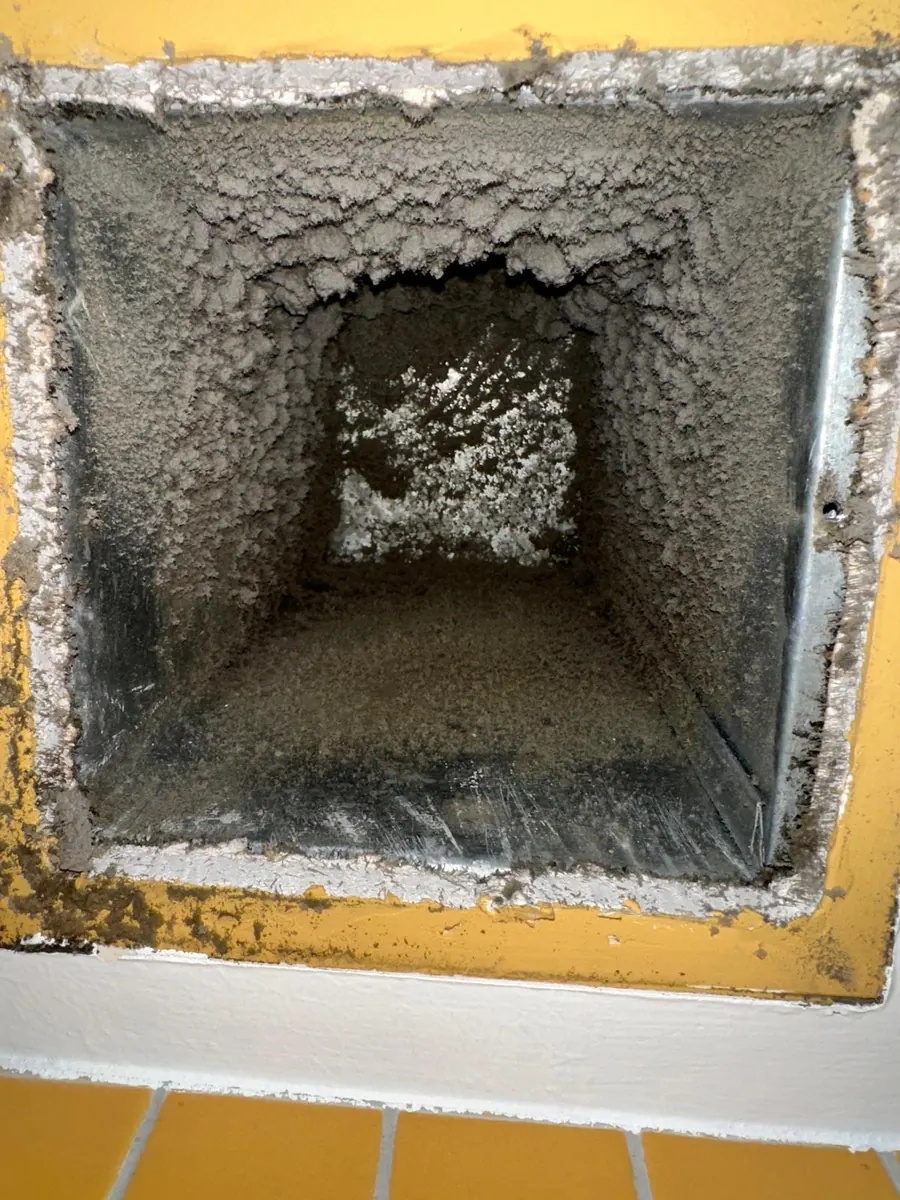
| Purpose | Pulls moisture and odours out of your bathroom |
| Signs it needs cleaning | Foggy mirror lingers, dust on the grille, fan sounds louder than usual |
| Target humidity | 30% to 50% indoors (Health Canada) |
| DIY-able? | Partly: you can vacuum the grille, but the motor and ductwork need professional cleaning |
| Safe to wait? | Every shower adds moisture a weak fan cannot remove |
| Price | Free quote |
Key takeaways
- A clogged bathroom fan cannot clear the steam from your shower. That moisture stays in the room and settles on walls, ceilings, and grout where mould takes hold.
- Health Canada recommends indoor humidity between 30% and 50%. A weak exhaust fan makes that target hard to hit in any bathroom.
- You can vacuum the grille yourself, but dust also collects on the fan motor, housing, and the ductwork behind the wall. Those parts need professional cleaning.
- We clean bathroom exhaust fans as part of a residential duct and furnace cleaning, or you can ask about fan cleaning on its own.
Your bathroom exhaust fan has one job: pull warm, moist air out of the room and send it through a short duct to the outside of your home. It is the main thing keeping condensation off your walls and ceiling in a space that gets soaked with steam every day. In BC’s damp coastal climate, bathrooms already start with higher ambient humidity for much of the year, and every hot shower adds a surge on top of that. Once dust and lint pack the fan blades, though, the fan spins without moving much air, and that is when moisture starts building up.
Signs your bathroom fan needs cleaning
1. The mirror stays foggy long after your shower
If the bathroom mirror is still fogged up well after you shut off the water, the fan is not moving enough air. A clean fan should clear visible steam within a few minutes of running. When steam lingers, the fan has lost a significant amount of its airflow capacity.
2. Dust is visible on the grille
Pull the grille cover down and look at the slats. If they are caked with dust, that same buildup is packed around the fan blades and motor too. A thick layer on the grille means the whole unit needs attention. This is the easiest sign to check, and most people are surprised how much dust builds up there.
3. The fan sounds louder or rattles
Dust on the fan blades throws them off balance. The motor works harder and makes more noise, but it moves less air. If your fan sounds different than it used to, or you hear a rattle when it kicks on, the blades are almost certainly dirty.

How weak exhaust leads to moisture damage
When the fan cannot pull moist air out quickly enough, that moisture has nowhere to go. It condenses on the coldest surfaces first: mirrors, windows, exterior walls, ceiling corners. Health Canada recommends keeping indoor relative humidity between 30% and 50%. A bathroom with a weak fan can blow past that range after a single shower, especially in a small space with the door closed.
Surfaces that stay damp become ideal ground for mould. The EPA notes that mould can begin growing on wet materials within 24 to 48 hours if they are not dried. In a bathroom where the fan runs but barely moves air, the ceiling, grout lines, and silicone caulking stay damp long enough for mould to establish itself.
Over time the damage goes beyond cosmetic. Paint peels. Grout darkens and crumbles. Caulking grows black spots that scrubbing cannot fully remove. In older homes, persistent moisture can reach the drywall and framing behind the wall. By that point, a simple fan cleaning would have been the far cheaper fix.
Heads-up: A bathroom fan that vents into the attic instead of outdoors pushes warm, moist air straight into your roof cavity. Health Canada advises that kitchen and bathroom fans should all vent to the outdoors. If your duct ends in the attic, get the termination fixed before moisture damages the sheathing.
What professional bathroom fan cleaning covers
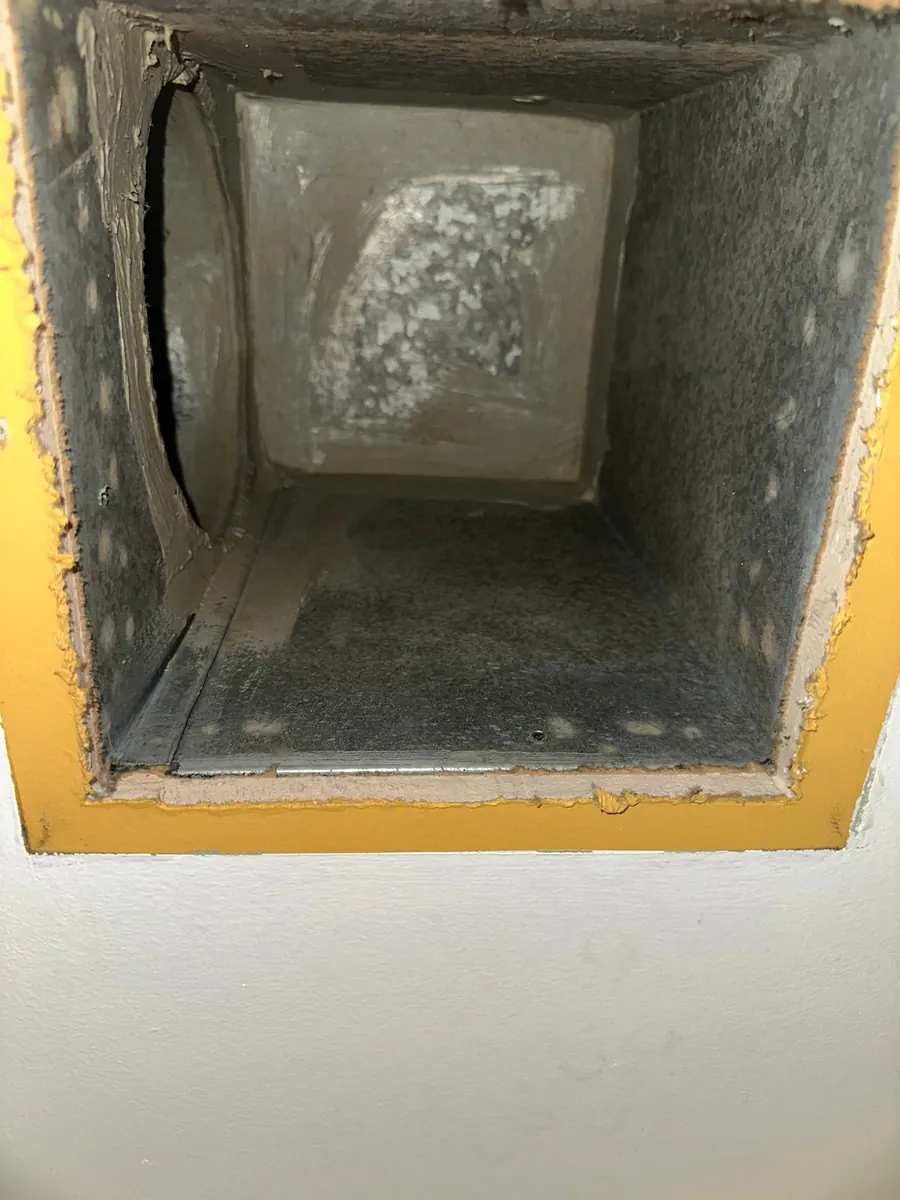
We remove the grille cover and the fan assembly from the housing. The fan blades, motor housing, and interior surfaces get cleaned of all dust, lint, and debris. We also check the duct connection, the damper flap (the part that should swing open when the fan runs and close when it stops), and the duct itself for blockages or disconnections.
AirCare is NADCA certified, so we follow the same source-removal cleaning standards on your bathroom fan that we use on the rest of the duct system.
If there is any sign of mould inside the housing or ductwork, we can follow up with Benefect Decon 30, a Health Canada approved, plant-based disinfectant that targets mould spores and bacteria. It is used by mould remediation companies and in our hospital and clinic work, and it works well for smaller residential spots like a bathroom fan housing.
Pro tip: Before calling, hold a single-ply tissue up to the grille while the fan runs. If the tissue does not pull toward the grille and hold there, the fan has lost real airflow. That is a quick, free test you can do right now.
Health Canada also recommends letting the fan run for a few minutes after you finish showering. That extra run time clears the last of the steam and helps keep humidity in the 30% to 50% range where mould has a harder time getting started.
When to get it done
If you are already due for a duct cleaning, we can handle the bathroom fan at the same time. That is the most practical way to get it done. If your ducts were cleaned recently but the bathroom still has moisture issues or a persistent mouldy smell, the fan may be the missing piece.
Get a free quote and we will let you know what makes sense for your home.
If you have noticed a musty smell from other vents in the house, that could point to mould deeper in the duct system. Our article on mould smell from vents covers what to look for and what we do about it.
Where we do this work
Vancouver, North Vancouver, West Vancouver, Burnaby, Richmond, Surrey, Coquitlam, Port Coquitlam, Port Moody, New Westminster, Delta, Langley, White Rock, Maple Ridge, Pitt Meadows, and Abbotsford.