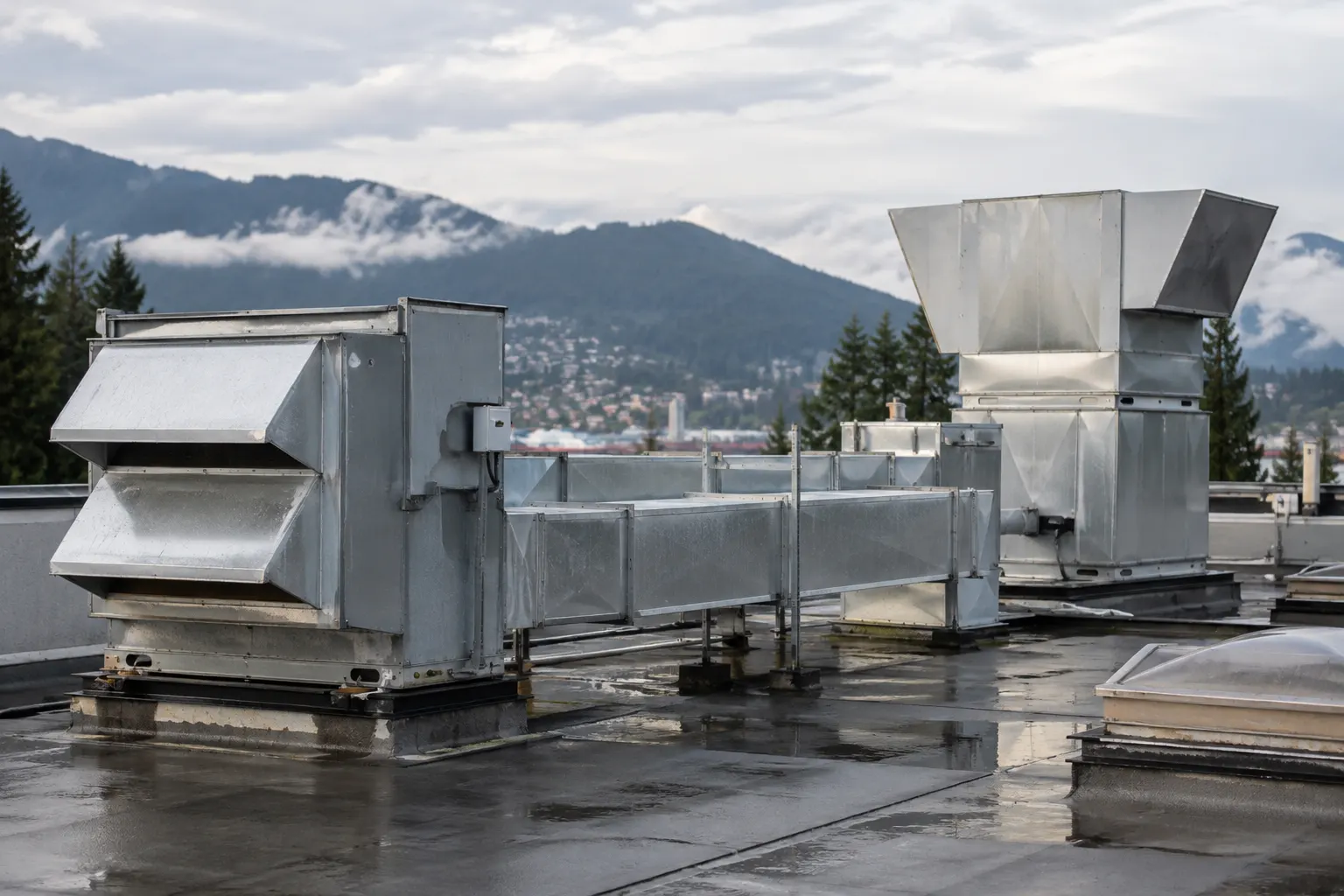
| Systems covered | Exhaust ducts, make-up air units (MAUs), rooftop units (RTUs) |
| Standard | NADCA ACR (assessment, cleaning, restoration) |
| BC requirement | WorkSafeBC Section 4.78: preventive maintenance on ventilation |
| Air recirculation | 5 to 7 times per day through the system |
| Price | Get a custom quote |
Key takeaways
- Exhaust and make-up air systems accumulate the same dust, debris, and biological growth as supply ductwork, but they tend to get overlooked because they sit on rooftops or in mechanical rooms where nobody looks at them.
- A contaminated make-up air unit pushes dirty outdoor air into the building before it reaches a single filter downstream. A clogged exhaust system fails to remove stale air. When both sides are dirty, indoor air quality drops and energy costs climb.
- WorkSafeBC Section 4.78 requires preventive maintenance on all ventilation system components. Exhaust and make-up air are part of that obligation.
Every commercial building circulates air through three connected systems. Supply ductwork delivers conditioned air to occupied spaces. Exhaust ductwork removes stale, humid, or contaminated air. Make-up air units and rooftop units bring in fresh outdoor air, heat or cool it, and push it into the building. For a broader look at the full HVAC cleaning scope, see our overview of commercial duct cleaning in BC. This article is about the exhaust and make-up air side, and why those systems need the same attention as the supply runs.
On BC’s damp coast, moisture enters exhaust runs through bathroom fans and general exhaust openings, and mould follows. Summer wildfire smoke deposits fine particulate that clings to the internal surfaces of make-up air units. A building that recirculates air 5 to 7 times per day through contaminated systems pushes those contaminants to every floor and suite.
What exhaust and make-up air systems do
Exhaust systems
Exhaust fans and their connected ductwork pull air out of the building. General exhaust handles washrooms, janitor closets, storage rooms, and parking levels. Bathroom exhaust fans in multi-unit buildings remove moisture and odours from individual suites. The ductwork runs vertically or horizontally to a rooftop or exterior wall termination.
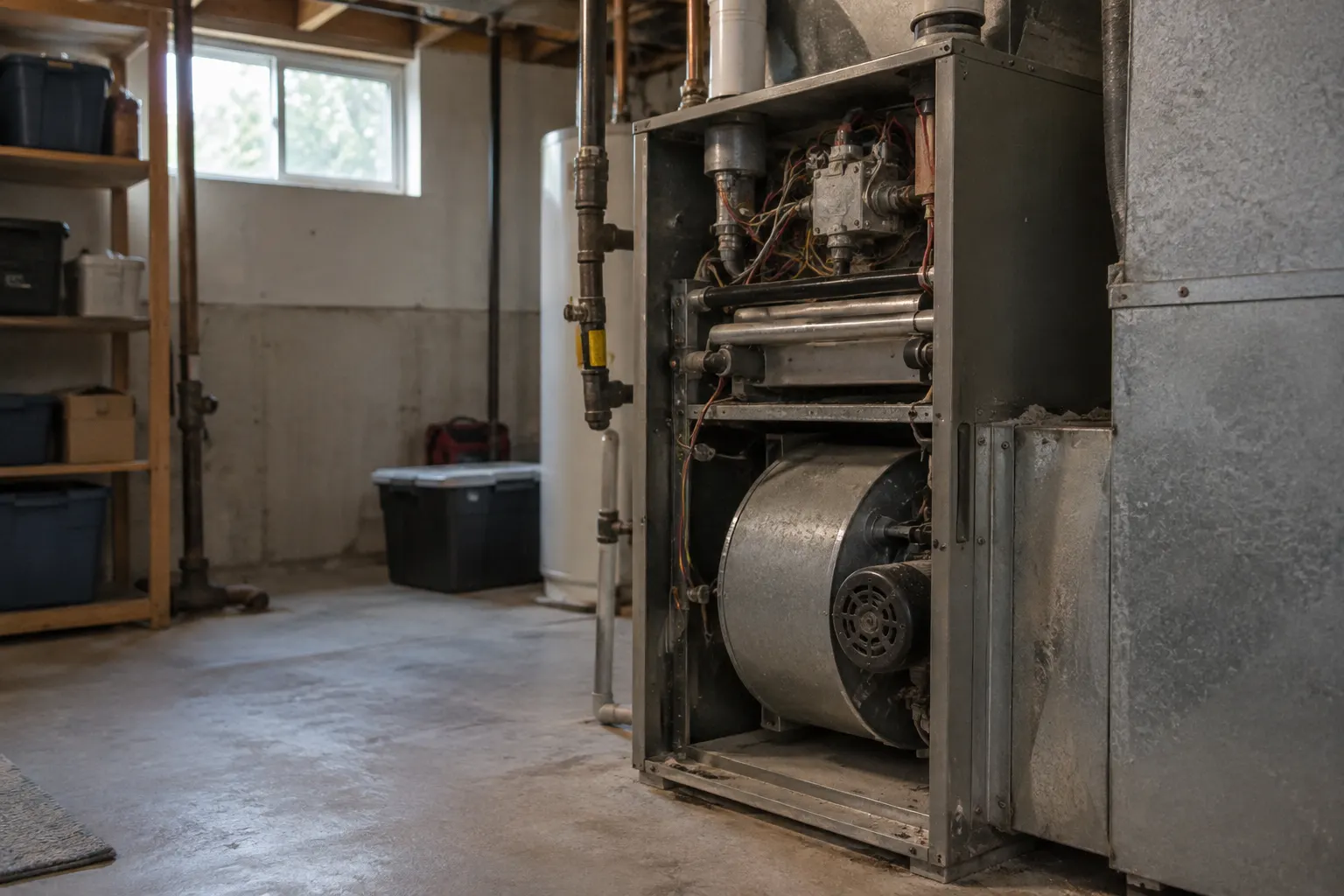
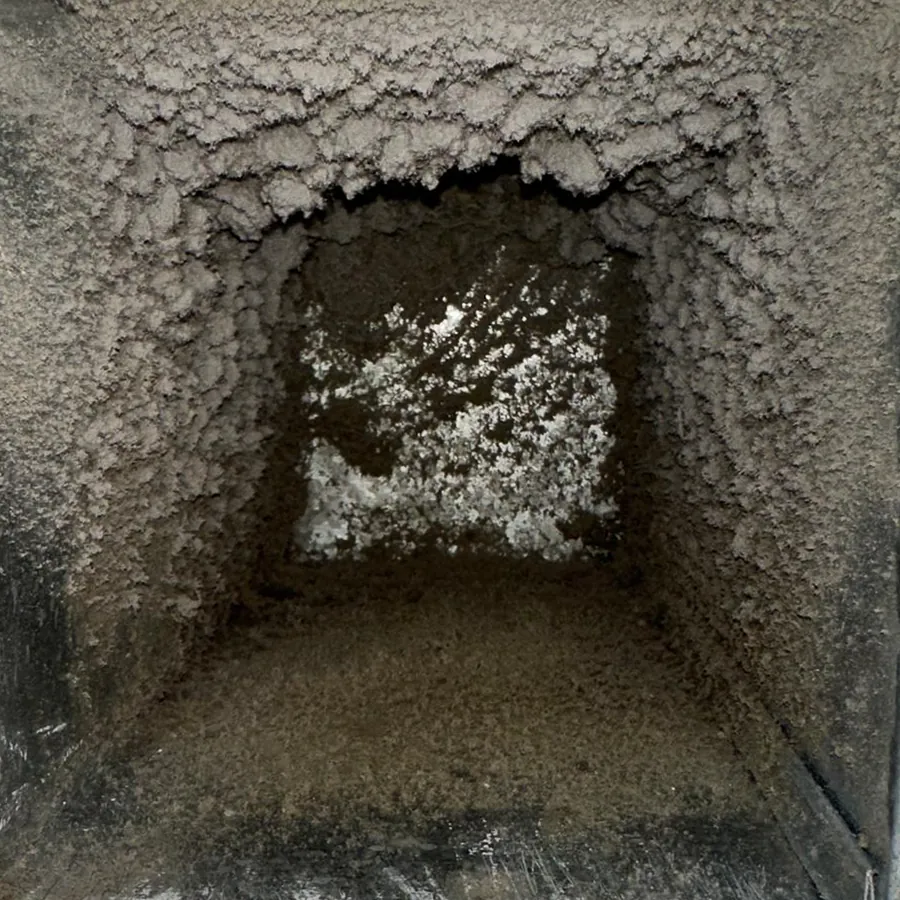
These systems run continuously or on a timer. Over time, the interior surfaces of the exhaust duct collect dust, lint, moisture, and biological growth. A dirty exhaust duct restricts airflow, which means the fan moves less air even at the same speed.
Make-up air units
A make-up air unit (MAU) or rooftop unit (RTU) draws in outdoor air, conditions it, and delivers it to the building to replace the air removed by exhaust fans. Without enough make-up air, the building runs under negative pressure: doors stick, drafts pull unfiltered air through gaps in the envelope, and exhaust fans lose efficiency.
The MAU’s coils, filters, and internal surfaces collect everything the outdoor air carries: pollen, dust, wildfire smoke, and coastal moisture. If the unit is not cleaned, the air it delivers is dirtier than what it replaced.
Signs the system needs cleaning
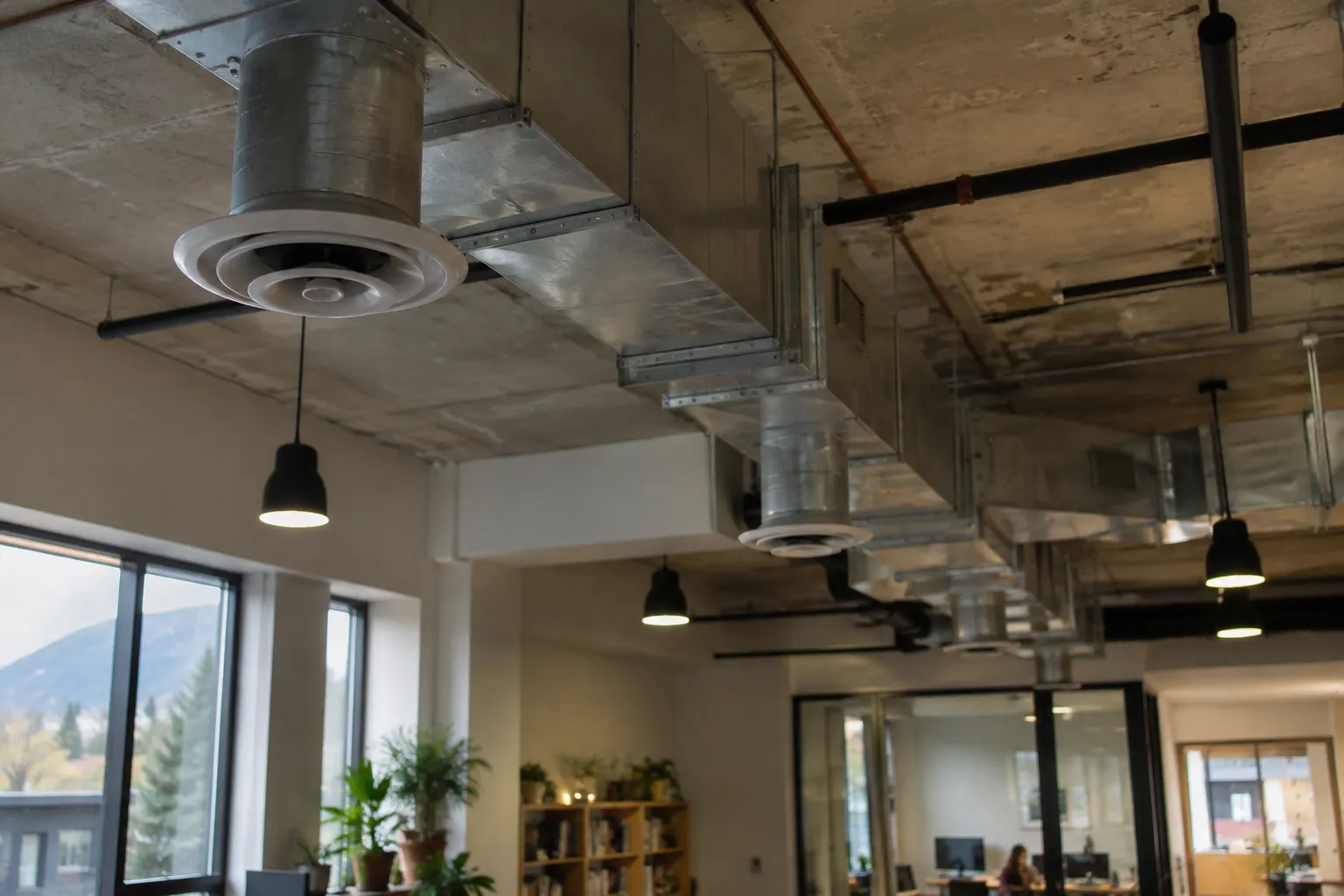
Visible buildup at grilles and exhaust openings
Dust and debris at supply diffusers or exhaust openings is the simplest indicator. NADCA’s guideline applies here: if your ducts look dirty, they probably are.
Persistent odours or stuffiness
When tenants report musty or stale air that ventilation adjustments do not resolve, the exhaust or make-up air side is worth inspecting. Mould inside exhaust runs produces odours that travel back into occupied spaces through duct leakage or shared plenums.
Uneven airflow across zones
Contamination inside MAU coils and exhaust ductwork restricts airflow. Zones served by a dirty make-up air unit may get less conditioned air than neighbouring zones, producing comfort complaints and overworking the system.
Pro tip: Ask your contractor to inspect the make-up air unit during the quoting walkthrough. A quick look at the coil condition and filter housing tells you how much outdoor contamination has been entering the building.
What the cleaning covers
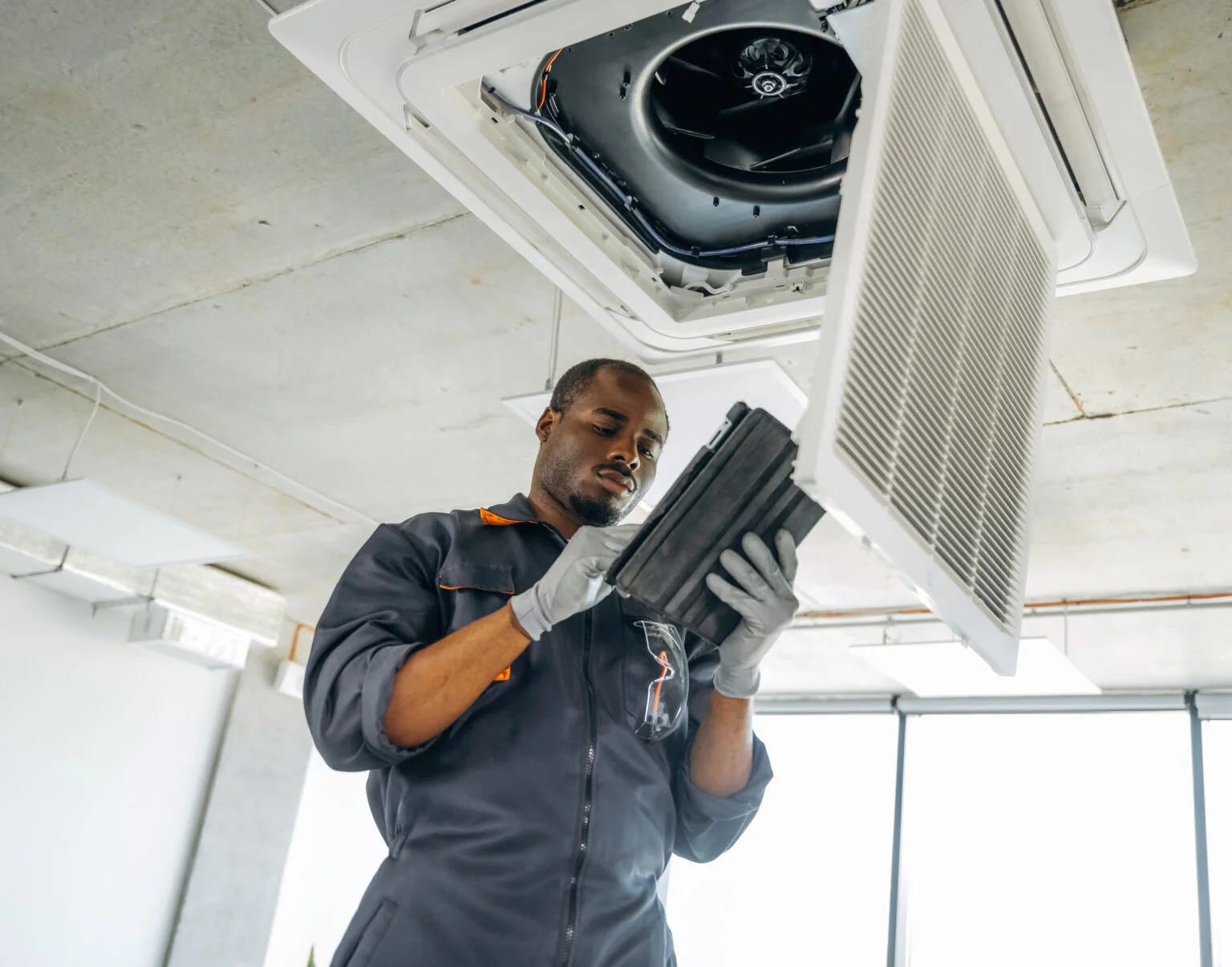
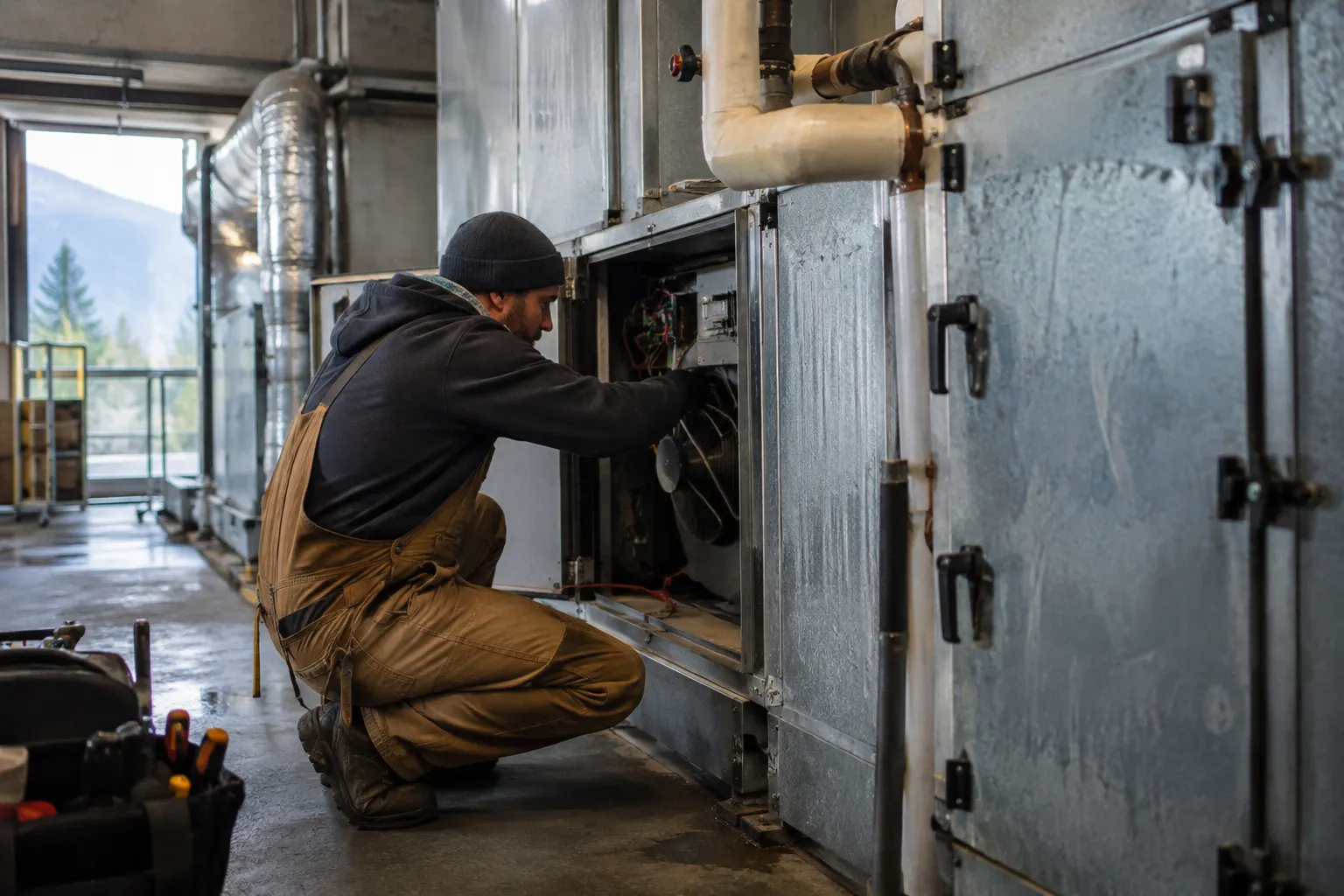
A NADCA-certified contractor cleans these components using HEPA-filtered negative-air vacuuming and compressed-air agitation. The system stays under continuous negative pressure during the work so contaminants do not migrate into occupied areas.
Exhaust ductwork. Accessible general exhaust and bathroom exhaust ducts are cleaned to remove dust, lint, moisture residue, and biological growth. In multi-unit buildings, this includes common risers and rooftop terminations.
Make-up air units and rooftop units. Internal surfaces and coils are cleaned with HEPA vacuuming, compressed air, and coil cleaner where appropriate. Accessible surfaces are hand-wiped and coil fins combed where needed. Filters are inspected (replacement filters supplied by the building unless quoted).
Diffusers, grilles, and exhaust openings. Power-wiped and air-washed. Removable components taken outside for cleaning before reinstallation.
Access panels. Existing openings used wherever possible. New openings made and closed to SMACNA and UL 181 requirements: mechanically fastened, sealed, re-openable, and marked.
Sanitizing (optional). After source-removal cleaning, a Health Canada registered disinfectant can be applied through the system to reduce bacteria, mould spores, and odours.
Every job ends with a Certificate of Completion and a before-and-after photo report documenting what was cleaned, what was found, and the condition of the system.
When to schedule
There is no single interval that fits every building. The timing depends on use and environment.
High-moisture environments. Bathroom exhaust in multi-unit residential and hotel buildings collects moisture constantly. In coastal BC, that moisture encourages mould growth faster than in drier climates.
Wildfire smoke seasons. Make-up air units pull in outdoor air. During active smoke events, fine particulate accumulates on the MAU’s filters and coils. After a heavy smoke season, inspect and clean the unit.
Post-construction or renovation. Construction dust and drywall particulate settle in exhaust runs and make-up air units during a refit. Clean the system before the building goes back into full occupancy.
After water damage. Any moisture intrusion into the ventilation system creates conditions for mould. Clean and dry the affected components before running the system again.
Assessment-driven scheduling. The NADCA ACR standard includes assessment procedures that evaluate system cleanliness. A certified contractor inspects the ductwork and recommends a schedule based on actual conditions. ASHRAE Standard 62.1 sets the baseline for commercial building ventilation, and keeping exhaust and make-up air equipment clean is part of meeting that standard.
Heads-up: Postponing cleaning after visible contamination or water damage risks spreading mould to every occupied space through the exhaust and supply loops. WorkSafeBC requires preventive maintenance on ventilation systems, and a dirty system that triggers complaints can become a regulatory issue.
We are NADCA certified, WorkSafeBC compliant, and carry $5M liability insurance. We have cleaned exhaust and make-up air systems in offices, strata buildings, schools, and healthcare facilities across BC, including work at Surrey Memorial Hospital, Richmond Hospital, and Kelowna General Hospital.
Get a free quote for your building.
Where we do this work
We clean commercial ventilation systems across BC: Vancouver, Burnaby, Surrey, Richmond, Coquitlam, Port Coquitlam, Port Moody, New Westminster, North Vancouver, West Vancouver, Delta, Langley, White Rock, Maple Ridge, Pitt Meadows, Mission, Abbotsford, Chilliwack, Squamish, Whistler, Kamloops, Kelowna, Nanaimo, and Victoria. We also serve commercial buildings in Alberta.