| How often (gas) | at least every 2 years (NRCan) |
| Full system cleaning | every 4 to 5 years (NADCA) |
| Filter changes | every 3 months (NRCan) |
| DIY-able? | Partly: filters yes, internals no |
| Price | Free quote |
Key takeaways
- NRCan recommends servicing gas and propane furnaces at least every 2 years. Pets, renovations, and allergies can move that timeline up.
- A proper furnace cleaning covers the blower motor, heat exchanger, burners, flame sensor, and filter area. NADCA says skipping any component can recontaminate the whole system.
- Your forced-air system recirculates indoor air 5 to 7 times per day on average. Every particle sitting loose in the furnace compartment travels through your home with it.
The furnace is where all your heated air starts. In a forced-air system, the blower pulls air from every room through the return ducts, pushes it past the heat exchanger, and sends it back through the supply runs. Everything that collects on the blower blades, the exchanger surfaces, and the burner area gets carried along for the ride. On the coast here, long damp winters, summer wildfire smoke seasons, and the usual pet hair and household dust give the furnace plenty to collect. That buildup affects your indoor air quality every time the blower runs.
What furnace cleaning covers
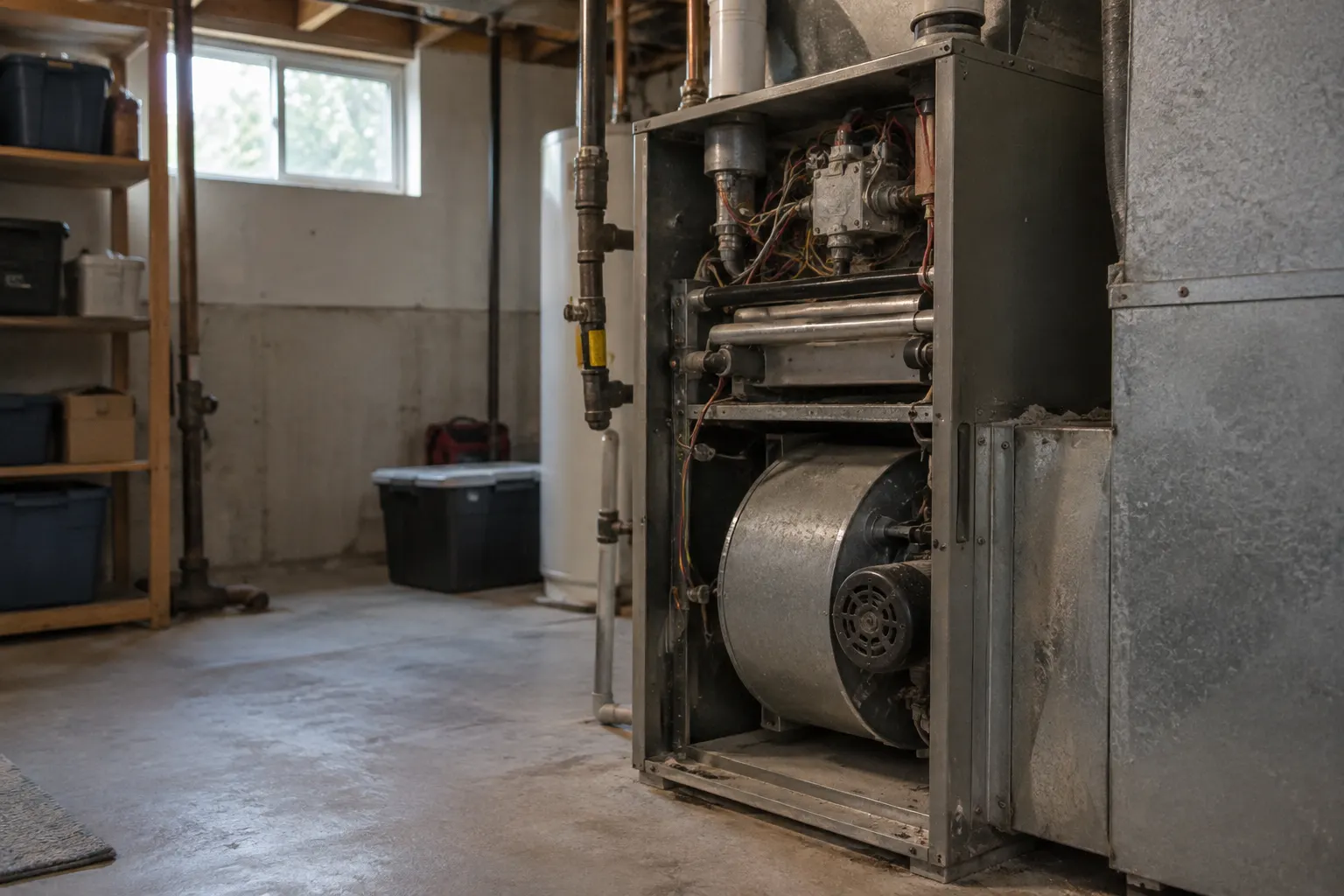
A furnace cleaning focuses on the heating unit itself, the components that sit upstream of your ductwork.
1. Blower motor and assembly
The blower pulls return air through the filter and pushes it into the supply ducts. Dust coats the fan blades over time and restricts airflow, which forces the motor to work harder. NADCA lists the blower motor and assembly as a component that should be cleaned as part of any HVAC system service.
2. Heat exchanger
This is the metal chamber where combustion heat transfers to your air. When dust builds up on the exchanger surfaces, heat transfer drops and the furnace runs longer cycles to reach the thermostat setting. NRCan recommends that gas and propane furnaces be serviced at least every 2 years to keep these components working properly.
3. Burners and flame sensor
On a gas furnace, dust on the burners or flame sensor can cause ignition delays, short cycling, or failure to light. A cleaning includes vacuuming and brushing the burner area and wiping the flame sensor. Health Canada recommends having fuel-burning appliances inspected by a qualified professional to prevent carbon monoxide buildup.
4. Filter area and air plenum
The filter catches particles before they reach the blower. NRCan recommends changing or cleaning it every 3 months. The air plenum, the chamber connecting the furnace to the ductwork, collects what the filter misses and should be cleaned along with the rest of the unit.
Signs your furnace needs cleaning
You do not need to open the furnace to know something is off. These are the common signs.
1. Dust around the registers when the system kicks on
If a puff of dust comes off the register covers each time the blower starts, debris in the system is getting circulated. Your forced-air system recirculates indoor air 5 to 7 times per day on average, so what is loose in the furnace travels through the house repeatedly.
2. Longer heating cycles
A furnace with a dusty heat exchanger takes longer to bring the air up to temperature. If your system runs noticeably longer before the thermostat clicks off, reduced heat transfer from buildup is a likely reason.
3. Stale or musty smell when heating starts
After sitting idle through summer, dust and moisture in the furnace compartment can produce a musty smell when the system fires up in the fall. If the smell lingers past the first few runs, the blower and exchanger area likely need cleaning.
4. Visible dust inside the furnace cabinet
Open the furnace panel and look at the blower blades and the surfaces inside the cabinet. If you can see dust coating them, the areas you cannot reach (back of the exchanger, inside the plenum) are usually worse.
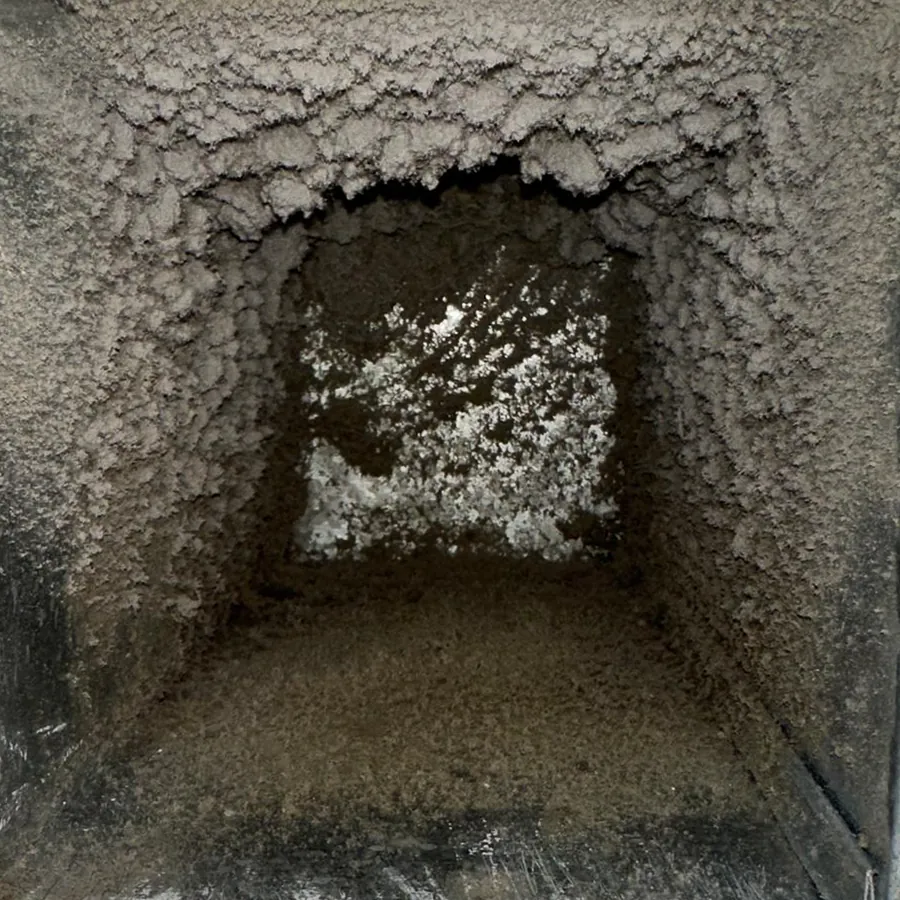
Pro tip: Pull off a floor register and shine a flashlight past the first few inches of the duct. If you see matted dust or debris lining the walls, the furnace compartment upstream almost certainly has buildup too. That check takes thirty seconds and costs nothing.
How often to clean your furnace
The answer depends on your furnace type and your home.
Gas and propane furnaces: NRCan recommends servicing at least every 2 years. That service covers the burners, heat exchanger, blower, and safety checks.
Oil furnaces: NRCan says oil-fired systems need annual cleaning and tuning.
Full HVAC system cleaning: NADCA recommends a complete system cleaning (furnace components and all ductwork) every 4 to 5 years. Homes with pets, occupants with allergies or asthma, smokers, recent renovations, or water damage may need it sooner.
The difference between a furnace service and a full system cleaning matters. Servicing the furnace every couple of years keeps the heating unit safe and efficient. A full cleaning every 4 to 5 years covers the furnace and the entire duct system with source removal, which clears the buildup that regular servicing does not reach.
Heads-up: Cleaning just the furnace and skipping the ducts, or the other way around, leaves the dirty half feeding debris right back into the clean half. NADCA’s position is that failure to clean all components of the HVAC system can result in recontamination of the entire system.
What the cleaning looks like
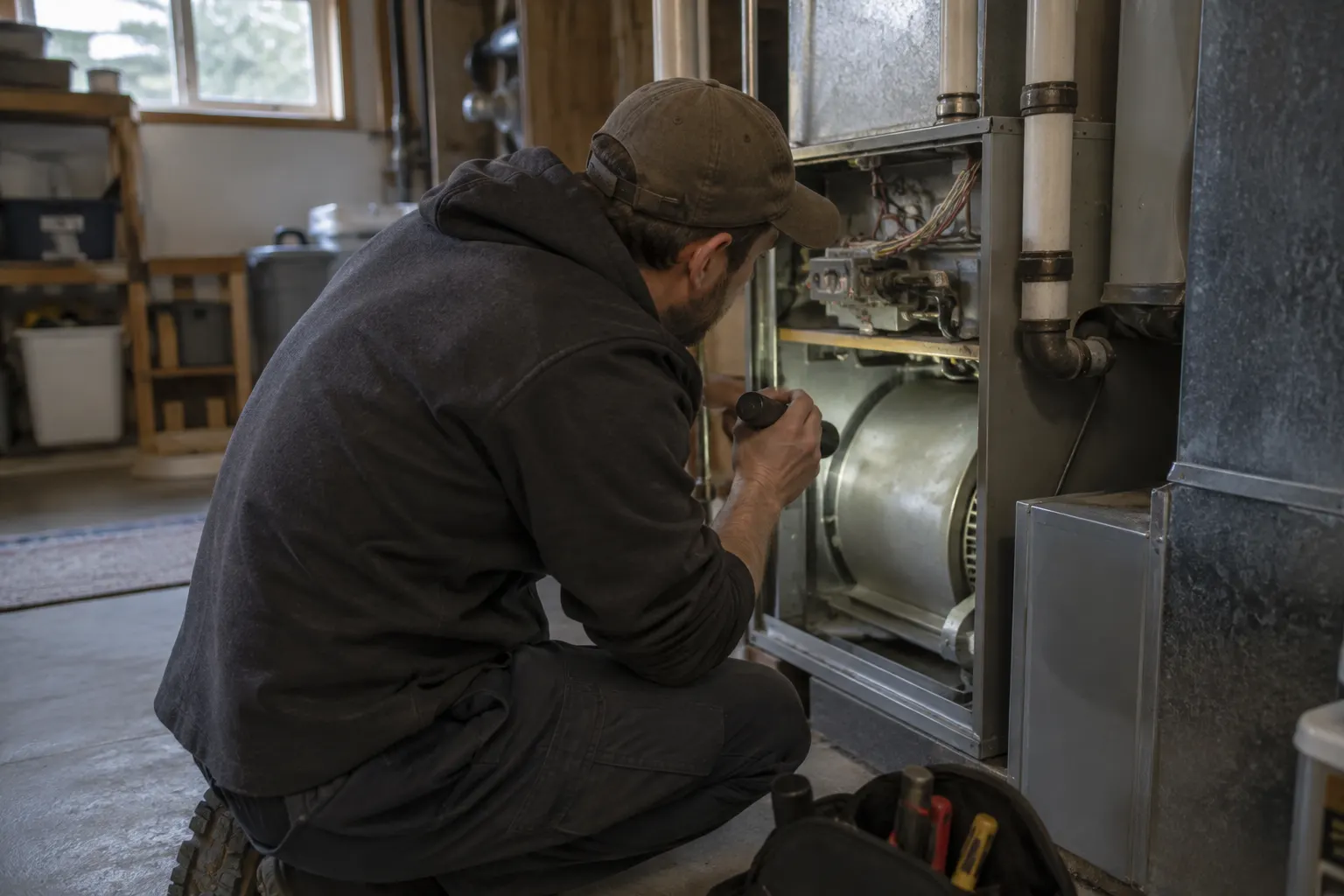
We clean the furnace and the full duct system in a single visit. The method is source removal: the entire system goes under continuous negative pressure with a HEPA-filtered vacuum while brushes, compressed-air tools, and air whips dislodge buildup from the duct walls and furnace components.
On average, 47 lbs of mold, dust, and debris comes out of a home’s system. Homeowners save an average of $1,020 between services (every three years) on heating and cooling, and cleaning has been associated with a 26% drop in energy use.
Before we close the system, we invite you to see the final cleaning of the main trunk so you can see the condition of the ductwork yourself.
Get a free quote
If your furnace has not been serviced in a while, or you have noticed any of the signs above, get a free quote. We are NADCA certified with 10+ years of experience cleaning homes across Metro Vancouver. For a closer look at how furnace cleaning and duct cleaning work together, see our guide on furnace cleaning vs. duct cleaning.
Where we do this work
Vancouver, North Vancouver, West Vancouver, Burnaby, Richmond, Surrey, Coquitlam, Port Coquitlam, Port Moody, New Westminster, Delta, Langley, White Rock, Maple Ridge, Pitt Meadows, Abbotsford.