| Equipment covered | Air handling units (AHUs), makeup air units (MAUs), rooftop units (RTUs) |
| Standard | NADCA ACR (assessment, cleaning, restoration) |
| What gets cleaned | Internal surfaces, coils, condensate drain pan, filters, blower |
| BC requirement | WorkSafeBC Section 4.78: maintenance per manufacturer specs |
| Price | Get a custom quote |
Key takeaways
- NADCA’s commercial cleaning checklist requires cleaning all AHU internal surfaces, components and condensate collectors and drains, plus all coils and related components, including evaporator fins. That is the baseline for a proper job, not an upgrade.
- A dirty coil restricts airflow across the entire building. NADCA data shows a 10 to 46% average improvement in supply airflow once HVAC systems are properly cleaned.
- WorkSafeBC Section 4.78 requires that a ventilation system be maintained in accordance with the manufacturer’s specifications and good engineering practice. The AHU is the core of that system.
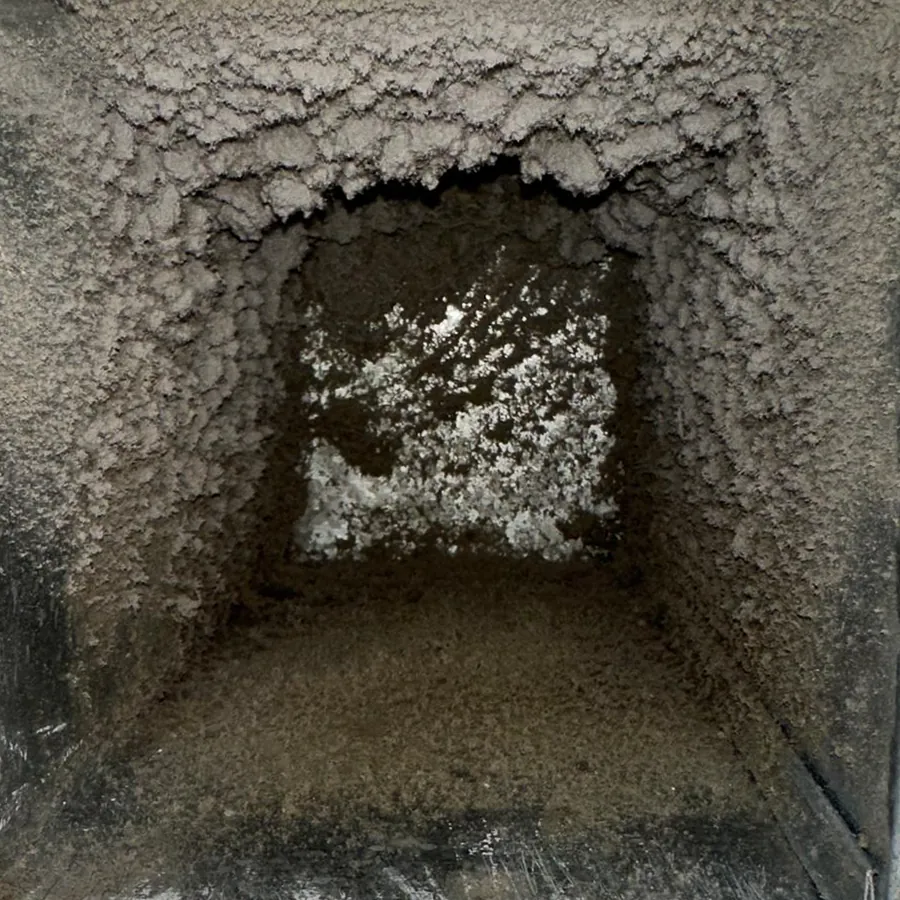
An air handling unit sits at the centre of every commercial HVAC system. It is the equipment that pulls air in, conditions it, and pushes it through the ductwork to occupied spaces. In a typical BC office tower, strata building, school, or healthcare facility, the AHU runs continuously, cycling air through its coils, filters, and blower 5 to 7 times per day. Everything the air carries (dust, pollen, coastal moisture, wildfire smoke) passes through this equipment first. Over time, it accumulates on the internal surfaces.
This article covers what NADCA’s ACR standard and commercial cleaning checklist require when these units are cleaned, what happens inside an AHU that warrants the work, and how we approach it. For a broader look at the full commercial HVAC scope, see our overview of commercial duct cleaning in BC. For the exhaust and makeup air ductwork side, see our exhaust and makeup air cleaning guide.
What sits inside an AHU, MAU or RTU
All three unit types share the same core components, and all of them collect contamination over time.
Coils
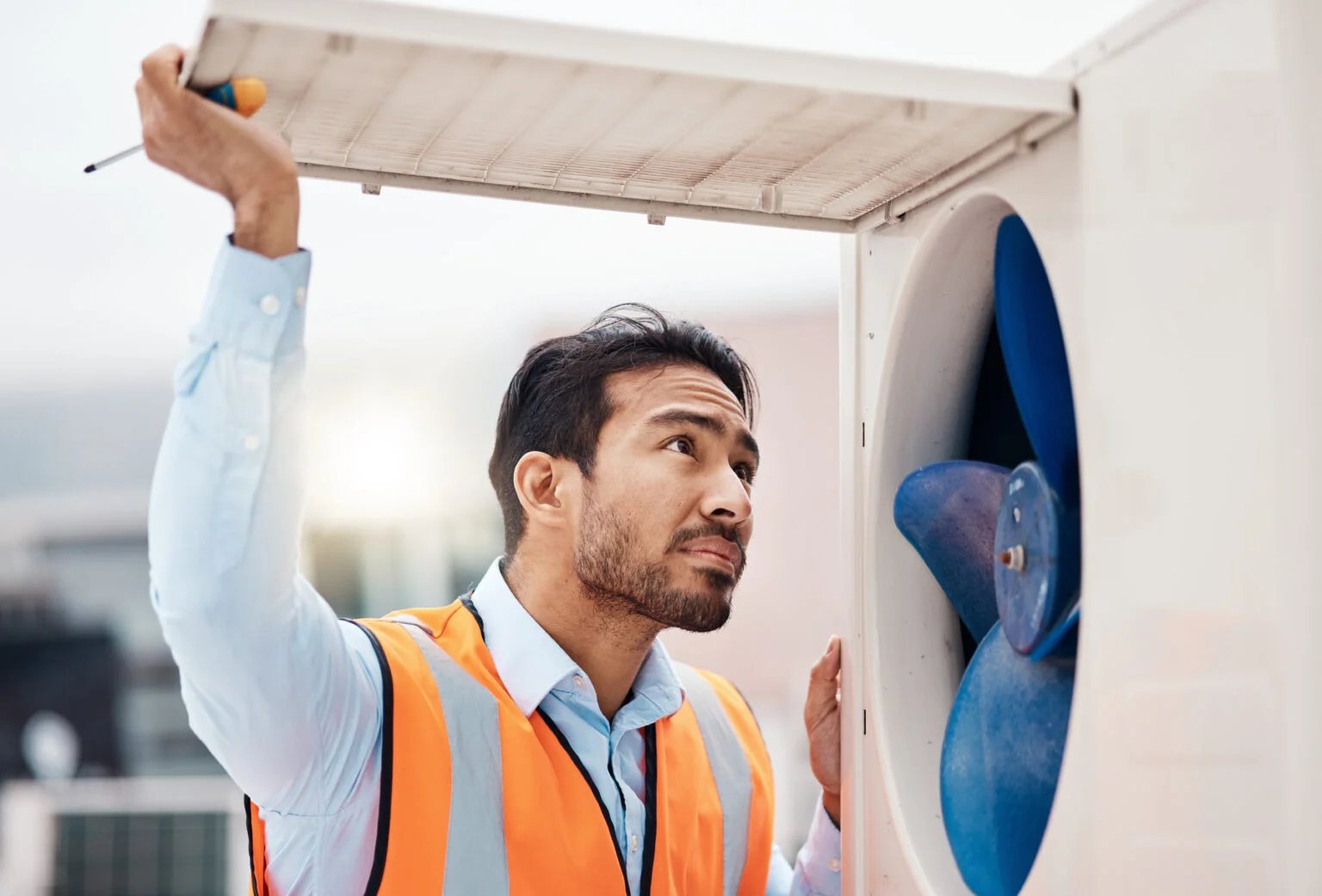
The coils transfer heat into or out of the air stream. A cooling coil runs cold refrigerant or chilled water through copper or aluminium fins. A heating coil does the opposite. When dust and biological growth coat the fins, heat transfer drops, the system works harder, and the building gets uneven temperatures. A dirty evaporator coil also restricts the airflow passing through it.
Condensate drain pan
The cooling coil produces condensation. That moisture collects in a drain pan below the coil and drains away through a pipe. If the pan or drain line is clogged with sludge or biological growth, water backs up. Standing water in a drain pan is one of the fastest paths to mould growth inside an air handling unit, and the blower pushes that air to every floor.
Filters
Filters sit upstream of the coils and catch particulate before it reaches the heat exchange surfaces. They need replacement on a schedule. But filter frames, housings, and bypass seals also collect dust. If the housing is not cleaned, unfiltered air leaks around the edges of the filter and reaches the coil anyway.
Blower and internal surfaces
The blower moves air through the entire system. Its wheel and housing accumulate dust over time, which reduces airflow and adds vibration. Every internal surface of the AHU cabinet collects a layer of whatever the air carries.
What NADCA ACR requires
ACR, the NADCA Standard, covers assessment, cleaning, and restoration of HVAC systems. It is the industry benchmark specified for commercial projects worldwide. The NADCA commercial cleaning checklist breaks the standard down for each component type.
For air handling units, the checklist requires the contractor to:
- Clean all AHU internal surfaces, components and condensate collectors and drains
- Clean all coils and related components, including evaporator fins
- Establish operative drainage before any wash-down procedures
- Create service openings as necessary for otherwise inaccessible areas
- Complete verification of cleanliness through inspection and/or testing in accordance with NADCA Standards
The checklist also covers duct systems, air distribution devices, VAV boxes, blowers, and exhaust fans. Access openings are made and closed to SMACNA and UL 181 standards: mechanically fastened, sealed, re-openable, and marked on the duct exterior. The full scope of a commercial cleaning project depends on what the initial assessment finds.
Pro tip: Before the cleaning starts, ask your contractor to walk the mechanical room with you and open one of the AHU access panels. You can see the coil condition, the drain pan, and the inside of the cabinet for yourself. That visual tells you more than any brochure.
How we clean AHUs, MAUs and RTUs
Our approach follows the NADCA commercial cleaning checklist and ACR, the NADCA Standard.
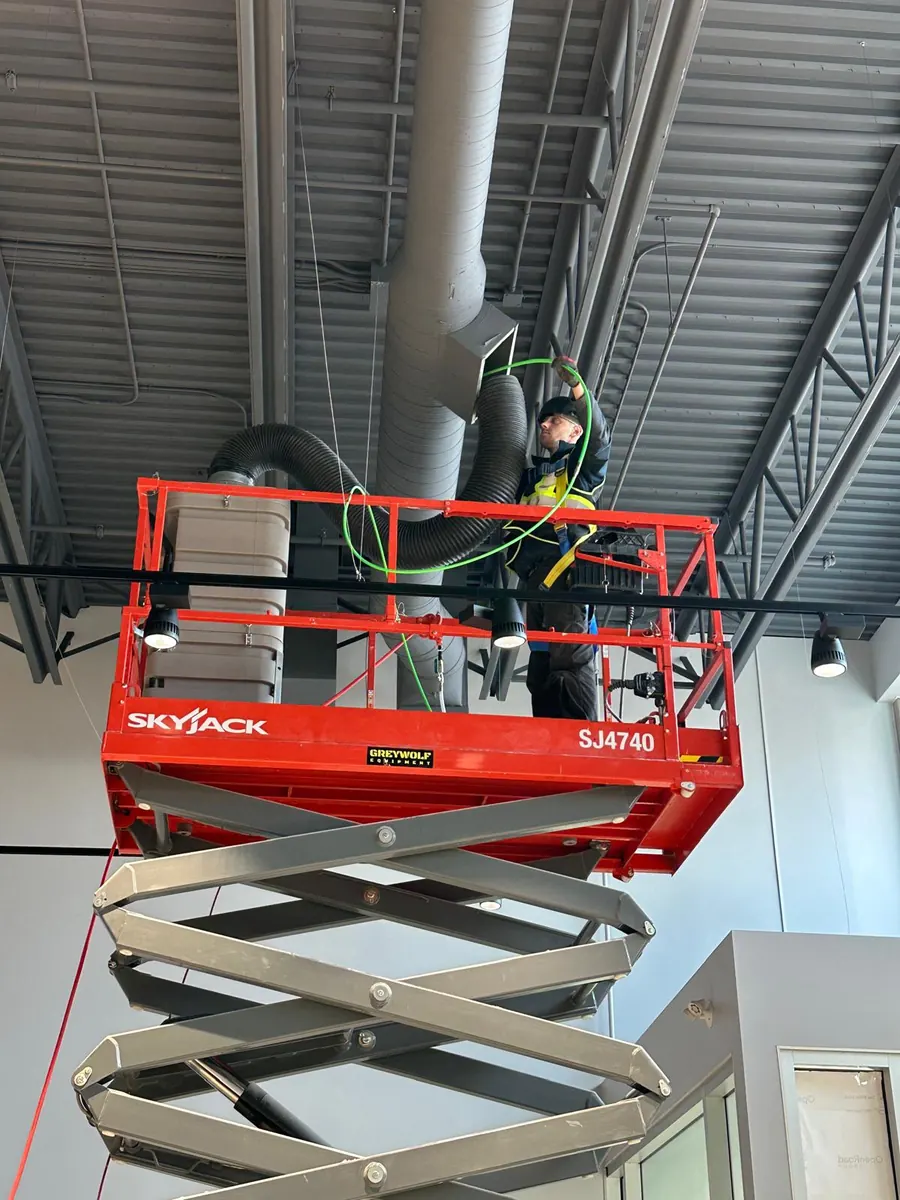
HEPA-filtered negative-air vacuuming. The system is placed under continuous negative pressure during cleaning. This prevents contaminants from migrating into occupied areas of the building.
Coil cleaning. Accessible heating and cooling coils are cleaned with compressed air, HEPA vacuum, and coil cleaner where appropriate. Coil fins are combed where required to restore airflow between the fins.
Condensate system. The drain pan and drain line are cleaned of sludge and biological growth to restore drainage and prevent standing water.
Internal surfaces. Accessible surfaces inside the AHU cabinet are hand-wiped. The blower housing and wheel are cleaned with compressed air and HEPA vacuum.
Filters. Filter housings and frames are cleaned. Replacement filters supplied by the client unless quoted as part of the scope.
Sanitizing (optional). After source-removal cleaning, a Health Canada registered disinfectant can be applied through the system to reduce bacteria, mould spores, and odours.
Every commercial job ends with a Certificate of Completion and a before-and-after photo report documenting conditions before and after the work.
When to schedule AHU cleaning
Cleaning frequency depends on the building, its occupancy, and its environment. There is no single interval that fits every situation.
After wildfire smoke seasons. Makeup air units and rooftop units pull in outdoor air directly. During BC’s wildfire seasons, fine particulate accumulates on filters, coils, and internal surfaces. Inspect and clean after any significant smoke event.
In high-humidity environments. BC’s coast means moisture inside AHU cabinets year-round. Condensate drain pans and cooling coils in coastal buildings see biological growth faster than buildings in drier climates.
Post-construction. Renovation dust, drywall particulate, and construction debris settle inside the AHU during a refit. Clean the unit before returning the building to full occupancy.
When airflow drops across zones. Uneven temperatures and tenant comfort complaints often trace back to a coil or blower with restricted airflow. NADCA data shows a 10 to 46% average improvement in supply airflow once HVAC systems are properly cleaned.
Heads-up: WorkSafeBC Section 4.78 requires that a ventilation system be maintained in accordance with the manufacturer’s specifications and good engineering practice. A neglected AHU that triggers indoor air quality complaints can become a compliance issue.
Why the unit matters as much as the ducts
It is tempting to think of duct cleaning as the whole job. But the AHU is where air enters the system, gets heated or cooled, and where the blower pushes it through every branch and supply run. If the unit is dirty, every metre of clean ductwork downstream receives contaminated air.
A coil coated in dust acts like a blanket over a radiator. The system runs longer, energy costs climb, and the building never quite reaches the right temperature. A clogged condensate drain pan breeds mould that the blower distributes to every floor. NADCA’s checklist treats the unit and the ductwork as a single system because that is what they are.
We are NADCA certified, WorkSafeBC compliant, and carry $5M liability insurance. Our commercial experience includes work at Surrey Memorial Hospital, Richmond Hospital, and Kelowna General Hospital.
Get a free quote for your building.
Where we do this work
We clean air handling units, makeup air units, and rooftop units across BC: Vancouver, Burnaby, Surrey, Richmond, Coquitlam, Port Coquitlam, Port Moody, New Westminster, North Vancouver, West Vancouver, Delta, Langley, White Rock, Maple Ridge, Pitt Meadows, Mission, Abbotsford, Chilliwack, Squamish, Whistler, Kamloops, Kelowna, Nanaimo, and Victoria. We also serve commercial buildings in Alberta.