| What you can do | Change filters, vacuum vent covers, wipe return grilles |
| What needs a pro | Cleaning inside the ductwork, furnace, and blower |
| How often (pro cleaning) | Every 3 to 5 years (NADCA) |
| Risk of going further | Damaged ducts, scattered debris, mould spread |
| Price | Free quote |
Key takeaways
- You can handle filters, vent covers, and visible dust yourself. The ductwork past the first few inches needs professional equipment.
- A shop vacuum cannot create the negative pressure needed for source removal cleaning. Debris you knock loose can resettle deeper in the system.
- Damaged flex duct or dislodged joints from DIY attempts can cost more to repair than a professional cleaning.
- NADCA recommends professional cleaning every 3 to 5 years, or sooner if you have pets, allergies, or recent renovations.
Your HVAC system re-circulates indoor air 5 to 7 times per day on average. Dust, pet hair, pollen, and mould spores collect in the ductwork over that cycle, and in BC’s damp coastal climate the buildup happens faster than in drier parts of the country. Some of that maintenance you can do yourself. The rest takes equipment you probably don’t have in the garage.
What you can do yourself
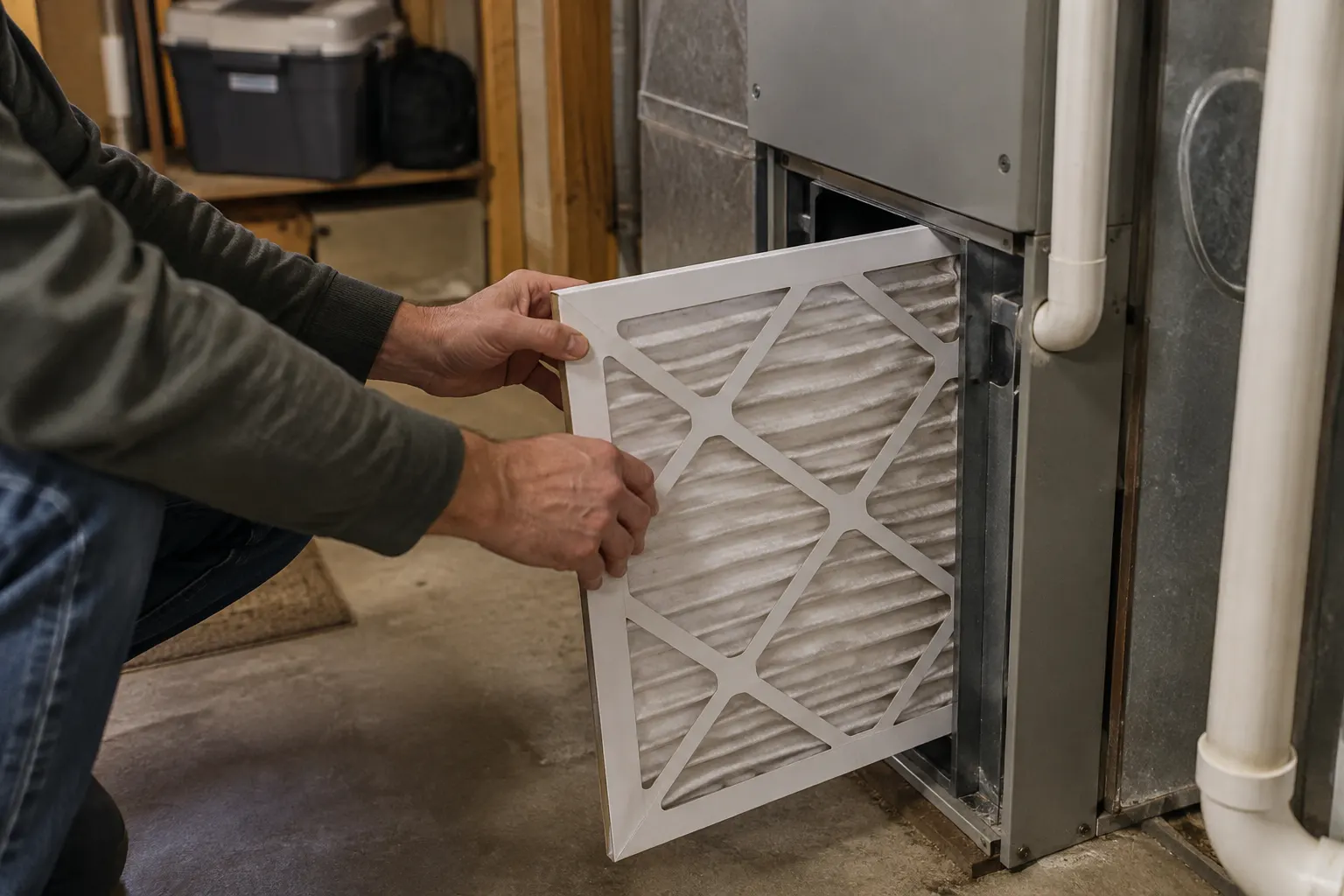
1. Change the furnace filter
This is the single most useful thing you can do for your HVAC system. A clogged furnace filter restricts airflow, makes the blower work harder, and lets more dust past into the ductwork. The Canadian Lung Association recommends replacing or cleaning your filter every 1 to 3 months depending on the type. Check it monthly. If it looks grey and loaded, swap it out.
2. Vacuum and wipe your vent covers
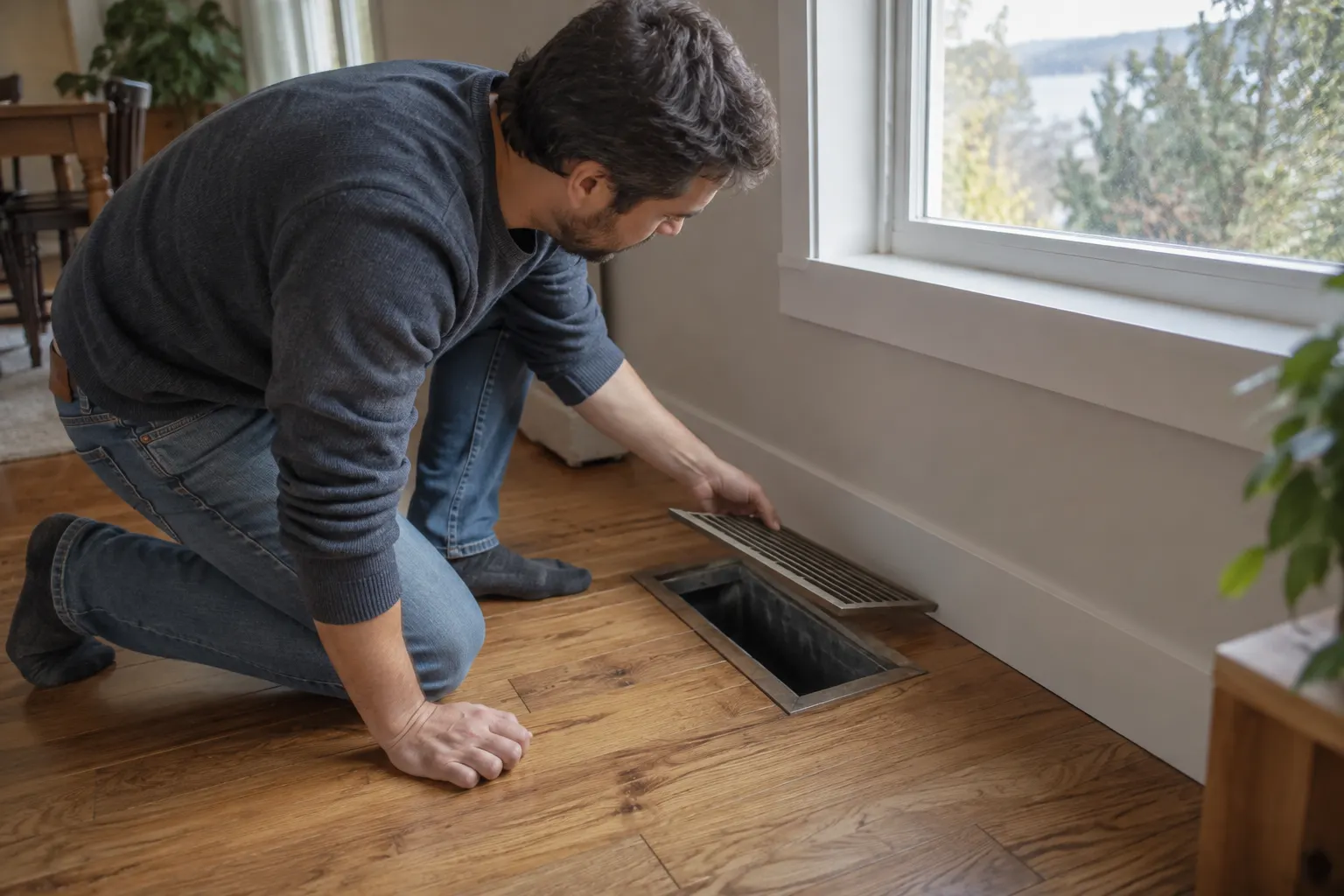
Pop off your supply vent covers and return air grilles. Wash them in the sink with warm soapy water or vacuum them with a brush attachment. While the covers are off, you can vacuum any visible dust inside the first few inches of the duct opening. That is about as far as a household vacuum will reach.
3. Keep the area around your furnace clean
Sweep or vacuum the floor around the furnace and the return air intake. If your return vent sits low on the wall or in the floor, it pulls in whatever settles near it: pet hair, crumbs, lint. A cleaner space around the return means less debris entering the system in the first place.
4. Check for obvious problems
While you have a vent cover off, shine a flashlight into the opening. If you see a heavy layer of dust, dark discolouration that could be mould, or catch a musty smell, those are signs the system is overdue for professional attention. NADCA puts it simply: if your air ducts look dirty, they probably are.
Why the rest needs a professional
The visible vent is just the opening. Behind it sits a network of supply ducts, return ducts, trunk lines, and the furnace blower compartment. A proper cleaning means reaching all of it.
Professional duct cleaning uses source removal methods. The technician connects a HEPA vacuum to the main trunk line and places the entire system under negative pressure. Then they work through each supply vent and return vent with agitation tools (compressed air whips, rotary brushes, or both) to dislodge dust and debris from the duct walls. Everything gets pulled toward the vacuum, contained, and disposed of.
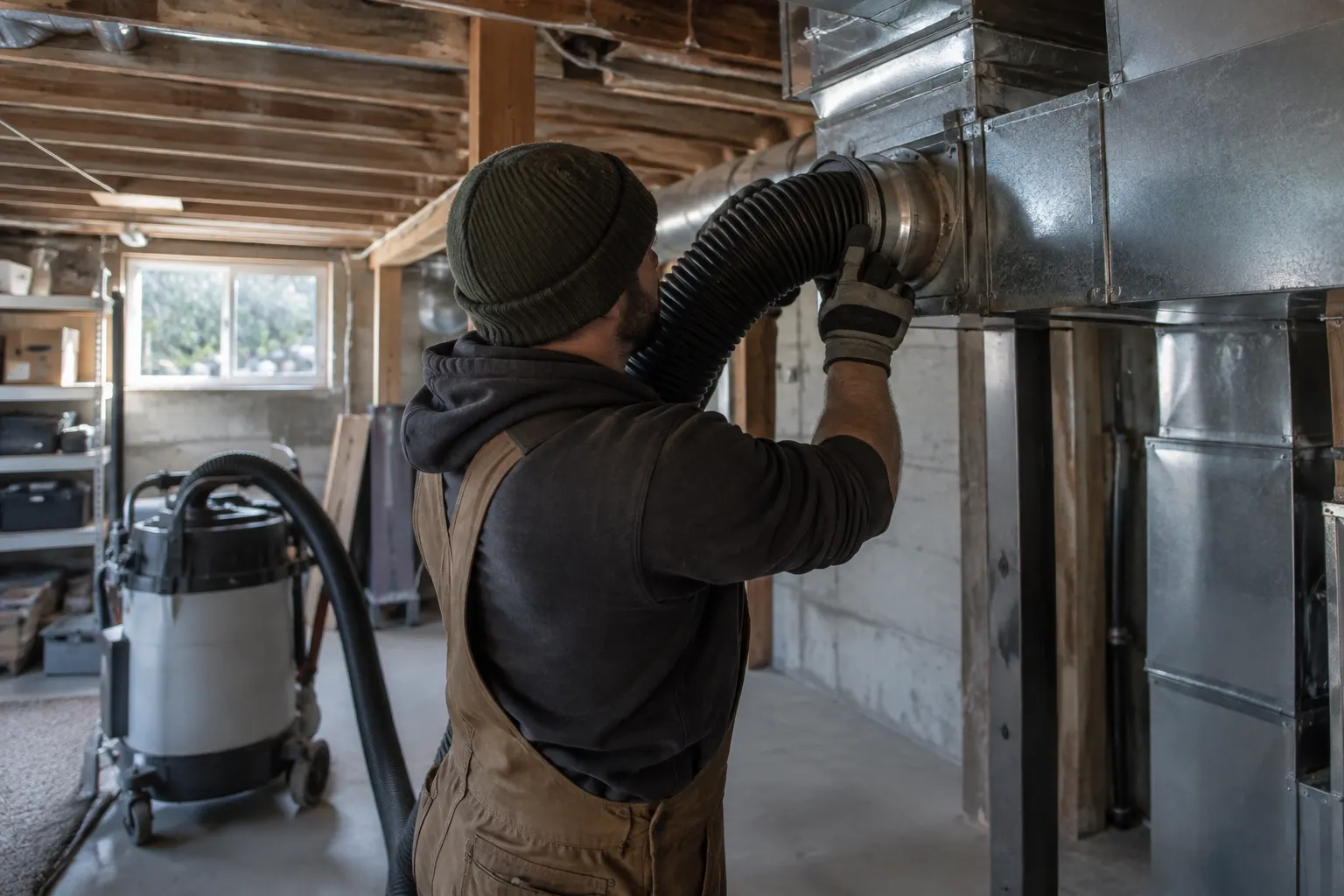
We remove an average of 47 lbs of mold, dust, and debris per home. A shop vacuum sitting at one vent opening cannot replicate that. It cannot reach the far end of a long supply run, cannot pull debris from branch lines, and cannot create negative pressure across a sealed system. Sticking a hose into a register and hoping for the best leaves the bulk of the buildup untouched.
What can go wrong with DIY
Damaged ductwork
Many BC homes use flexible ductwork (flex duct) for branch runs between the trunk line and individual rooms. Flex duct is a plastic inner liner surrounded by insulation and a foil jacket. It tears easily. Pushing a vacuum hose, brush, or pole too far into flex duct can puncture the liner, collapse sections, or pull connections apart. That means conditioned air leaking into your walls or crawl space instead of reaching your rooms.
Scattered debris
Without negative pressure holding the entire system, anything you knock loose can travel in the wrong direction. You might dislodge a clump of dust in a supply run only to have it land on the furnace blower or settle deeper in a branch you cannot reach. The debris moves around inside the system. It does not leave.
Mould spread
BC’s coastal humidity means mould in ductwork is a real possibility. If you scrub or disturb mould growth without containing it, you can release spores into the living space. Professional cleaning addresses this with containment and, where needed, a Health Canada approved antimicrobial like Benefect Decon 30 after the source material is physically removed.
Pro tip: Before you spend a weekend on your ducts, pull off a few vent covers and look inside with a flashlight. If the ducts look reasonably clean, the best DIY move is a fresh furnace filter every 1 to 3 months and a quick wipe of the grilles. If you see heavy buildup, that is a job for professional source removal equipment.
Heads-up: Bargain “whole house duct cleaning” offers at suspiciously low prices are often blow-and-go operations. They skip the negative pressure step and leave the bulk of the debris in place. NADCA’s scam prevention page covers the warning signs.
When to book a professional cleaning
NADCA recommends professional duct cleaning every 3 to 5 years. You may need it sooner if your home has pets, occupants with allergies or asthma, cigarette smoke, water damage, or recent renovations.
Clean ducts also save energy. A 26% drop in energy use after cleaning is real money back in your pocket, and between services that works out to about $1,020 saved on heating and cooling.
We are NADCA certified with $5M liability insurance and 10+ years of experience. Before we close the system, we invite you to see the final cleaning of the main trunk so you know the work was done.
Get a free quote and we will let you know what your home needs.
Where we do this work
We clean residential ducts in Vancouver, North Vancouver, West Vancouver, Burnaby, Richmond, Surrey, Coquitlam, Port Coquitlam, Port Moody, New Westminster, Delta, Langley, White Rock, Maple Ridge, Pitt Meadows, and Abbotsford.