| When to clean | before you move in (NADCA) |
| How often after that | every 3 to 5 years |
| Time on site | 3 to 5 hours for most homes |
| DIY-able? | Vents and grilles, yes. Full system, no |
| Price | Free quote |
Key takeaways
- NADCA lists duct cleaning “prior to occupancy of a new home” as a reason to schedule service. You do not know what the previous owner left in the system.
- Your HVAC system recirculates indoor air 5 to 7 times per day. Whatever is sitting in the ducts from the last occupant cycles through the house every few hours.
- An empty house is the easiest time to clean. No furniture blocking registers, no belongings to cover, and the crew can reach every vent without working around your life.
- An average cleaning pulls 47 lbs of mold, dust, and debris per home and homeowners see a 26% drop in energy use afterward.
When you get the keys to a home someone else has been living in, you inherit their ductwork along with everything in it. Years of household dust, pet dander if they had animals, cooking residue, and whatever the local air carried in through open windows. In Metro Vancouver’s damp coastal climate, moisture in the air adds another layer: dust that absorbs humidity can support mould growth inside dark, still duct runs. None of this shows up during a home inspection because inspectors do not look inside the ducts.
What sits in the ducts between owners
Most homeowners do not clean their ducts on a regular schedule. The recommended interval is every 3 to 5 years, and plenty of homes go well beyond that. When the previous owner hands you the keys, they are not handing you a maintenance log for the HVAC system.
Dust and debris from daily life
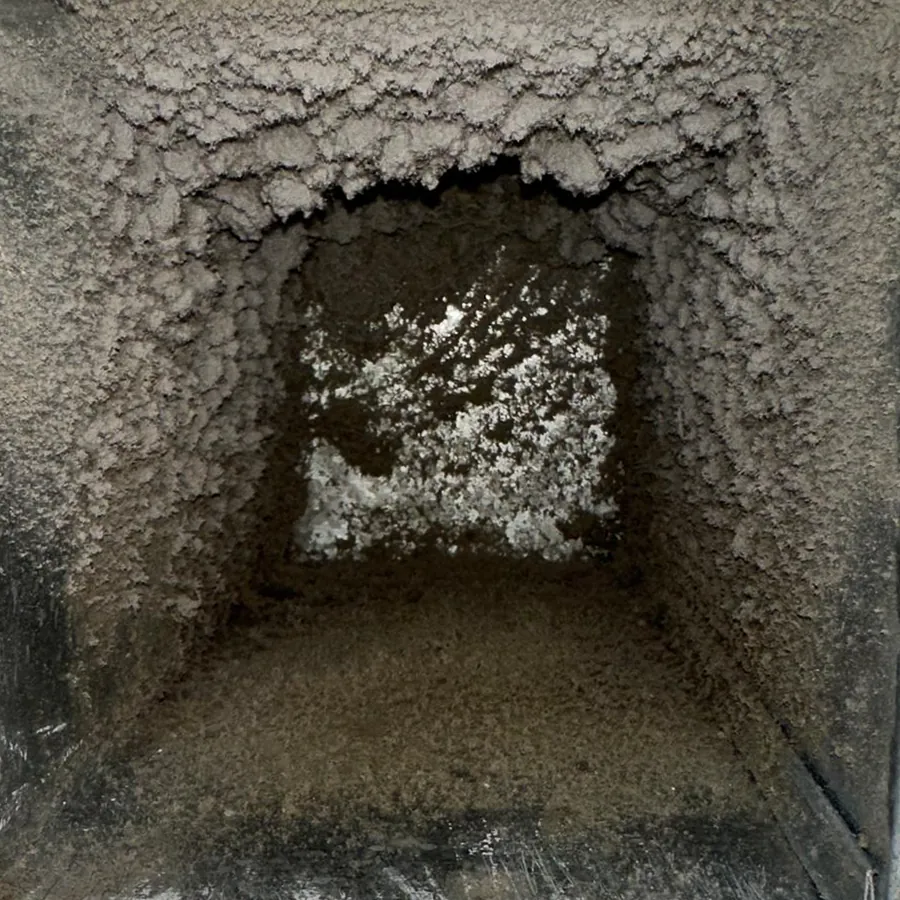
Every home generates dust from skin cells, fabric fibres, tracked-in soil, and cooking. That dust enters the return air, passes through the filter (or around it, if the filter fit is loose), and settles on duct walls, inside the furnace cabinet, and on the blower wheel. After years of accumulation, the layer is real.
Pet hair and dander
If the previous owner had pets, their hair and dander is still in the system. NADCA lists pets that shed high amounts of hair and dander as a trigger for more frequent cleaning. The new owner’s fresh air filter will not pull pet dander off the duct walls where it already sits.
Mould in a damp climate
Metro Vancouver’s coastal humidity means moisture enters homes through everyday activities: cooking, showering, drying laundry. When that moisture reaches duct surfaces coated in organic dust, mould can grow. You may notice a musty smell from the vents the first time you turn on the furnace.
Previous renovations
The seller may have renovated before listing. NADCA also lists cleaning after home renovations or remodeling as a reason for service. Drywall dust, sawdust, and insulation fibres settle deep in ductwork where no filter can reach them. If the listing mentioned “recently renovated,” the ducts may be holding construction dust the seller never addressed.
You do not know the previous owner’s habits
The home inspection covers structure, plumbing, electrical, and the furnace itself. It does not include a look inside the ductwork. So you are left guessing about questions that matter for indoor air quality:
- Did they smoke indoors? Cigarette residue coats duct surfaces and recirculates.
- How many pets, and what kind? A house with three cats has a different duct situation than one with none.
- Did they change the furnace filter regularly, or let it load up until airflow dropped?
- When was the last time anybody cleaned the ducts, if ever?
You will not find answers to these questions in the disclosure statement. A duct cleaning gives you a known starting point.
Pro tip: During your walkthrough before closing, pull a supply register off the wall and look inside the duct with a flashlight. If the metal is coated in dust or you see debris sitting on the bottom, that is a good sign the system has not been cleaned recently.
Why an empty house is the best time
Duct cleaning means connecting HEPA-filtered vacuum equipment to the main trunk and using compressed-air tools inside each supply and return run. The crew needs access to every register in the home.
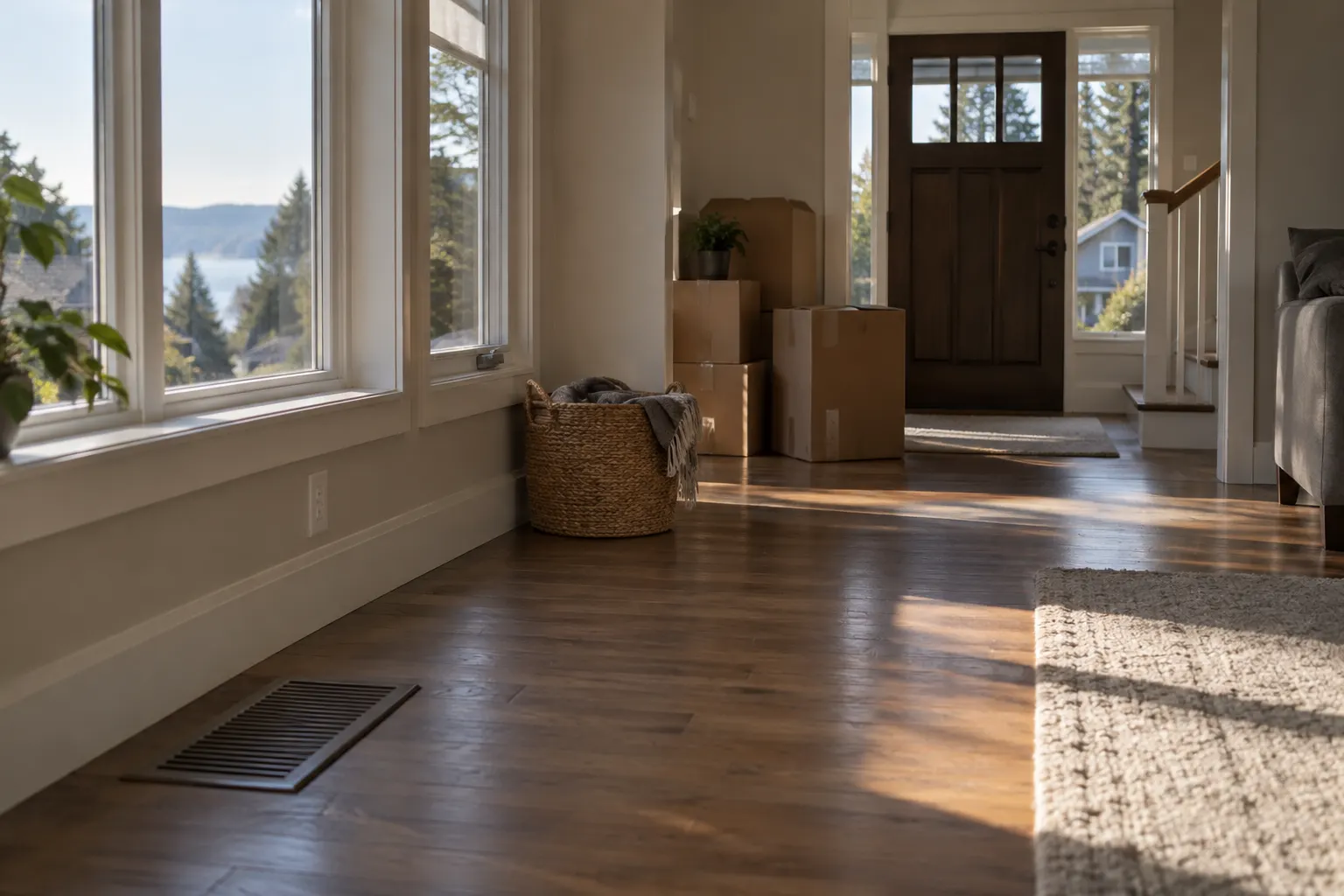
When the house is empty, every room is open. No beds to move, no shelving blocking wall registers, no furniture draped in plastic. The work goes faster and costs no extra effort on your part. Once you have moved in, scheduling gets harder because someone needs to be home and rooms need to be cleared.
The cleaning also stirs up whatever is inside the system. In an empty house, there are no rugs, curtains, or upholstered furniture to collect anything that briefly becomes airborne before the negative-air equipment captures it. You move into a home where the ducts, the furnace, and the air are all starting fresh.
What the cleaning covers
A source-removal duct cleaning for a home typically follows these steps:
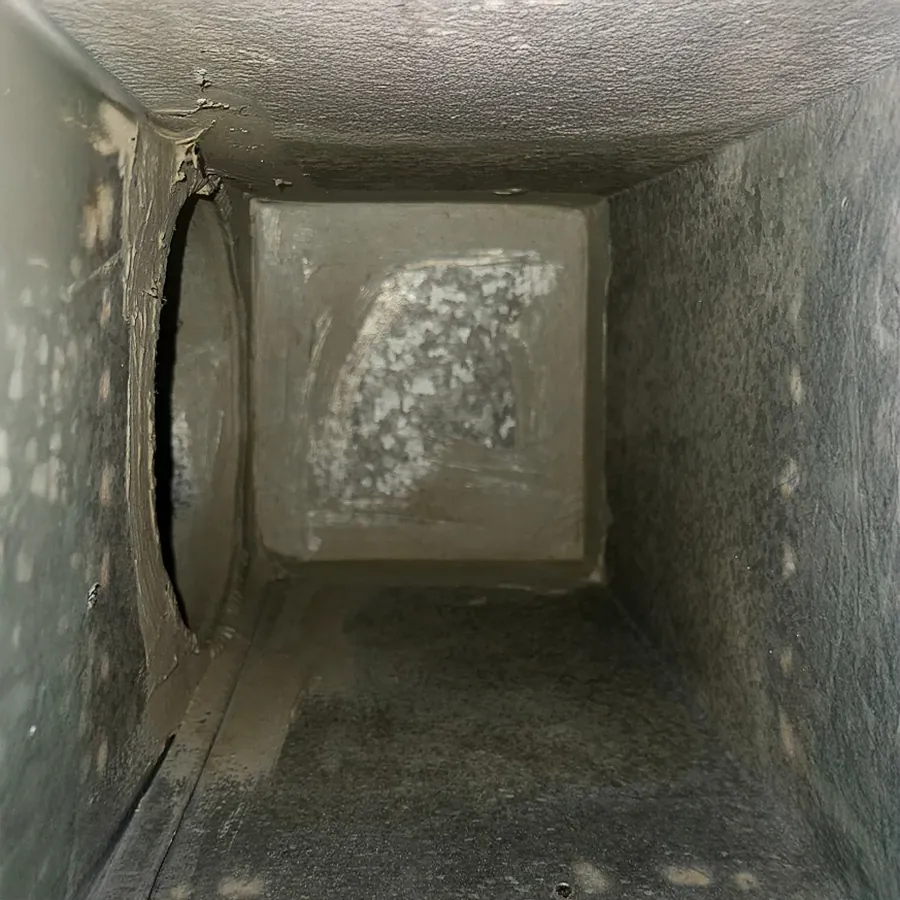
- The HVAC system goes under continuous negative pressure using a HEPA-filtered vacuum connected to the main trunk line.
- Each supply and return duct gets compressed-air agitation to break loose settled dust and debris. The negative pressure pulls everything toward the vacuum.
- The furnace cabinet interior, blower wheel, and evaporator coil are cleaned separately.
- Every register and grille is removed, cleaned, and reinstalled.
- Before closing the system, we invite you to see the final cleaning of the main trunk so you can see the difference for yourself.
The typical visit takes 3 to 5 hours for most homes. An average cleaning pulls 47 lbs of mold, dust, and debris per home.
If mould or persistent odour is a concern, a Health Canada approved botanical disinfectant (Benefect Decon 30) can be applied through the system after the source-removal cleaning is complete.
Heads-up: Running the furnace in a new-to-you home without cleaning the ducts first pushes whatever accumulated under the previous owner straight into every room. That dust settles on the surfaces and floors you just cleaned, and it gets pulled into your lungs with every breath. Doing the cleaning before move-in day means you skip that cycle entirely.
After the cleaning: keeping it clean going forward
Once the ducts are cleaned, keeping the system in good shape is straightforward. Swap the furnace filter on the schedule the manufacturer recommends. Run bathroom exhaust fans when showering to keep moisture out of the duct system. And plan on your next duct cleaning in 3 to 5 years, or sooner if you have pets, residents with allergies or asthma, or your home goes through a renovation.
If you are moving into a home in Metro Vancouver and want to start with clean air, get a free quote. We are NADCA certified, carry $5M in liability insurance, and have been cleaning ducts across the Lower Mainland for 10+ years.
Where we do this work
We clean residential ducts in Vancouver, North Vancouver, West Vancouver, Burnaby, Richmond, Surrey, Coquitlam, Port Coquitlam, Port Moody, New Westminster, Delta, Langley, White Rock, Maple Ridge, Pitt Meadows, and Abbotsford. See all service areas.