| What it targets | Dust mites, pet dander, pollen, mould spores |
| How often | Every 3 to 5 years (NADCA); sooner with allergies, pets or smokers |
| How it works | Source-removal cleaning under negative pressure |
| Time on site | 3 to 5 hours for a typical home |
| DIY-able? | Vent covers yes; the ductwork itself needs professional equipment |
| Price | Free quote |
Key takeaways
- Your HVAC system recirculates indoor air 5 to 7 times per day. Anything sitting in the ducts (dust mites, pet dander, pollen, mould spores) gets pushed through your living space with every cycle.
- NADCA-standard source-removal cleaning physically pulls contaminants out of the ductwork rather than just blowing them around.
- Allergy and asthma sufferers tend to be more susceptible to the kinds of indoor air quality problems that duct cleaning can help address.
- Duct cleaning is one piece of the puzzle. Pair it with regular filter changes and humidity control for the best results.
Duct cleaning for allergy and asthma relief is straightforward: get the stuff out of the ducts so it stops cycling through the rooms you breathe in. In Metro Vancouver, the damp coastal climate adds mould to the usual mix of dust, pet dander and pollen. A forced-air HVAC system pulls air through its return, pushes it past the furnace, and blows it out the supply vents. If the ductwork is coated, every heating or cooling cycle sends a dose of those particles into your home.
Signs your ducts may be making symptoms worse
These are worth paying attention to if someone in the household has allergies or asthma.
1. Dust returns quickly after cleaning
You wipe down surfaces, and within a day or two the dust is back. That dust has to come from somewhere. If the furnace is running, it is likely coming from inside the duct system.
2. Symptoms improve when you leave the house
If sneezing, congestion or wheezing ease up after a few hours away from home and return when you get back, the indoor air is a likely factor. Dust mites, pollen and dander trapped in the ducts recirculate 5 to 7 times per day through a typical forced-air system.
3. Visible dust or debris around supply vents
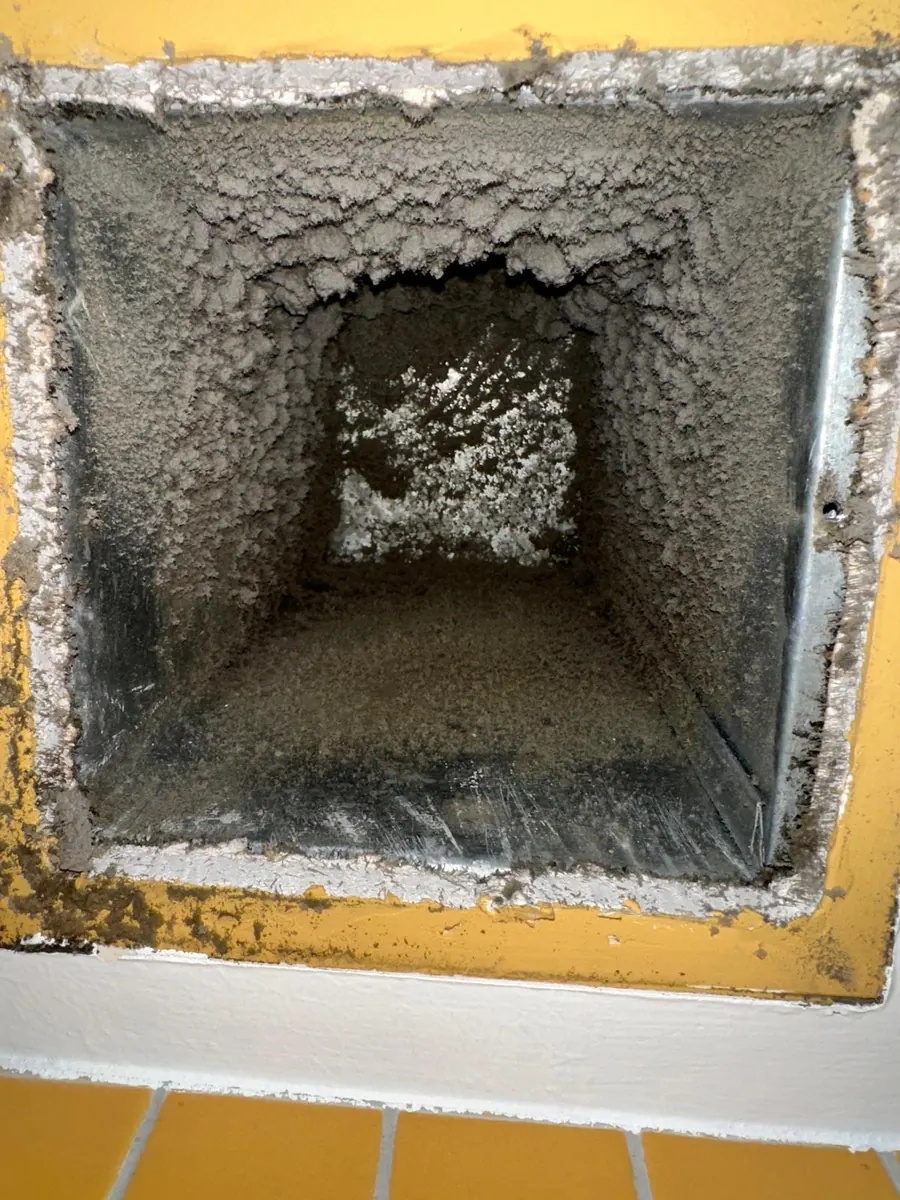
Dark smudges or fuzz at the edges of your registers mean particles are blowing out into the room. That is what your lungs are filtering, too.
4. A musty or stale smell when the system kicks on
Mould can trigger asthma symptoms such as wheezing, coughing, and shortness of breath, according to the Canadian Lung Association. In BC’s damp climate, condensation inside ductwork is common, and mould spores thrive where moisture collects.
How the cleaning works
A NADCA-certified contractor uses source-removal methods. Here is what that looks like in your home.
1. System inspection
The technician checks the furnace, ductwork and registers to identify the scope of the buildup, any moisture issues, and the best access points.
2. Negative pressure
A large vacuum connects to the main trunk line and puts the entire duct system under negative pressure. This means debris moves toward the vacuum, not into your rooms.
3. Agitation
While the vacuum draws air through the system, compressed-air tools and mechanical brushes work through each supply and return run. These devices dislodge dust, pet dander, pollen, mould spores and anything else stuck to the duct walls. Everything gets pulled toward the vacuum.
4. Visual check
NADCA’s standard is clear: if any dust or debris can be seen during the visual inspection, the system should not be considered cleaned. Before we close the system, we invite you to see the final cleaning of the main trunk.
5. Filter and register cleanup
Vent covers get washed or wiped down. This is also a good time to put in a fresh furnace filter. NRCan recommends changing or cleaning your filter every 3 months.

What to expect after the cleaning
You are not going to walk in and smell lavender. What you should notice over the next few days:
- Less dust settling on furniture and floors.
- Fewer sneezing or coughing episodes triggered by the furnace cycling on.
- Cleaner air coming from the vents (hold a tissue near a supply register while the fan runs and see if it stays white).
- A system that runs a bit quieter, because airflow is no longer fighting through a layer of buildup.
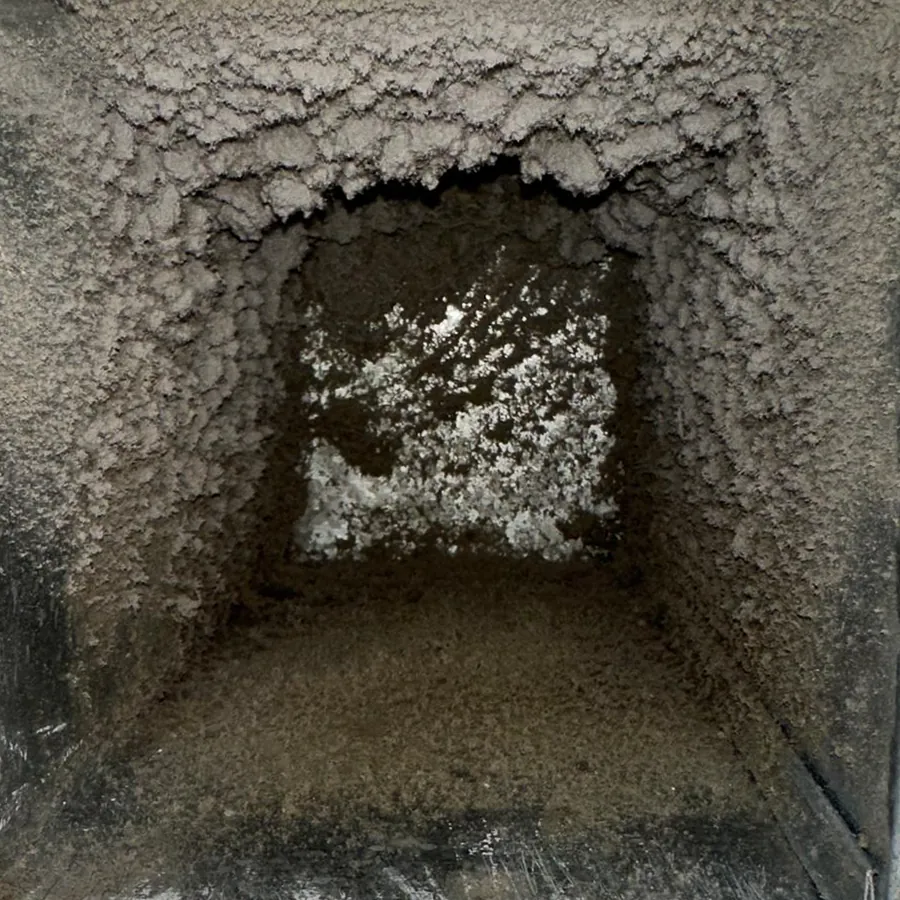
Across our residential jobs, we remove an average of 47 lbs of mold, dust, and debris per home. That is material that was sitting in your ductwork and recirculating through your living space.
Pro tip: Before you book a cleaning, pull a supply register off the wall and look inside with a flashlight. If you can see dust coating the duct walls, a cleaning will make a real difference. If the ducts look relatively clean, your symptoms may have a different source.
Sanitizing: when it helps
Source-removal cleaning handles the physical debris. If mould or bacteria are part of the problem, a sanitizing step can help. We apply Benefect Decon 30 after the cleaning is done. It is a plant-based disinfectant made from thyme oil, Health Canada approved, with a contact time of 30 seconds. No synthetic chemicals, no evacuation required. Homeowners in Vancouver with asthma or mould problems have found it really helps.
Sanitizing is only useful after the ducts are physically clean. Spraying a dirty duct does not solve anything; the debris itself has to go first.
Heads-up: If a company offers to “sanitize” your ducts without doing a full source-removal cleaning first, that is a red flag. The spray cannot reach contaminants buried under a layer of dust.
Keeping allergens low between cleanings
Duct cleaning resets the system, but a few habits keep it cleaner for longer:
- Change or clean your furnace filter every 3 months (or sooner if you have pets). A loaded filter lets more particles through and puts strain on the blower.
- Keep indoor humidity below 50%. Dust mites and mould both thrive in damp conditions. A hygrometer costs a few dollars and tells you where you stand.
- Run your HRV or bathroom exhaust fans regularly, especially after showers and cooking. Moving moisture out of the house keeps it out of the ducts.
- Vacuum with a HEPA filter to catch fine particles before they enter the return air stream.
Get a free quote
If allergies or asthma are worse indoors, the ductwork is a good place to start. Get a free quote or call us at (604) 200-4767.
Where we do this work
We clean residential duct systems across Metro Vancouver and the Fraser Valley: Vancouver, North Vancouver, West Vancouver, Burnaby, Richmond, Surrey, Coquitlam, Port Coquitlam, Port Moody, New Westminster, Delta, Langley, White Rock, Maple Ridge, Pitt Meadows and Abbotsford. See all service areas.