| Method | Source removal with HEPA-filtered negative air |
| Time on site | 3 to 5 hours for most homes |
| What comes out | 47 lbs of mold, dust, and debris per home |
| How often | Every 3 to 5 years |
| Price | Free quote |
Key takeaways
- Professional duct cleaning uses source removal: the system goes under negative air pressure so contaminants travel into the vacuum, not your living space.
- The crew cleans every supply run, return run, and register, then moves to the furnace blower, heat exchanger, and accessible coils.
- Before closing the system, we invite you to view the final cleaning of the main trunk so you can see the results yourself.
- Cleaned systems show a 10 to 46% improvement in supply airflow, according to NADCA.
Your HVAC system recirculates indoor air 5 to 7 times per day, on average. Dust, pet dander, mould spores, and whatever else has settled in the ductwork all ride that loop through every room. Professional duct cleaning takes it out at the source rather than filtering around it. Here is what that process looks like in a typical Metro Vancouver home, step by step, from the moment the crew arrives to the moment they hand the system back to you.
How source removal works
The industry standard for duct cleaning is called source removal. The concept is straightforward: place the entire duct system under continuous negative air pressure using a powerful HEPA-filtered vacuum, then use agitation tools to dislodge debris from the duct walls. Everything that comes loose travels toward the vacuum, gets captured, and leaves your home.
This is what separates a proper cleaning from low-cost services that blow compressed air through a few vents and call it done. Source removal means each duct run is cleaned individually, and the results are verifiable by visual inspection. If dust or debris can still be seen after cleaning, the system should not be considered cleaned.
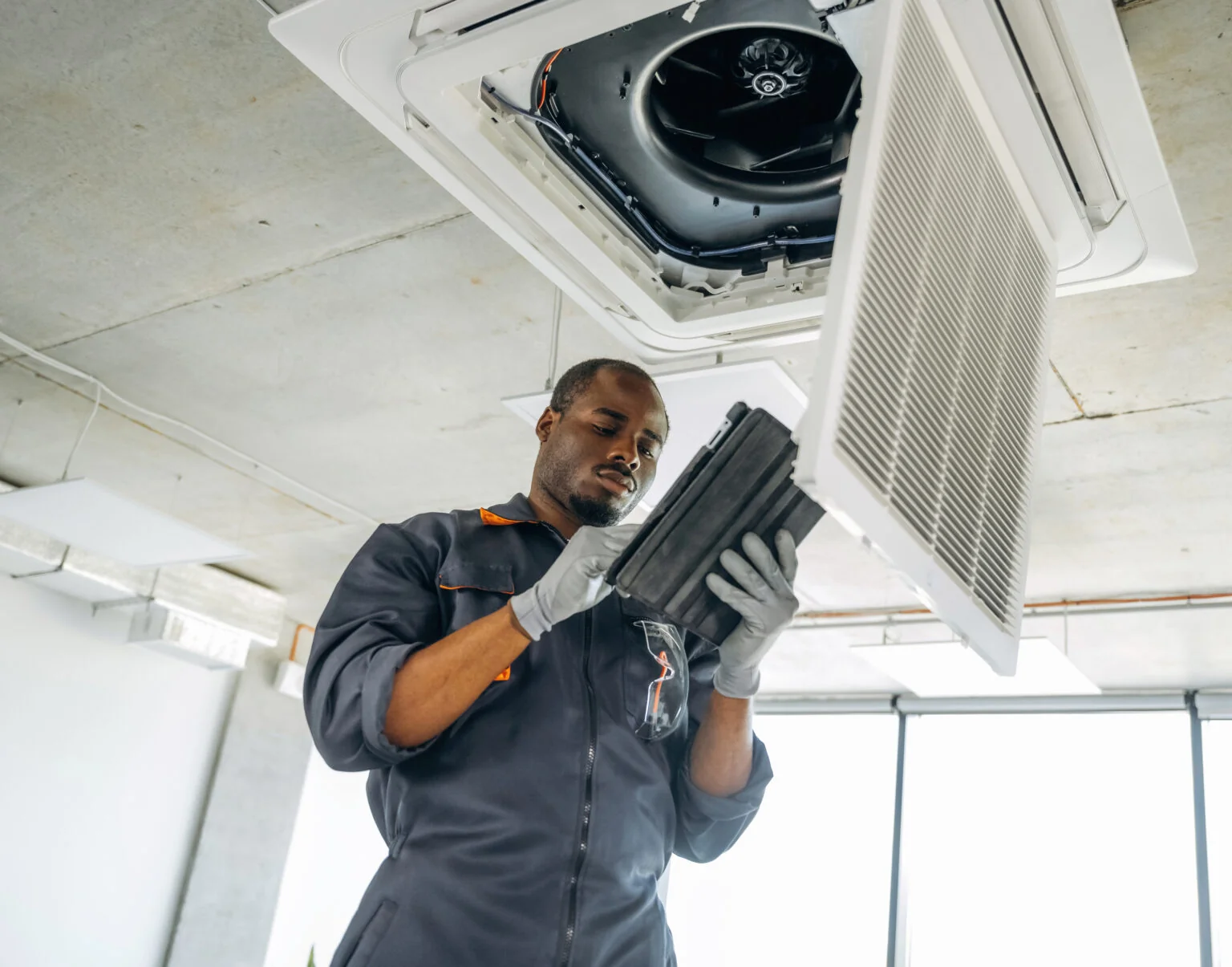
Pro tip: Ask any duct cleaning company what method they use. If they cannot explain source removal and negative air pressure, keep looking. NADCA-certified companies are trained in this method.
The steps your technician follows
Every home is a little different, but the sequence stays the same. A typical job runs 3 to 5 hours for a single-system home. For more on timing and preparation, see how long duct cleaning takes.
1. Arrival, walkthrough, and setup
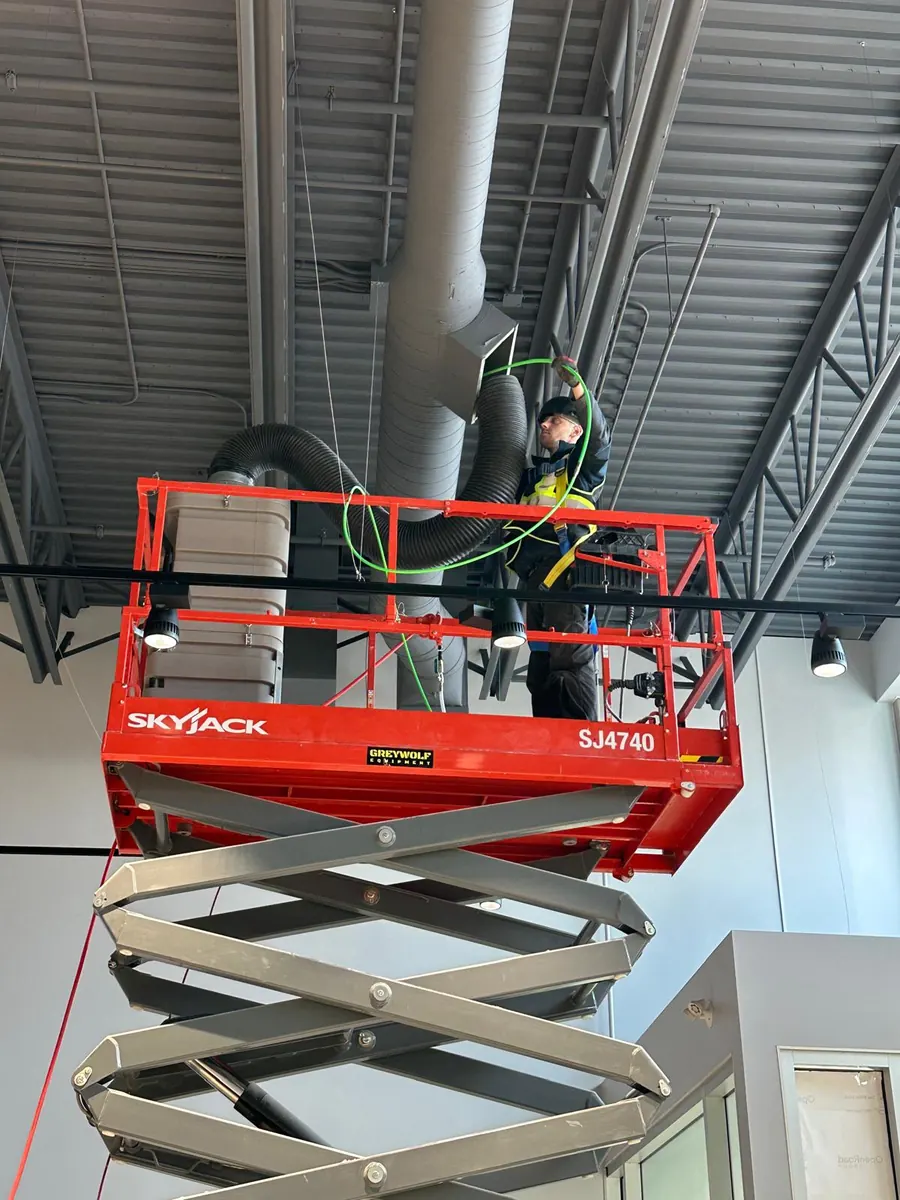
The crew arrives with a truck-mounted or portable vacuum unit, agitation tools, hoses, and access equipment. The first thing they do is walk through the home with you. They note how many registers you have, where the furnace is, and whether any areas have odour or airflow issues you want them to focus on.
The main vacuum hose connects to your duct system at the main trunk, usually near the furnace. Once connected, the system goes under continuous negative pressure for the duration of the cleaning.
2. Sealing the system
With the vacuum running, the crew seals off all supply and return registers using adhesive covers or magnetic blockers. This focuses the suction through the ductwork and prevents dust from escaping into your rooms. Each register stays sealed until it is that run’s turn to be cleaned.
3. Cleaning every supply duct run
The technician opens one register at a time, inserts an agitation tool (compressed-air whips, brushes, or both), and works it through the full length of that supply run. The tool knocks debris off the duct walls, and the negative pressure pulls it toward the main vacuum.
This step takes the longest because every supply duct run is done individually. In a typical home that means working through each bedroom, bathroom, kitchen, and living area duct one by one.
4. Cleaning every return duct run
Return ducts get the same treatment. They tend to collect heavier buildup because they pull unfiltered room air back toward the furnace. The technician works each return run with agitation tools while the vacuum continues to draw debris out of the system.
5. Furnace compartment
With the ductwork clean, the crew moves to the furnace itself. This includes the blower assembly, the heat exchanger surfaces, and any accessible evaporator coils. These components collect fine dust even in homes with good filters, especially if the filter has not been changed on schedule.
6. Registers, grilles, and covers
All the register covers and grilles that were removed during the cleaning get washed or air-blasted clean before they go back on the wall. Caked-on dust on a register restricts airflow the same way buildup inside the duct does.
7. Final inspection and walkthrough
Before closing the system, we invite you to view the final cleaning of the main trunk. The technician does a final visual check, secures all access points, and reviews the completed service with you. If anything looked unusual during the cleaning (heavy mould growth, damaged ductwork, disconnected runs) they will let you know what they found and what, if anything, needs follow-up.
Heads-up: If a company finishes a full home in under an hour, they likely skipped runs. A proper source-removal cleaning of a single-system home takes 3 to 5 hours.
What the cleaning removes
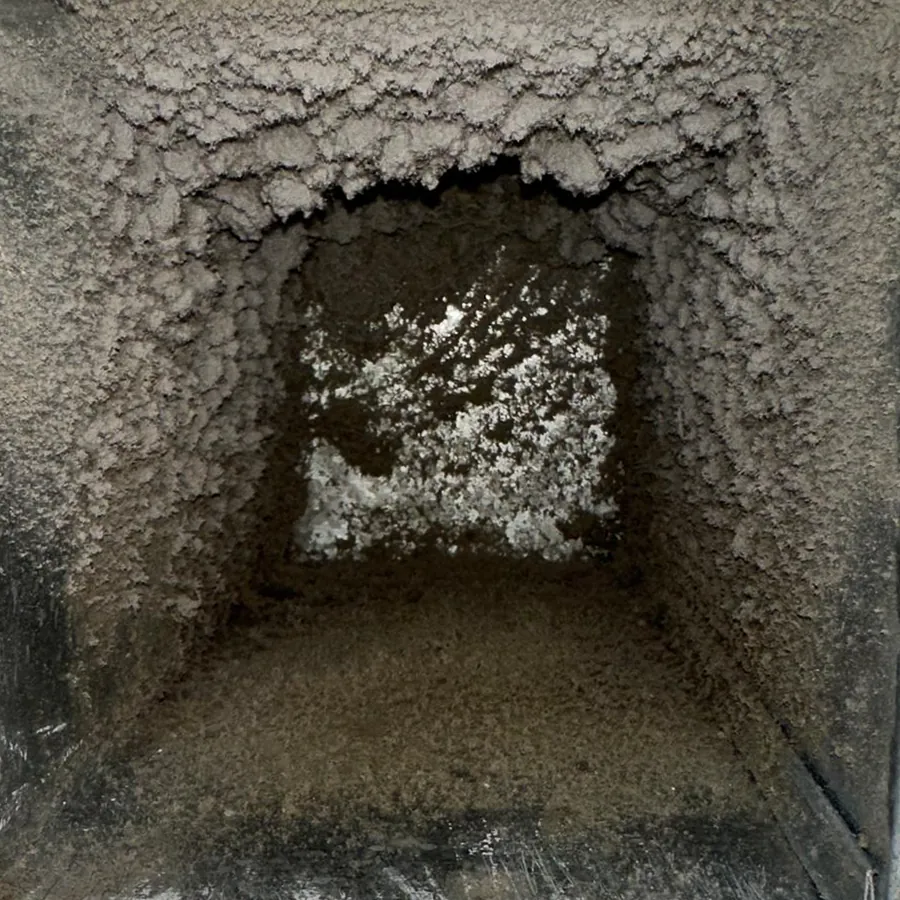
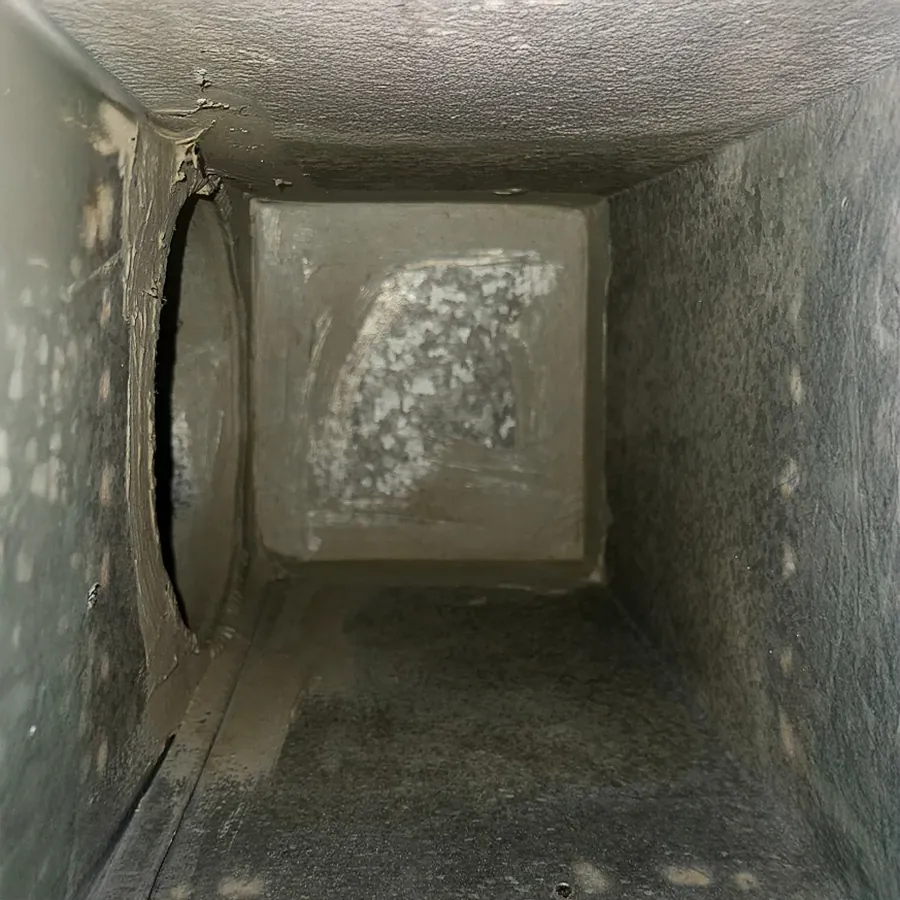
Over a typical service interval of 3 to 5 years, the average home accumulates 47 lbs of mold, dust, and debris in the duct system. Removing it restores supply airflow: NADCA data shows a 10 to 46% improvement in supply airflow once systems are properly cleaned. Homeowners also see a 26% drop in energy use after duct cleaning, because the system no longer has to push air through layers of buildup.
When sanitizing makes sense
If you notice musty smells from the vents, or if mould was visible during the cleaning, a sanitizing treatment can follow the source-removal clean. We use Benefect Decon 30, a Health Canada approved, plant-based disinfectant used by mould remediation and restoration companies. It is applied through the ductwork with a spray wand after all debris has been physically removed. Sanitizing without source removal first does not address the problem: the material needs to come out before you treat the surfaces.
Where we do this work
We clean residential duct systems across Metro Vancouver and the Fraser Valley: Vancouver, North Vancouver, West Vancouver, Burnaby, Richmond, Surrey, Coquitlam, Port Coquitlam, Port Moody, New Westminster, Delta, Langley, White Rock, Maple Ridge, Pitt Meadows, and Abbotsford.
Get a free quote and we will walk you through what the cleaning involves for your specific home.