
| What it covers | Chute interior walls, intake doors on every floor, compactor room |
| How it works | High-pressure rotating nozzles, biodegradable degreaser, enzyme treatment |
| How often | At least once a year (NFPA 82); high-volume buildings twice a year |
| Caretaker upkeep | About 10 minutes per floor weekly (CMHC operations manual) |
| Price | Custom quote |
Key takeaways
- NFPA 82 requires waste chute systems to be inspected and maintained at least annually, and that includes the intake doors on every floor.
- Grease and food residue baked onto chute walls feeds odour, pest and fire problems that surface-level caretaker wiping cannot solve.
- Professional cleaning works top to bottom with rotating high-pressure nozzles, a biodegradable degreaser and an enzyme treatment that breaks down organic buildup.
- A dirty chute shaft acts as a chimney for smells: CMHC research confirms heated air rises through garbage chutes, carrying odours between floors.
A garbage chute runs the full height of a multi-unit residential building. Every bag tossed in leaves a little grease, liquid or food residue on the steel walls. Over months that residue builds into a sticky film, and the film is what produces odour, feeds pests and adds fuel load inside a fire-rated shaft. Professional chute cleaning strips all of it, top to bottom, so the shaft goes back to bare metal. In Metro Vancouver and across BC, where mild damp weather keeps organic material from drying out, that buildup tends to happen faster than in drier climates.
Signs the chute needs professional cleaning
Odour on the hallway floors
CMHC’s air leakage research confirms that heated air rises through vertical shafts like elevator shafts and garbage chutes. That stack effect pulls odour up through the chute and into hallways wherever intake door seals are loose. If tenants on upper floors complain about garbage smell even after collection day, the chute walls are likely the source.
Pest complaints
Health Canada notes that cockroaches contaminate food and spread disease by walking over and excreting on food preparation areas. A grease-lined chute shaft gives them exactly what they need: warmth, moisture and organic residue. CMHC research also identifies air leakage pathways in multi-unit buildings as routes for the entry and proliferation of cockroaches, mice and other pests. Cleaning the chute removes the food source that draws them in.
Sticky or stiff intake doors
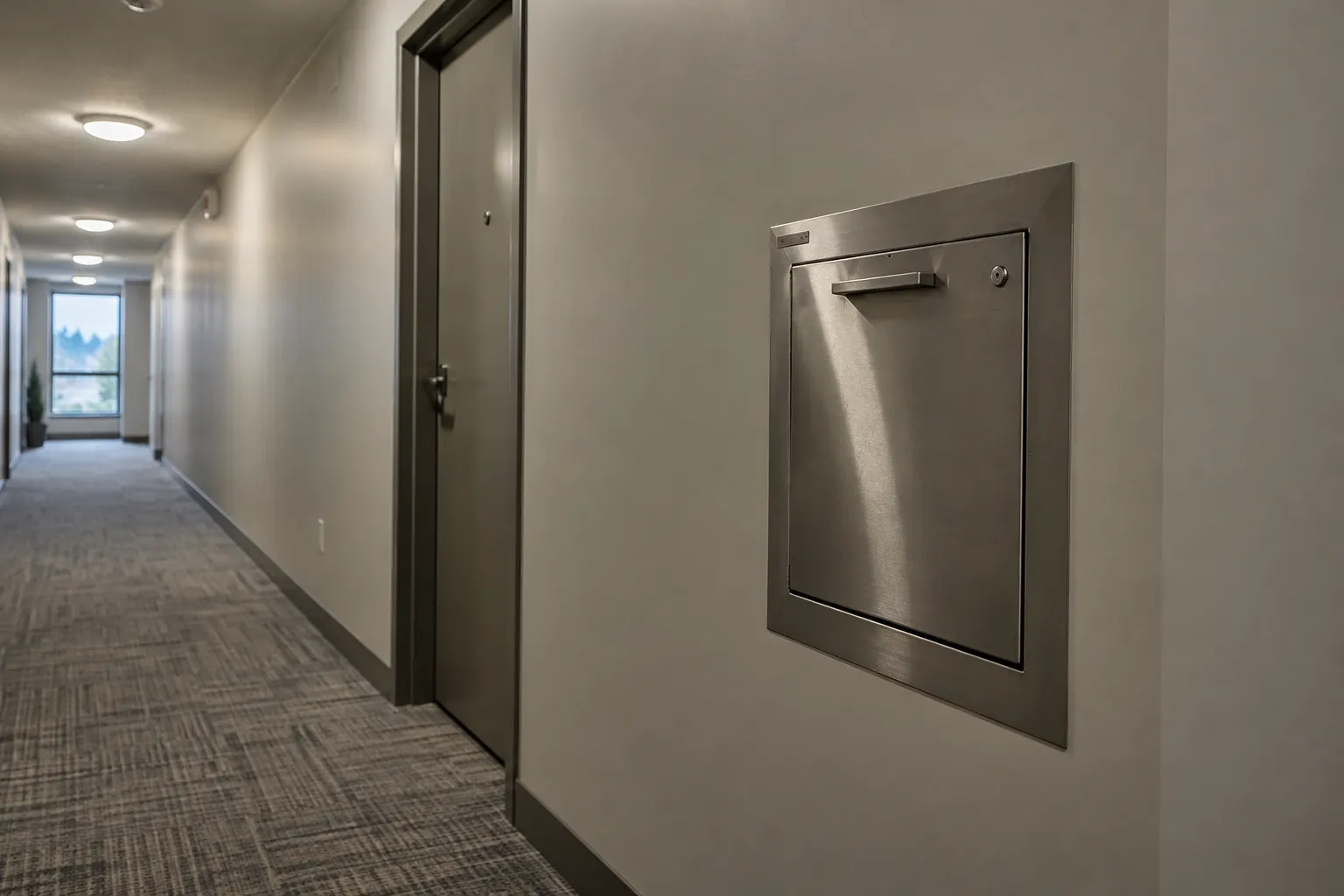
Intake doors that resist closing or won’t latch properly are a fire code issue. NFPA 82 requires every chute intake door to be self-closing and positive-latching. Grease buildup on the frame or hinge is a common reason doors stop latching. A professional cleaning restores the door operation and lets your maintenance team verify the hardware.
What professional chute cleaning covers
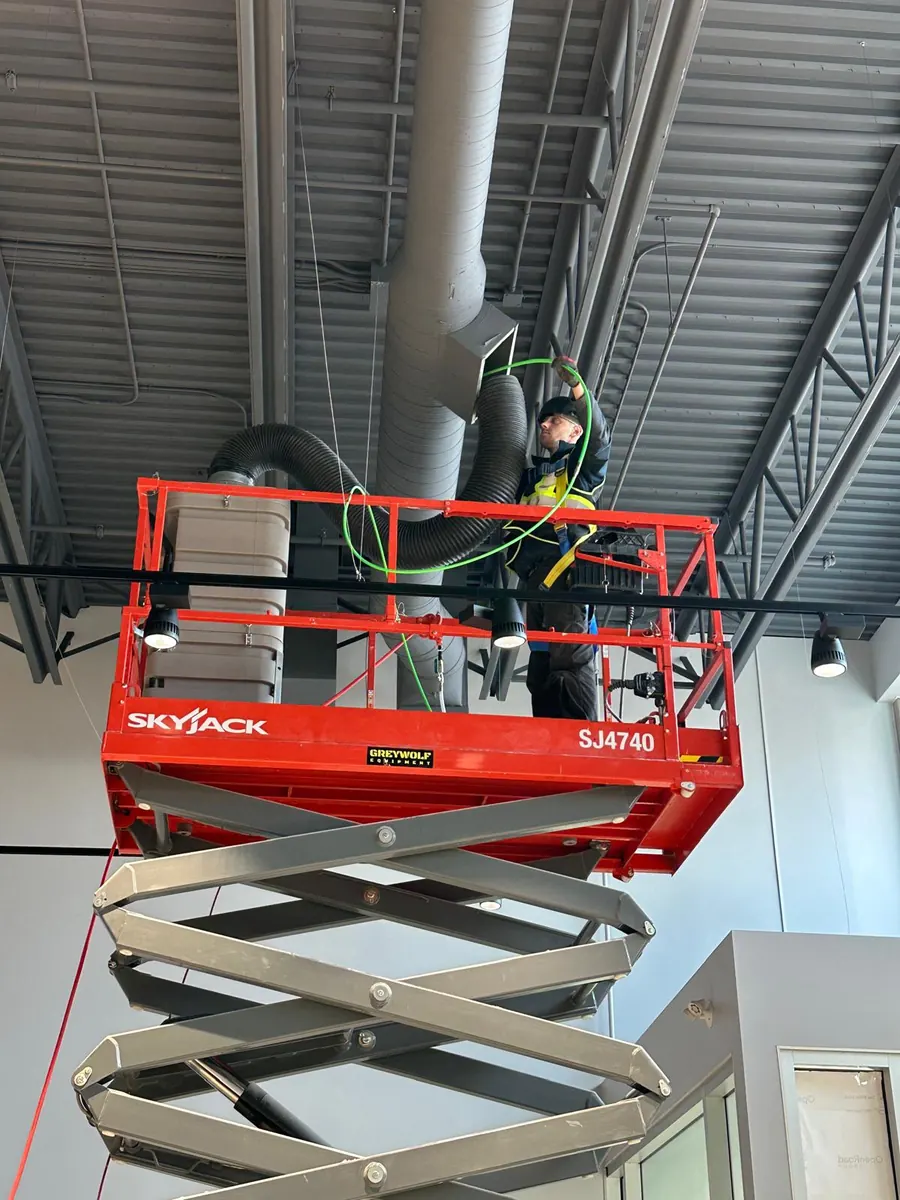
We clean chutes top to bottom with high-pressure rotating nozzles, including every intake door. A biodegradable degreaser cuts through the grease layer, followed by an enzyme treatment that breaks down the organic film bacteria feed on. The compactor room at the bottom gets the same attention.
This matches our commercial service scope: every job ends with a Certificate of Completion and a before-and-after photo report so your strata council or property manager has documentation for their records.
Pro tip: Before scheduling a full chute cleaning, have your caretaker check whether the intake doors on every floor close and latch on their own. Doors that stick or won’t latch need hardware attention alongside the cleaning, and knowing the count up front keeps the job on schedule.
Fire safety and NFPA 82
Garbage chutes are fire-rated assemblies. NFPA 82 requires chute enclosures in buildings of four or more stories to carry a two-hour fire resistance rating. The compactor room at the bottom needs the same rating, with self-closing fire doors on every opening.
Grease and organic residue inside the chute add fuel load to what is supposed to be a non-combustible shaft. That residue also coats intake door frames, preventing them from sealing. A chute that does not close properly at every floor compromises the fire separation the rating is designed to provide.
NFPA 82 requires waste chute systems, including intake and discharge doors, to be inspected and maintained at least annually. A professional deep clean is part of meeting that requirement.
Heads-up: If your intake doors have fusible links (the heat-sensitive closures that release in a fire), NFPA 82 requires those links to be inspected for dust and grease coating and removed for testing every four years. A dirty chute accelerates that coating, so cleaning and link inspection go hand in hand.
How often and who does what
CMHC’s operations manual for multi-unit buildings lists garbage chute cleaning as a weekly caretaker task, budgeting about 10 minutes per floor for wiping down intake door areas. That keeps the surface passable. Separately, the manual schedules annual chute cleaning by an outside contractor, which is the deep clean that reaches the shaft interior.
For buildings with high waste volume, food-service tenants on the ground floor, or a history of pest issues, twice-a-year professional cleaning is worth considering. Your property manager or strata corporation can fold the schedule into the building’s annual maintenance plan, often pairing it with commercial duct and HVAC cleaning since the crew and access logistics overlap.
Get a free quote
We clean garbage chutes across BC and Alberta for strata buildings, rental properties and mixed-use complexes. NADCA certified, WorkSafeBC compliant, with $5M liability insurance. Get a custom quote and we will scope the job based on your building height, chute condition and schedule.
Where we do this work
We serve commercial buildings across BC, including Vancouver, Burnaby, Surrey, Richmond, Coquitlam, Port Coquitlam, Port Moody, New Westminster, North Vancouver, West Vancouver, Delta, Langley, White Rock, Maple Ridge, Pitt Meadows, Mission, Abbotsford, Chilliwack, Squamish, Whistler, Kamloops, Kelowna, Nanaimo and Victoria, as well as Alberta.