
| Cleaning frequency | Assess yearly; clean when buildup is confirmed |
| Time on site | A few hours to several days, depending on building size |
| Office disruption | Scheduled around business hours or on weekends |
| Report included | Certificate of Completion with before-and-after photos |
| Price | Custom quote |
Key takeaways
- The air in a typical office recirculates 5 to 7 times per day through the same ductwork, collecting dust and debris with each pass.
- NADCA-standard cleaning with HEPA-filtered negative-air vacuuming can improve supply airflow by 10 to 46%.
- Every commercial job ends with a Certificate of Completion and a before-and-after photo report you can share with tenants or strata council.
Office HVAC systems run constantly, pushing air through hundreds of metres of ductwork that nobody inspects unless something goes wrong. A mid-rise in Metro Vancouver might have separate runs for every floor, every suite, every conference room. Over the years, dust, fibres, construction debris, and moisture-driven mould spores settle inside that network. When the system cycles on, it pushes whatever has collected back into the rooms where your staff and tenants spend their working day.
Why office ductwork collects more than you’d expect
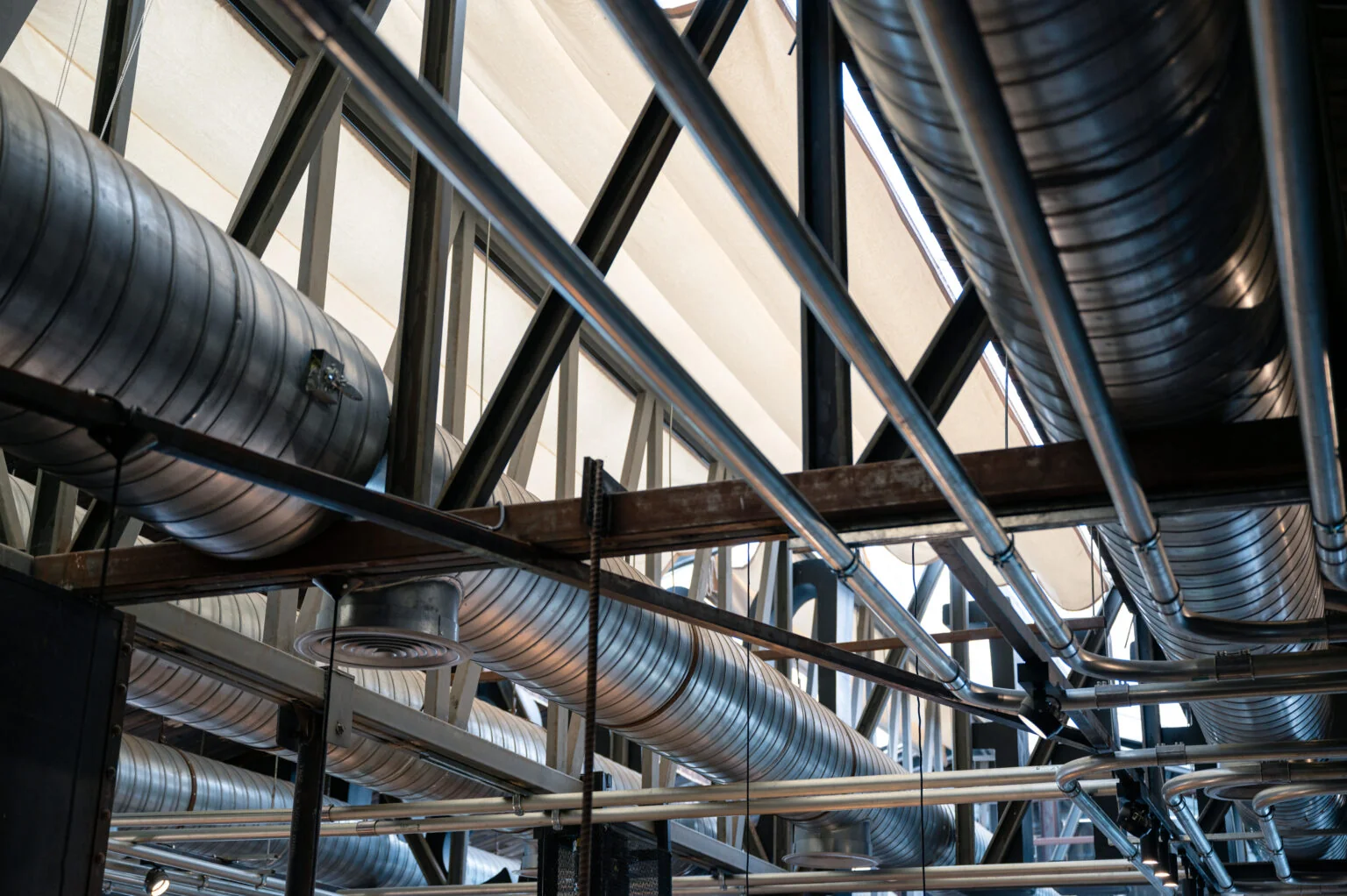
People spend roughly 90% of their time indoors. In an office, that means a full working day breathing air that recirculates through the HVAC system 5 to 7 times per day. Each cycle pulls particles from the occupied space, moves them through the ductwork, and delivers them back through the supply vents. Indoor air pollutants can reach concentrations 2 to 5 times higher than outdoor levels.
Over months and years, the interior surfaces of ducts, coils, and AHU cabinets accumulate a layer of dust and organic matter. Coils stay damp from condensation, which gives mould a foothold. Return grilles near kitchenettes or loading docks pull in cooking residue, exhaust fumes, and whatever else drifts through those areas.
Metro Vancouver’s coastal climate adds to the problem. High outdoor humidity means cooling coils run wet for much of the year, creating the conditions mould needs to colonize coil surfaces and drain pans. Summer wildfire smoke, a near-annual event in BC, deposits fine particulate deep in the ductwork where it lingers long after the skies clear.
Signs your office HVAC needs cleaning
1. Dust on surfaces keeps returning
If desks, monitors, and windowsills collect a visible film of dust within days of being wiped down, the ductwork is likely the source. The HVAC system is redistributing particles faster than anyone can clean them.
2. Stale or musty air
A persistent smell when the system starts up, or a staleness that lingers in interior rooms, often points to organic buildup or mould on coils and duct surfaces.
3. Tenant or staff complaints
Headaches, fatigue, dry eyes, and allergy flare-ups that improve when people leave the building are common signs of poor indoor air quality. When multiple people on the same floor report similar symptoms, the shared HVAC system is the first place to look.
4. Visible debris at diffusers or grilles
Dark streaks or dust clumps around supply diffusers and return grilles mean the ductwork behind them is carrying a heavy load.
5. Rising energy costs
When coils and duct surfaces are coated in debris, the system works harder to move the same volume of air. Properly cleaned HVAC systems show a 10 to 46% improvement in supply airflow, which translates directly to lower fan energy and better temperature control.
6. Recent renovation or nearby construction
Tenant fit-outs, floor renovations, or construction on an adjacent property send drywall dust, sawdust, and adhesive vapours straight into the HVAC system. NADCA recommends that HVAC systems undergoing renovation be verified clean before returning to normal operation.
Pro tip: Before scheduling a full cleaning, ask for a visual assessment. A NADCA-certified technician can open access panels, inspect representative sections of the ductwork, and tell you what condition the system is actually in. You spend money on cleaning that is confirmed necessary, not on a calendar guess.
What a commercial office HVAC cleaning covers
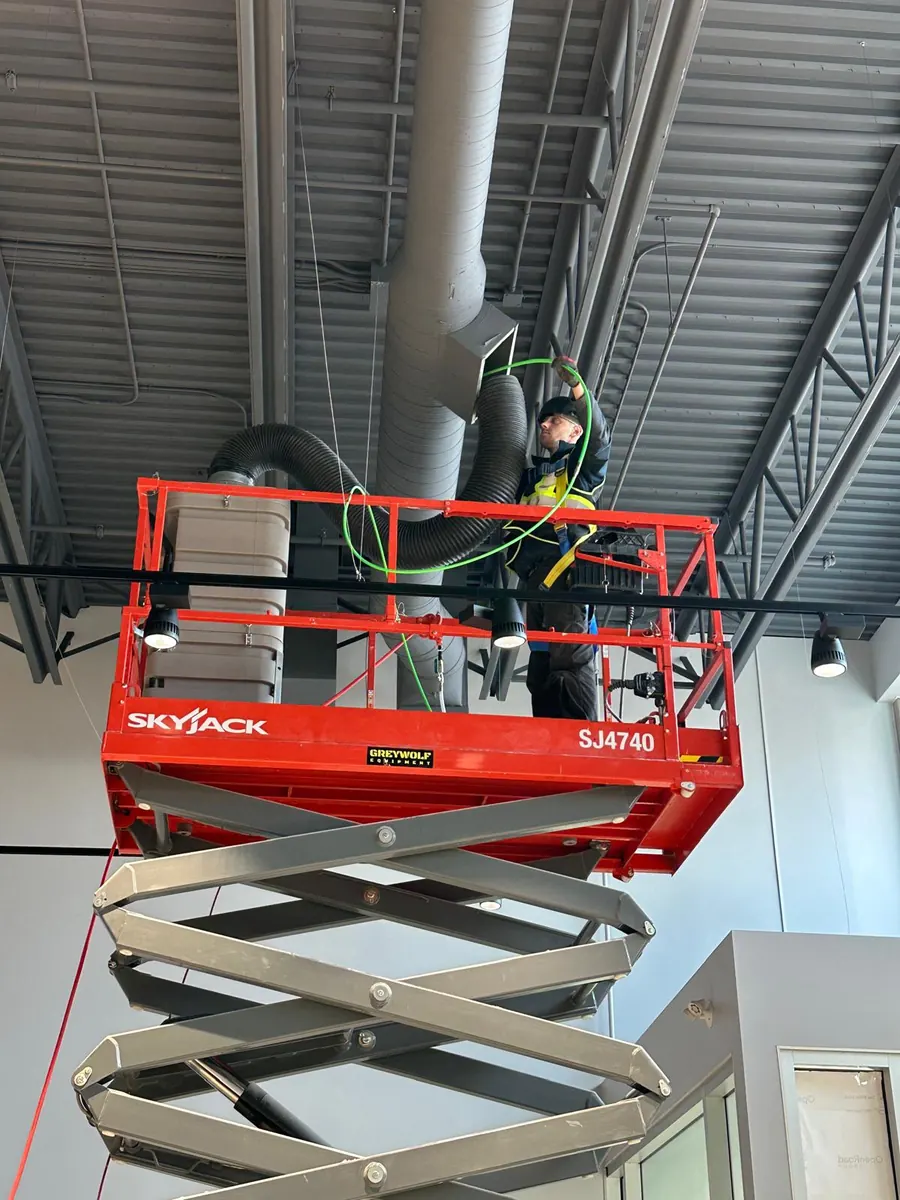
We clean the full system, not just the runs visible from a ceiling tile. A typical office job includes:
- Supply, return, and exhaust ductwork. Cleaning of accessible ductwork using HEPA-filtered negative-air vacuuming and compressed-air agitation to remove dust and debris. Mechanical brushes used when required.
- Air handling units (AHU, MAU, RTU). Internal surfaces and coils cleaned with HEPA vacuuming, compressed air, and coil cleaner where appropriate. Fins combed, drain pans cleared.
- Diffusers, grilles, and VAV boxes. Removable components taken out and air-washed before reinstallation.
- Coils (heating, cooling, evaporator). Compressed air, HEPA vacuum, and no-rinse evaporator foam to restore heat transfer and airflow.
- Access panels. New openings follow SMACNA HVAC Duct Construction Standards and UL 181 closure requirements: mechanically fastened, sealed, re-openable, and marked.
If mould or odours are part of the problem, we apply a Health Canada registered disinfectant after source-removal cleaning. Benefect Decon 30 is plant-based, used in hospital and clinic work, and effective against mould spores and bacteria.
Heads-up: Cleaning only the ductwork while skipping the AHU, coils, or drain pans is a common shortcut. The components left dirty become the source of re-contamination within weeks.
What you receive when the work is done
Every commercial job ends with a Certificate of Completion and a before-and-after photo report. The report documents system condition before cleaning and confirms what was done. Property managers use these for building maintenance files, strata council updates, and tenant communication.
We follow ACR, the NADCA Standard, which sets minimum procedural requirements for assessing, cleaning, and verifying HVAC system cleanliness. Our team is NADCA certified, carries $5M liability insurance, and has 10+ years of experience in commercial buildings across BC. Previous work includes work at KPMG offices and MNP offices.
If dust, odours, or tenant complaints keep surfacing in your office building, a professional HVAC cleaning addresses the problem at the source. Get a custom quote and we will scope the building, schedule around your tenants, and deliver the documentation when we are finished.
For a broader look at what belongs on a commercial maintenance schedule, see our guide on what to schedule for commercial duct cleaning in BC.
Where we do this work
We clean office HVAC systems across British Columbia, including Vancouver, Burnaby, Surrey, Richmond, Coquitlam, Port Coquitlam, Port Moody, New Westminster, North Vancouver, West Vancouver, Delta, Langley, White Rock, Maple Ridge, Pitt Meadows, Mission, Abbotsford, Chilliwack, Squamish, Whistler, Kamloops, Kelowna, Nanaimo, and Victoria. We also serve commercial clients in Alberta.