| What is cleaned | Supply, return, and exhaust ductwork, AHUs, coils, diffusers, grilles |
| Standard | NADCA ACR (assessment, cleaning, restoration) |
| BC requirement | WorkSafeBC Section 4.78: preventive maintenance on ventilation systems |
| Best window | Summer break, late June through early September |
| Price | Get a custom quote |
Key takeaways
- Summer break is the widest window for full-scope school HVAC cleaning in BC, but winter and spring breaks cover targeted zones.
- WorkSafeBC Section 4.78 requires preventive maintenance on all ventilation systems, including those in schools.
- Air in a typical HVAC system recirculates 5 to 7 times per day on average, carrying whatever is in the ductwork back into classrooms.
- Start planning with your contractor in early spring to secure summer crew availability.
School HVAC cleaning is the process of removing dust, debris, and microbial buildup from every component of a school’s ventilation system: the ductwork, air handling units, coils, diffusers, and grilles. In BC, coastal moisture and wildfire smoke seasons add load to these systems year after year. A school that runs its HVAC hard through a rainy winter and a smoky August will have more buildup in its ducts than a filtered-air building in a dry climate. Schools are designed to meet ASHRAE Standard 62.1 ventilation rates, but no amount of fresh outdoor air helps if the ductwork itself is lined with years of buildup. The goal is source removal: physically pulling contaminants out so they stop recirculating through occupied classrooms.
Why schools collect more in their ducts
Schools are dense. Thirty-plus students per classroom, each shedding skin cells, clothing fibres, and tracked-in dirt. Add art rooms with chalk and paint particulate, science labs, shop classes, gymnasiums with rubber-mat dust. The HVAC system pulls all of this in, recirculates it 5 to 7 times per day on average, and deposits a fraction in the ductwork with each pass.
Children breathe more air relative to their body weight than adults. Nearly 1 in 13 school-age children has asthma, which the EPA identifies as the leading cause of school absenteeism from chronic illness. Mould growth in drip pans, ductwork, coils, and humidifiers is one of the pollutant sources the EPA flags in its reference guide for indoor air quality in schools. Cleaning the HVAC system removes that source at the duct level.
When to schedule the work
The challenge with school buildings is that you cannot run a commercial HVAC cleaning crew through occupied classrooms. The equipment generates noise (HEPA-filtered negative-air vacuums, compressed-air agitation tools) and requires access to every diffuser and return grille in the space. The work has to happen when the building is empty, or at least when the zones being cleaned are unoccupied.
Summer break: the main window
Late June through early September is the widest opening. The building is empty for weeks, so the crew can work full days across the entire system without scheduling around classes. This is the window for a full-scope cleaning: all ductwork runs, every air handling unit, all coils, diffusers, and grilles. If the school has multiple AHUs serving different wings, the crew moves through them systematically without worrying about noise or dust containment in adjacent classrooms.
The catch: every other school district and commercial building manager books the same months. Getting your contractor a scope walkthrough in early spring gives you priority on summer scheduling.
Winter and spring breaks: targeted zones
Shorter breaks are enough for targeted zones. If a particular wing has had indoor air quality complaints, or if one AHU is overdue for coil cleaning, a winter or spring break lets the crew address that section without disrupting the rest of the building. These breaks are also long enough for bathroom exhaust fan cleaning in high-use areas like change rooms and gymnasiums.
Professional development days and long weekends
Single days and long weekends are too short for ductwork runs, but they are long enough for focused tasks: cleaning a specific air handling unit, servicing a rooftop unit, or replacing access panels. These smaller jobs fit naturally into a multi-year maintenance cycle where full cleaning happens in summers and component work fills the gaps.
Pro tip: Walk your mechanical rooms before March. If coil fins are matted with dust or drain pans have visible residue, that is your signal to book a summer cleaning before contractor schedules fill up.
What the scope covers
A full school HVAC cleaning under the NADCA ACR standard includes several categories of work.
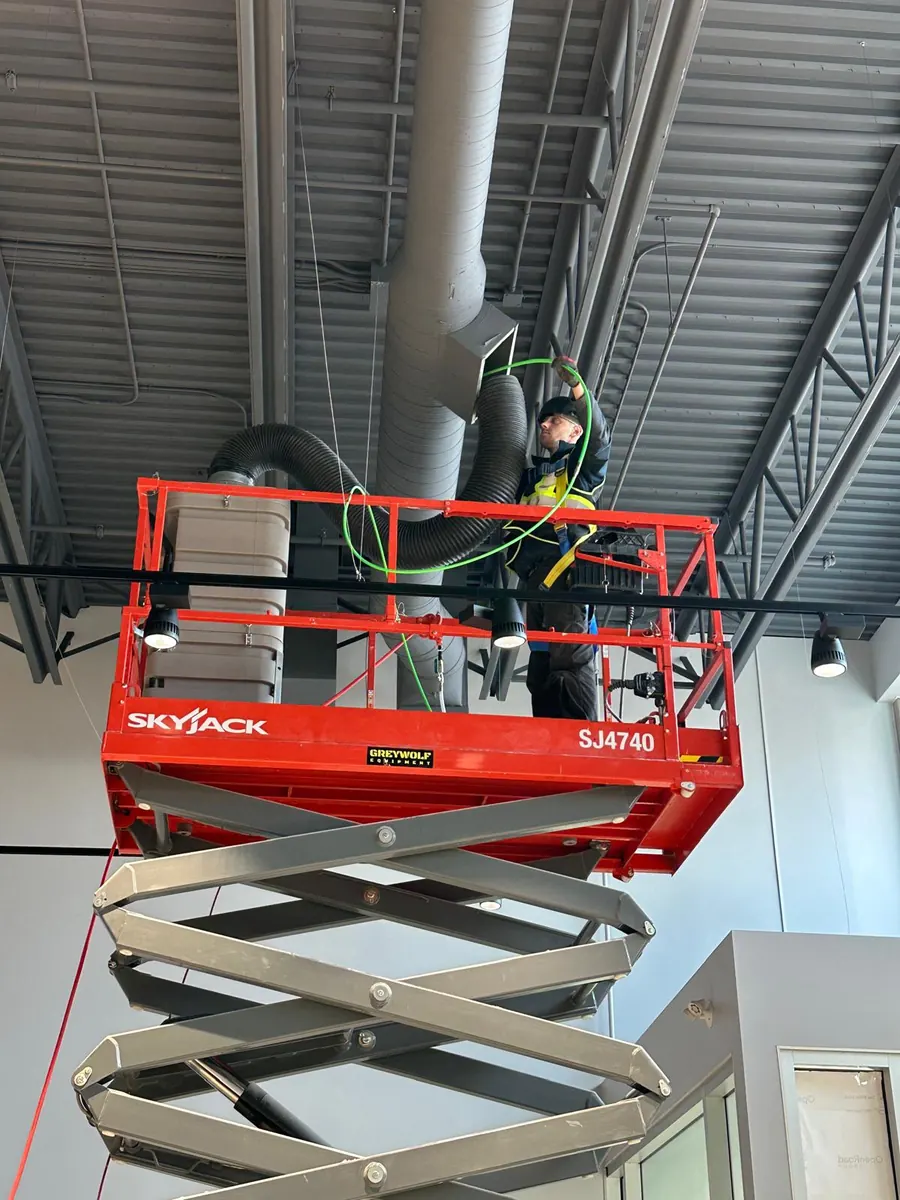
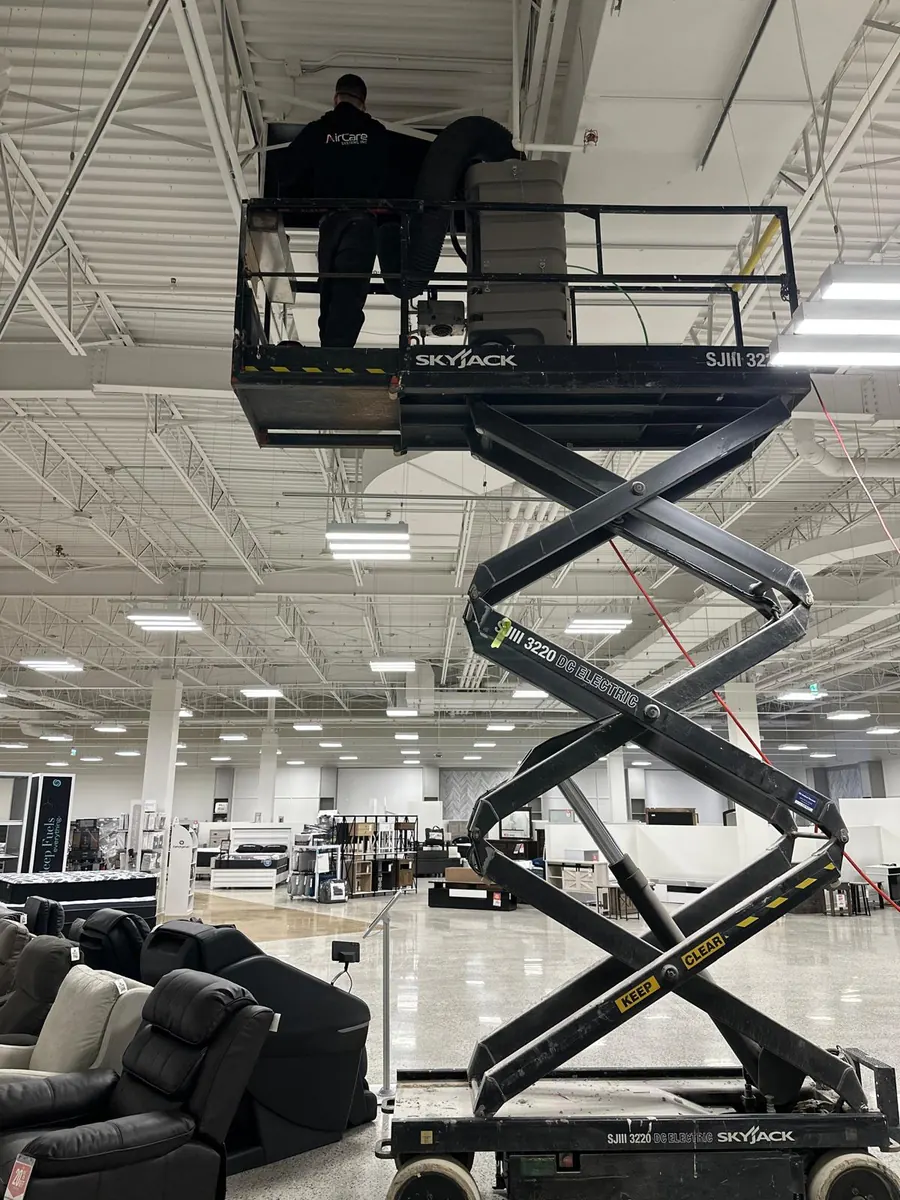
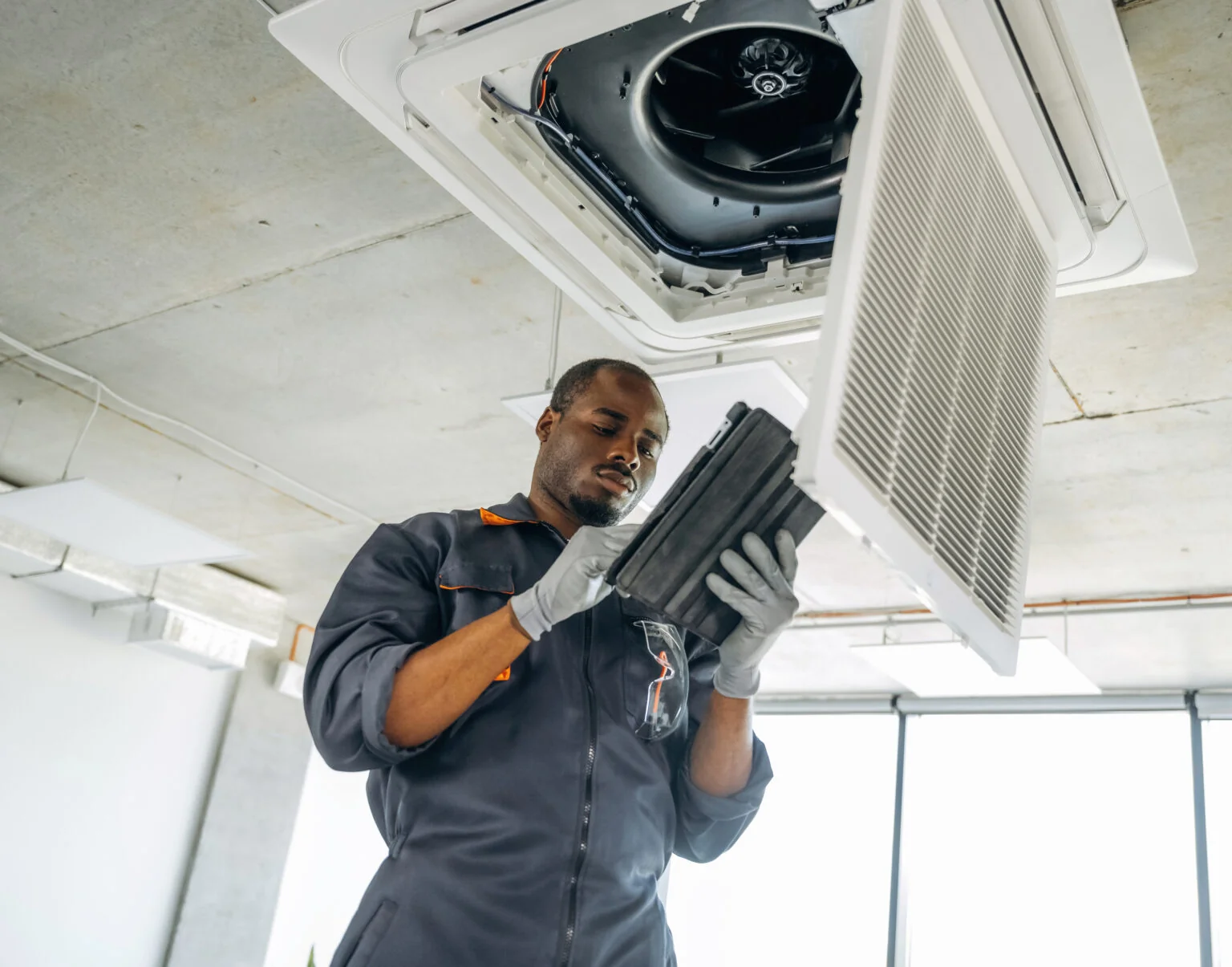
Ductwork (supply, return, exhaust). The crew connects HEPA-filtered negative-air vacuuming equipment to the system and works compressed-air agitation tools through each run to dislodge and capture dust and debris.
Air handling units. Accessible internal surfaces and coils in every AHU, makeup air unit, and rooftop unit are cleaned using HEPA vacuuming, compressed air, and coil cleaner where appropriate. Coil fins are combed where needed. Replacement filters are supplied by the district unless quoted separately.
Components. Diffusers, return and exhaust grilles, and VAV boxes are power-wiped and air-washed. Removable parts come outside for air washing before reinstallation.
Coil cleaning. Heating and cooling coils are cleaned with compressed air, HEPA vacuum, and no-rinse evaporator foam to restore heat transfer and airflow.
Sanitizing (optional). After source-removal cleaning, a Health Canada registered disinfectant can be applied through the system with a 360-degree spray wand. This step is common in schools where mould or persistent odour has been a concern.
Every commercial job ends with a Certificate of Completion and a before-and-after photo report documenting the condition of the system before and after cleaning.
How the crew works in your building
The entire section under cleaning goes on continuous negative pressure so that loosened contaminants travel toward the vacuum collection unit, not into hallways or classrooms. In a school with multiple AHUs, the crew can isolate zones and clean one wing at a time while the rest of the building stays ventilated.
Any new access openings are closed to SMACNA and UL 181 standards: mechanically fastened, sealed, and marked on the duct exterior so the next maintenance team can find them.
WorkSafeBC Section 4.78 requires preventive maintenance on all ventilation systems, including filters. Scheduling a cleaning during a break period keeps you on the right side of that requirement without interrupting instruction.
Heads-up: Waiting until August to book a summer cleaning often means competing with every other district in the region for crew time. Contractors who follow NADCA ACR are a smaller pool than general HVAC shops, and their summer calendars fill months in advance.
Our recent projects include work at School District 72 (Campbell River) and School District 63 (Saanich). We clean schools, district offices, and portables across BC and Alberta.
Plan your next cleaning
If your district has not had the HVAC system cleaned in several years, summer break is the place to start. A site walkthrough gives us the scope: how many AHUs, how much ductwork, what condition the coils are in. From there we provide a timeline and a custom quote so the work fits your budget cycle and your building calendar.
For a broader look at commercial HVAC cleaning scope and standards, see our guide to commercial duct cleaning in BC.
Where we do this work
We clean school HVAC systems across BC: Vancouver, Burnaby, Surrey, Richmond, Coquitlam, Port Coquitlam, Port Moody, New Westminster, North Vancouver, West Vancouver, Delta, Langley, White Rock, Maple Ridge, Pitt Meadows, Mission, Abbotsford, Chilliwack, Squamish, Whistler, Kamloops, Kelowna, Nanaimo, and Victoria. We also serve Alberta.