| Who handles it | the strata corporation (ducts are common property in BC) |
| How often | at least once a year; twice for high-use buildings |
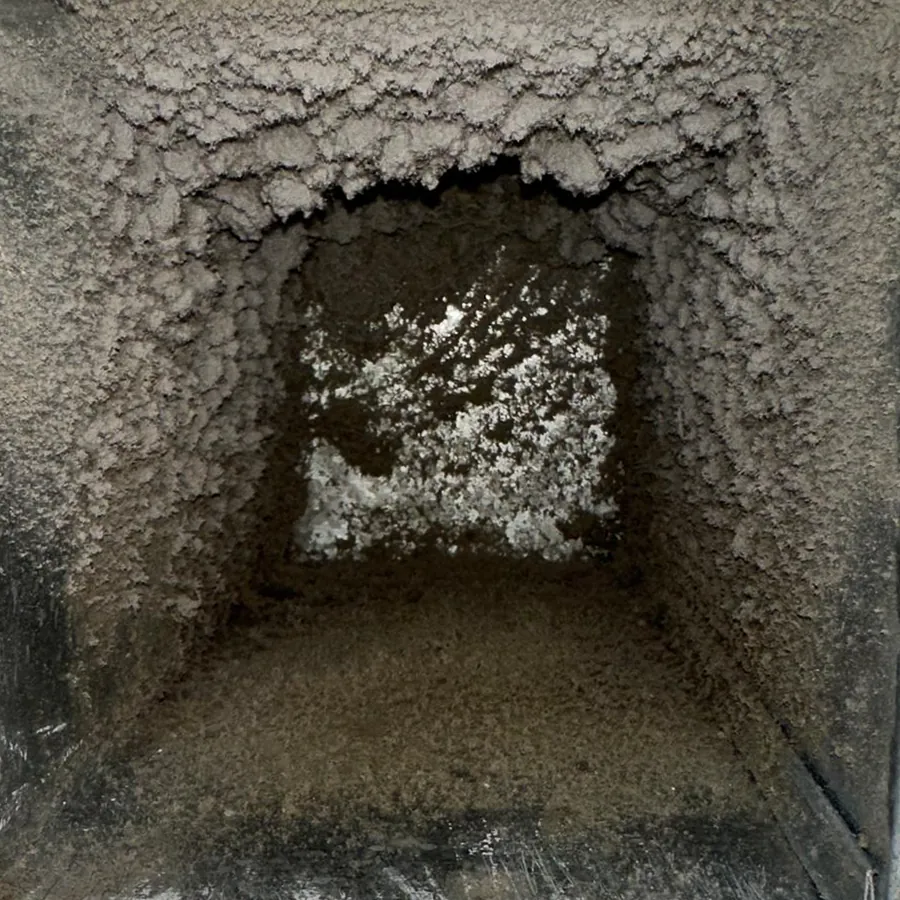
| What collects | lint, fabric softener residue, moisture |
| Rooftop access | fall protection required per WorkSafeBC |
| Fire risk | one-third of dryer fires caused by failure to clean (NFPA) |
| Price | Custom quote |
Key takeaways
- Shared dryer ducts collect lint from every unit on the run, not just one dryer. The buildup is proportional to the number of suites feeding the same exhaust.
- Rooftop terminations need fall-protected access that most strata councils cannot arrange in-house.
- One-third of dryer fires are caused by failure to clean, per NFPA research. A building full of dryers puts more lint into the system faster.
- AirCare cleans common dryer exhaust ductwork including rooftop runs and terminations across BC. Get a custom quote.
In a single-family home, one dryer pushes exhaust through a short duct to a wall vent. In a strata building, the setup is different. Multiple units may share a common exhaust duct that runs vertically through the building and exits on the roof. Each suite adds lint, moisture and heat to the same path. The duct is longer, the lint volume is higher, and the termination sits on a rooftop that nobody in the building can easily reach.
The cleaning falls to the strata corporation.
What makes strata dryer ducts different
Shared runs
In many BC strata buildings, individual dryer ducts from each suite connect to a common riser that runs up through the building to a single rooftop termination. Some buildings have one riser per stack of units; others feed several suites into a manifold at each floor. Either way, lint from every connected dryer accumulates in the shared section.
Longer duct runs
A residential dryer duct is typically short. A strata dryer duct can run ten storeys or more before reaching the roof. More surface area means more places for lint to stick. Vertical runs add gravity to the problem: lint that loosens from the duct wall can fall and settle at bends or branch connections lower in the system.
Rooftop terminations
The vent cap on a strata building roof is exposed to BC’s coastal weather. Rain, wind-driven debris, bird nesting material and ice can block or partially obstruct the opening. Unlike a wall vent that a homeowner can check from the yard, a rooftop termination requires a contractor with fall protection per WorkSafeBC before anyone steps onto the roof.
Why this is a fire risk for buildings
NFPA research shows one-third of dryer fires are caused by failure to clean. Lint is the material most often first ignited. In a building where multiple dryers feed a shared duct system, the lint volume entering that system every week far exceeds what a single household produces.
The conditions are straightforward: lint is flammable, dryers generate heat, and a clogged duct traps both in a confined space. In a shared system, no single resident controls the lint load. The strata corporation controls the maintenance schedule. If that schedule slips, every unit on the run contributes to the problem without anyone seeing it happen.
Pro tip: Ask your property manager whether the building’s dryer exhaust ducts are individual per suite or shared. If they are shared, the strata corporation is responsible for the cleaning. A look at the mechanical drawings or strata plan will show the layout.
How we clean strata dryer vents
AirCare’s commercial dryer vent cleaning covers common dryer exhaust ductwork, including rooftop runs and terminations. Here is how the process works:
- Access the roof with fall protection in place per WorkSafeBC requirements.
- Inspect the rooftop termination for blockages (bird nests, debris, weather damage) and clear them.
- Clean the common riser and branch connections using HEPA-filtered negative-air vacuuming and compressed-air agitation, working from the rooftop down.
- Clear each branch duct back to the individual unit connections.
- Confirm airflow is restored at each branch before closing up.
Every commercial job ends with a Certificate of Completion and a before-and-after photo report, so your strata council has documentation for the building’s maintenance records.
For buildings with individual per-suite dryer ducts and no shared riser, the cleaning process is closer to residential dryer vent cleaning. The scope depends on the building’s layout.
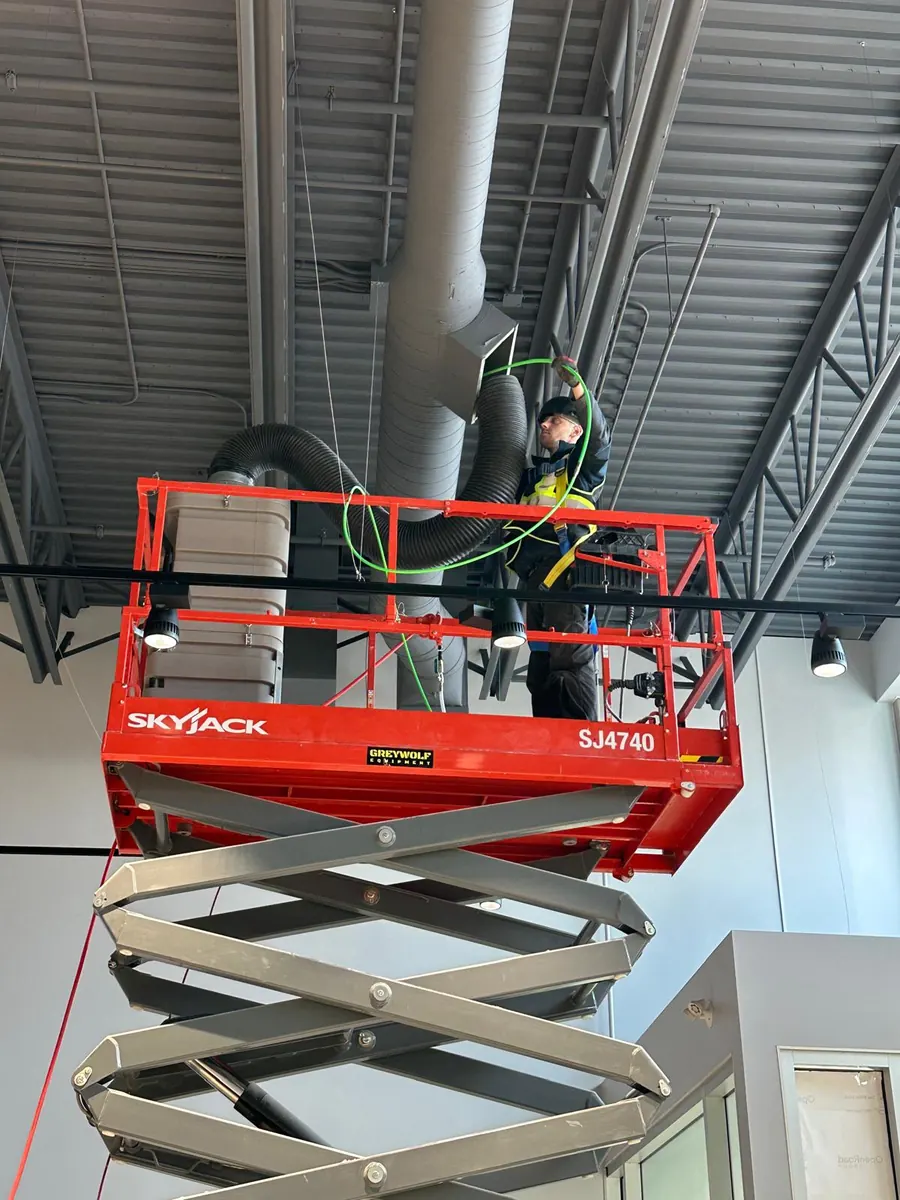
Heads-up: If a shared dryer duct has never been cleaned, the first service may reveal deterioration like corroded joints, disconnected sections, or failed dampers. The technician documents everything so the strata council can address repairs.
When to schedule it
NADCA’s consumer guidance recommends cleaning dryer vents once per year. For strata buildings with high dryer usage (rental towers, student housing, buildings with in-suite laundry in every unit), twice a year is worth considering. CMHC’s operations manual for multi-unit buildings lists dryer servicing as a semi-annual task for building superintendents.
The practical trigger is the same as for a single home, just harder to spot in a building: longer drying times across multiple suites, moisture in common laundry areas, or lint visible at the rooftop cap. Since residents rarely report these signs to management, scheduled annual cleaning is the most reliable approach.
If your building also needs ventilation and HVAC cleaning, bundling the dryer vents with the main scope saves on mobilization and roof-access setup.
Get a custom quote
AirCare is NADCA certified with $5M liability insurance and 10+ years of experience cleaning ductwork across BC. We handle common dryer exhaust ductwork, rooftop runs and terminations for strata buildings of all sizes. Get a custom quote and we will scope the dryer vent cleaning for your building.
Where we do this work
Vancouver, Burnaby, Surrey, Richmond, Coquitlam, Port Coquitlam, Port Moody, New Westminster, North Vancouver, West Vancouver, Delta, Langley, White Rock, Maple Ridge, Pitt Meadows, Mission, Abbotsford, Chilliwack, Squamish, Whistler, Kamloops, Kelowna, Nanaimo, Victoria, and all of BC.